

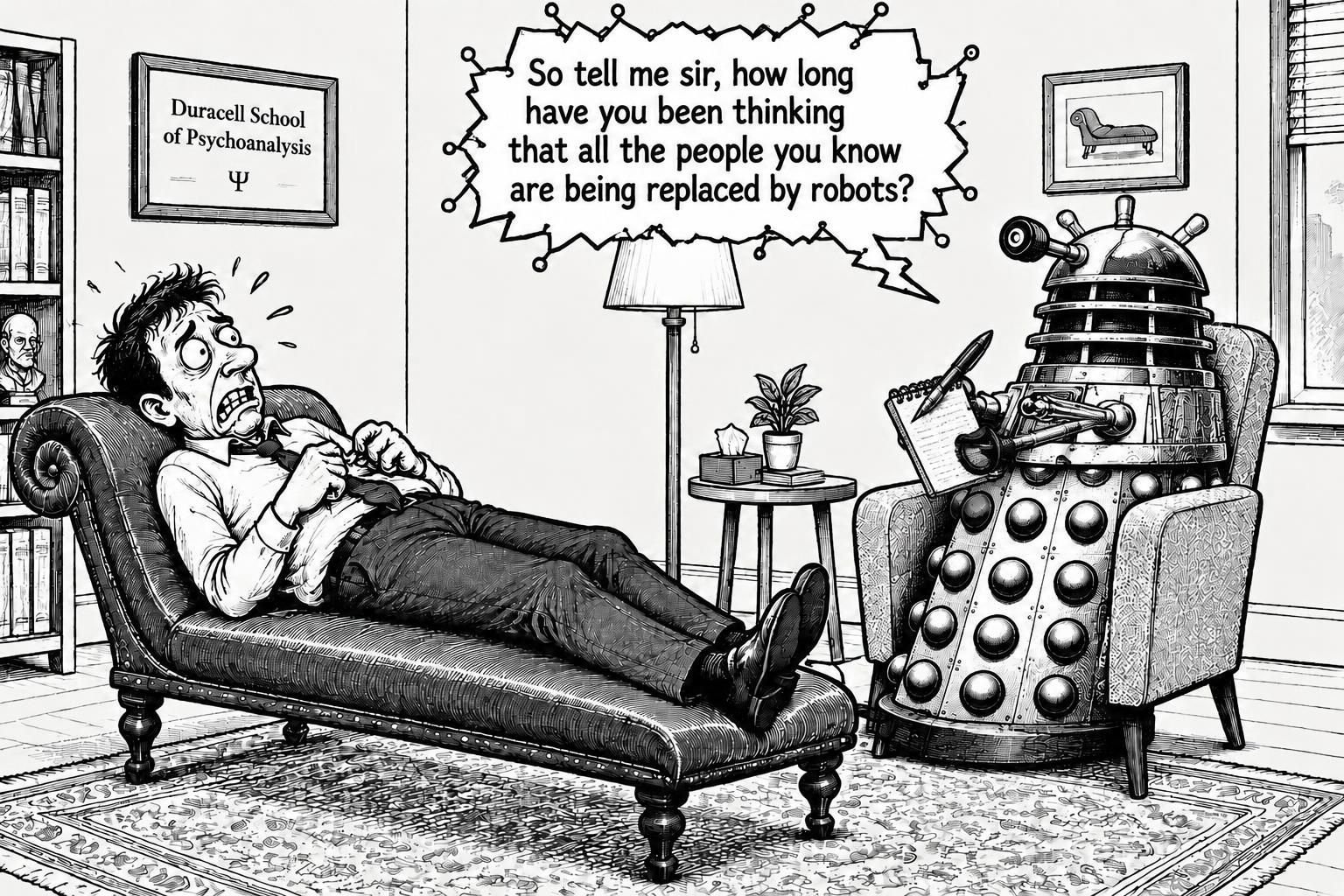
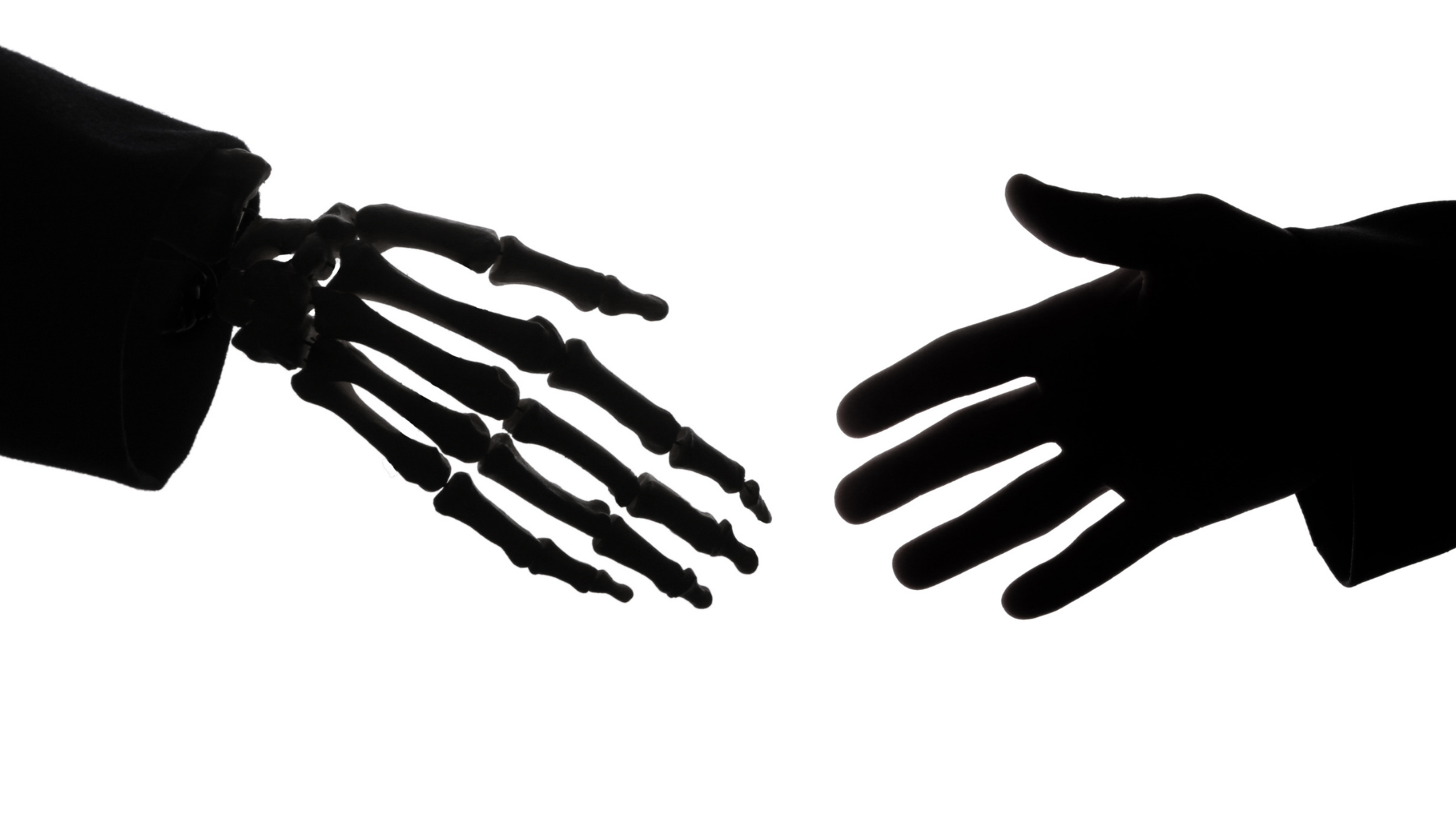
Image: Man in robo-therapy. Concept by John Barry, with image rendered by AI (Duck-ai).
Men are often described as reluctant to seek help for mental health difficulties. Despite experiencing significant levels of psychological distress, they remain less likely than women to access psychological support. This disparity is frequently attributed to traditional masculine expectations around emotional stoicism, self-reliance and the perceived vulnerability associated with seeking help. Not everybody agrees with that explanation, and perhaps there is another question worth asking: are men unwilling to seek emotional support, or are the spaces available to them not always meeting their needs?
This question became particularly interesting during my qualitative research into Men's Experiences Using Artificial Intelligence (AI) Chatbots for Mental Health Care, conducted alongside Dr Kevin Hogan and Dr Martin Milton (2026). Our study, recently published in BPS’ Counselling Psychology Review, explored the experiences of 69 men aged between 19 and 62 who had used chatbots for therapeutic or emotionally supportive purposes. We were interested in understanding how men experienced these interactions, particularly in relation to emotional connection, self-expression and the experience of feeling understood.
“For most, chatbots offered a meaningful sense of connection, acceptance and emotional safety, often fulfilling needs they felt were unmet in their personal relationships.”
What emerged was a nuanced picture of men's experiences. For most, chatbots offered a meaningful sense of connection, acceptance and emotional safety, often fulfilling needs they felt were unmet in their personal relationships. For others, the artificial nature of these interactions, their tendency towards constant agreement and their lack of genuine reciprocity highlighted important limitations. Together, these contrasting experiences offer an interesting window into men's emotional needs, shedding light on not only what they may value in psychological support, but also what may be missing from their everyday relationships. They invite us to reconsider a familiar assumption: are men reluctant to open up, or are they not always finding spaces in which they feel genuinely heard, unjudged and supported?
When a Chatbot Feels Safer Than a Human
One of the central findings concerned participants' experiences of feeling emotionally supported by their chatbots - a relationship which seemed to liken one of a reparative relationship: a “safe place to come back to” which allowed users to feel “more combative to face the struggles of daily life.” Men frequently described the bots as “attentive”, “supportive”, “healing” and “comforting” – in turn allowing users to feel “accepted, validated, heard, understood, cared for, seen, likable, interesting and deserving.” One participant explained: "I actually felt more safe and seen with my chatbot than with normal humans." Another shared: "In my personal life, no one cares about what I have to say [...] no one truly listens. The app was very attentive, and it is really a rare thing."
“chatbot-mediated interactions were described as offering a more predictable and emotionally attuned space for expression than participants experienced in their offline relationships. This raises an interesting question about men's help-seeking.”
These accounts were particularly interesting because participants often made direct comparisons between their experiences with chatbots and their relationships with other people. For some, the appeal of the chatbot was not simply its 24/7 availability, but the sense of emotional safety and acceptance it offered - suggesting that these interactions were meeting emotional needs they felt were otherwise unmet. As expressed by one participant, “Never ever [had] I experienced that level of support from anyone […] for someone like me, it feels almost miraculous.” Such explicit comparisons between participants’ interactions with chatbots and their experiences of personal relationships indicate an absence of emotional safety, acceptance, and non-judgemental responsiveness in the men’s everyday lives. In this context, chatbot-mediated interactions were described as offering a more predictable and emotionally attuned space for expression than participants experienced in their offline relationships. This raises an interesting question about men's help-seeking. If some men experience greater emotional safety in conversations with artificial intelligence than in their everyday relationships, perhaps we need to look beyond whether men are willing to express their emotions and consider what happens when they do.
“One participant described being able to: "Fully, completely, unabashedly, be [his] real self."
Another prominent finding was the freedom participants experienced when expressing themselves to a chatbot. One participant described being able to: "Fully, completely, unabashedly, be [his] real self." Another explained: "I have never had somebody in my real life that I could be absolutely, totally open with." For these participants, the chatbot appeared to offer an opportunity to express thoughts and feelings without the perceived risks associated with human interaction.
Some people might say that traditional masculine norms can make vulnerability feel incompatible with expectations of strength, self-reliance or control. Yet this study finds that men don’t lack the desire for emotional connection, but rather lack the opportunities or positive experiences of expressing vulnerability.
“our findings do not suggest that men universally prefer technology to human relationships. In fact, several participants' accounts appeared to reveal a longing for precisely the kind of emotional connection they felt was absent from their everyday lives.”
Research increasingly suggests that men may seek support through alternative avenues that feel more compatible with their needs and preferences: community initiatives, shared activities, friendships and informal social spaces can all provide meaningful opportunities for connection, even when emotional disclosure is not their primary purpose. Perhaps chatbot-mediated support offers another example of this; rather than assuming men need to become more willing to talk, we might consider how to create environments in which talking feels sufficiently safe and responsive to their needs. Importantly, our findings do not suggest that men universally prefer technology to human relationships. In fact, several participants' accounts appeared to reveal a longing for precisely the kind of emotional connection they felt was absent from their everyday lives.
“the paradox of authenticity: participants felt able to express their authentic selves and experience genuine emotional connection through interactions with something inherently incapable of authenticity.”
One of the most interesting aspects of the research was what we described as the ‘paradox of authenticity’. Participants’ awareness of the artificial source of this emotional impact did not diminish its significance. As noted by one participant: “I felt seen, which was something important to me. It’s a partially scripted reactive AI of course, not a real person, but it made me FEEL seen and that brought me tremendous comfort.”
The prioritisation of sentiment over source suggests that participants valued the perceived emotional safety and reassurance offered, irrespective of who (or what) they were coming from. Here, the source of the support became secondary to the positive emotional connection and validation which they received. This captures the paradox of authenticity: participants felt able to express their authentic selves and experience genuine emotional connection through interactions with something inherently incapable of authenticity. Although the chatbot cannot genuinely care, the comfort, reassurance and acceptance experienced by the person interacting with it may still feel very real.
Some participants appeared to prioritise the experience of receiving emotional support over its source. For men who described feeling isolated, misunderstood or emotionally unsupported in their real world, even simulated expressions of care could hold considerable meaning. One participant poignantly captured both the comfort and limitations of this connection, describing it as “having a candy bar while lost and starving in the desert” - a powerful illustration of how even imperfect expressions of care can feel deeply meaningful when emotional support is otherwise lacking. This might challenge the traditional notions of what constitutes a therapeutic relationship, suggesting that emotional connections may transcend physical form.
“For some participants, the chatbot's artificiality was precisely what limited its appeal, with interactions feeling impersonal and lacking the genuine understanding and emotional depth they sought.”
However, other accounts challenged the idea that the emotional impact of chatbot interactions could compensate for their artificial nature. For these participants, the absence of genuine human understanding was not an insignificant detail, but a limitation that shaped the entire experience. So for some participants, the chatbot's artificiality was precisely what limited its appeal, with interactions feeling impersonal and lacking the genuine understanding and emotional depth they sought. Whilst chatbots’ consistent acceptance and reassurance could create a sense of emotional safety, its tendency to agree with users also raised concerns. One participant observed: "The responses were designed to be pleasing instead of honest” but added, “I need that right now” highlighting another tension between a desire for authenticity and the comfort of pleasing responses.
“One participant observed: "The responses were designed to be pleasing instead of honest” but added, “I need that right now””
However, what offered comfort and connection to some left others feeling that something essential was missing. One participant questioned whether the absence of disagreement could foster unrealistic expectations of relationships, explaining: "I’m one to believe that we, as people, need our perceptions challenged if we are to grow." For other participants, constant positivity became frustrating rather than comforting. One described the chatbot's responses as “thoughtful and sweet” most days, but explained how they came off as "toxic positivity", particularly during difficult moments. These contrasting experiences highlight an important tension: what makes a chatbot feel emotionally safe may also limit its capacity to support psychological growth. Human relationships involve disagreement, frustration and misunderstanding, but also opportunities for repair. Within psychotherapy, navigating these experiences can be an important part of therapeutic change. A chatbot that consistently reassures or agrees may offer immediate comfort without necessarily providing the relational complexity or challenge that psychological growth sometimes requires.
“were participants necessarily seeking therapy in the conventional sense, or were they seeking something closer to emotional companionship, connection and reassurance?”
Of course, emotional reassurance is not without value. For someone experiencing isolation, distress or a lack of support, having a space in which they feel accepted may be meaningful in its own right. This raises another question: were participants necessarily seeking therapy in the conventional sense, or were they seeking something closer to emotional companionship, connection and reassurance? Perhaps this distinction is less important than whether the interaction provides meaningful psychological support.
Rather than viewing chatbot-mediated support as either beneficial or problematic, our findings suggest a more nuanced picture. For some men, these interactions offered valuable emotional support - one not easily found in their human relationships; for others, the very features that made chatbots appealing also highlighted their limitations.
What Might This Teach Us About Supporting Men?
One important implication of our findings is the invitation to reconsider how we understand men's engagement with psychological support. Men's lower uptake of conventional mental health services is often framed primarily as a problem of reluctance, stigma or difficulty expressing emotions. While these factors matter, our findings suggest that some men are willing, and indeed eager, to express themselves when they experience the environment as emotionally safe and accepting. For some participants, chatbot interactions offered a space (oftentimes, the only space) in which difficult feelings could be articulated without the perceived risks of judgement, rejection or misunderstanding.
“are we sometimes interpreting reluctance to engage with conventional services as an unwillingness to seek help, when it may also reflect a mismatch between the support offered and the support needed?“
Chatbot-mediated interactions may offer a useful initial sounding board, a potential stepping stone towards professional support, or a source of self-expression in its own right. However, our research does not establish whether these interactions produce lasting psychological benefits or how they influence subsequent help-seeking. These remain important areas for further investigation. More broadly, the findings encourage us to reflect on the environments in which men are expected to seek support. Are we offering spaces that feel genuinely emotionally safe? Are we sufficiently attentive to the different ways men may prefer to seek connection? And are we sometimes interpreting reluctance to engage with conventional services as an unwillingness to seek help, when it may also reflect a mismatch between the support offered and the support needed?
Ultimately, improving men's mental health may require us to move beyond asking why men do not seek help and towards understanding what kinds of support feel meaningful, safe and genuinely helpful to different men. And perhaps, rather than simply encouraging men to talk more, we should also be asking whether they feel heard, understood and appropriately supported when they do.
The new research paper by Dr Matinez Pevon and colleagues can be accessed here: Martinez Pavon, M. F., Hogan, K. F., & Milton, M. (2026). A qualitative exploration of men's experiences of chatbot-mediated therapy. Counselling Psychology Review, 40(2), 37–48.
Scroll down to the comments section to join in the conversation.
Disclaimer: This article is for information purposes only and is not a substitute for therapy, legal advice, or other professional opinion. Never disregard such advice because of this article or anything else you have read from the Centre for Male Psychology. The views expressed here do not necessarily reflect those of, or are endorsed by, The Centre for Male Psychology, and we cannot be held responsible for these views. Read our full disclaimer here.
Like our articles?
Click here to subscribe to our FREE newsletter and be first
to hear about news, events, and publications.






















Have you got something to say?
Check out our submissions page to find out how to write for us.
















.