

The Long Way Home: Why Odysseus is More Relevant Than Ever, Especially for Men and Boys.
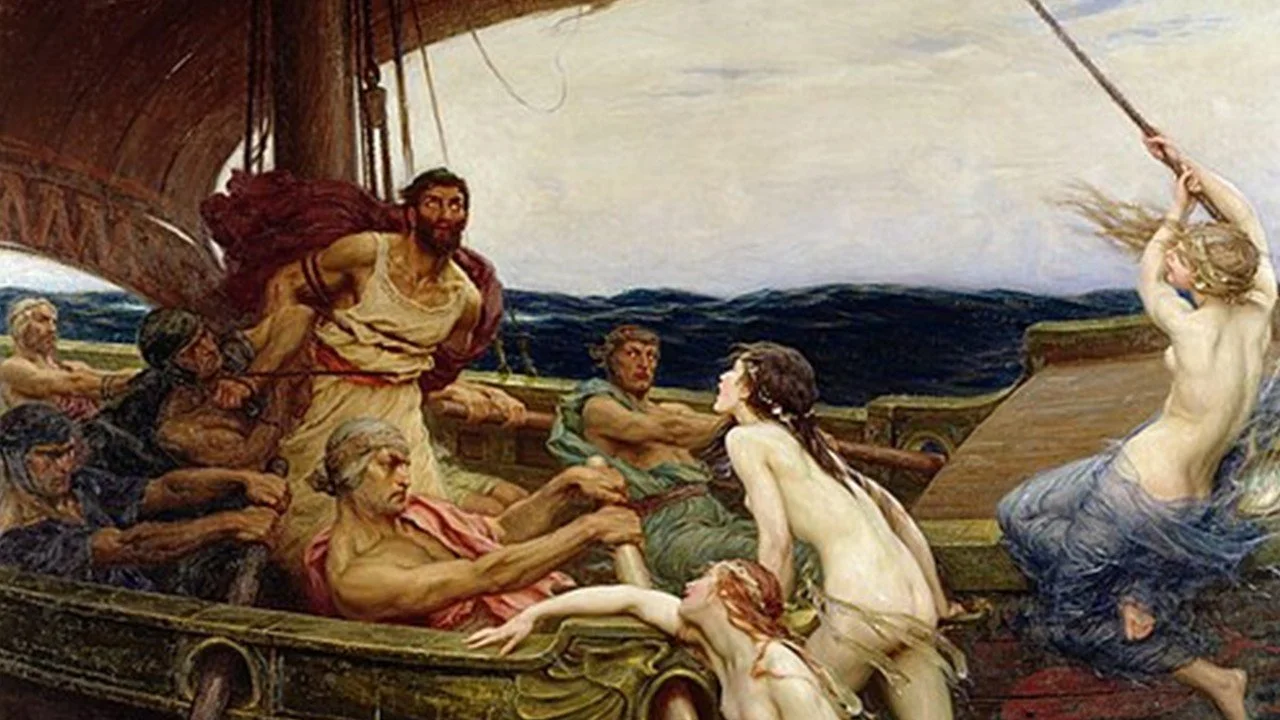
Image: Ulysses and the Sirens. Oil on canvas by Herbert James Draper (circa 1910). Licence: public domain.
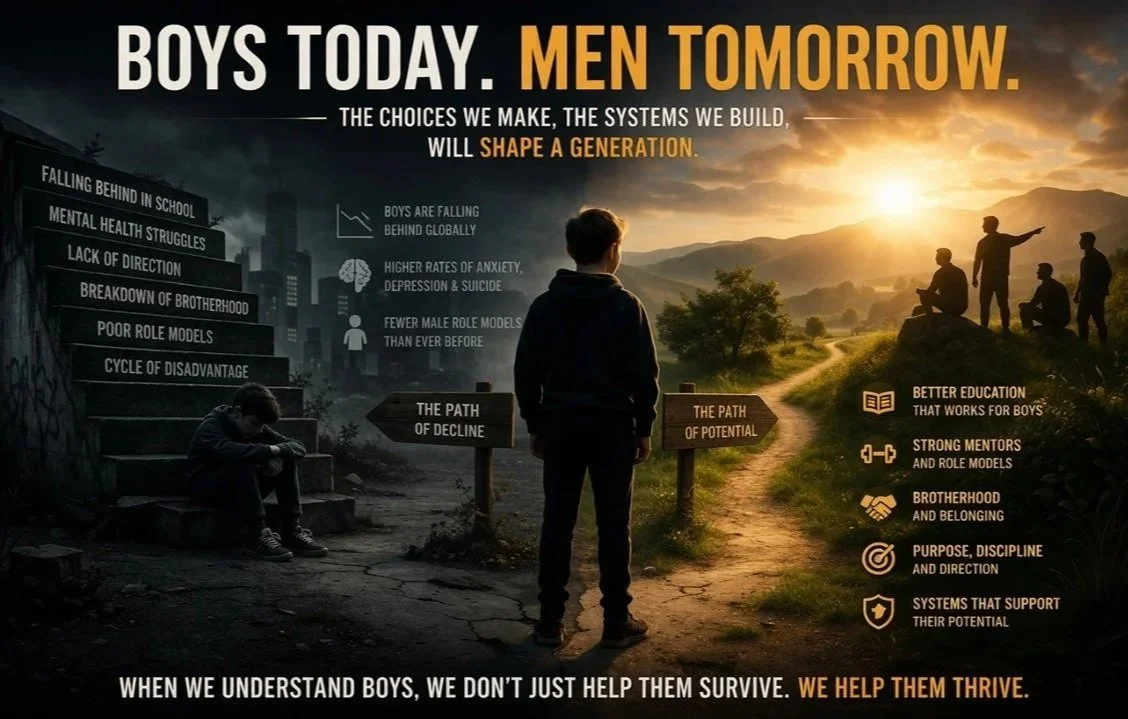
The modern man lives in a strange time. Never before has he had so much freedom. He can change professions, redesign family models, show uninhibited feelings, live out sexual orientations and identities, be a single father or consciously renounce all this and live as a single. Old role models have lost their self-evidentness. Society's expectations of men have become more open than ever before. And yet many men seem to be missing something. Not freedom, but orientation and thus the meaning of life. Nowadays, orientation is no longer automatically included in education and culture.
If you listen to young men today, you will hardly come across stories of positive male role models or even heroes. Self-doubt and insecurity appear much more frequently. What does it actually mean to be a good man today? What qualities deserve admiration? What can a boy use as a guide when the traditional images of the man have become brittle, but new models are hardly visible or not accepted? These questions are neither nostalgic nor reactionary. They are psychologically imperative.
“Our era makes it particularly difficult for young men to find themselves. They learn less from their fathers and teachers, because in too many cases they simply are not available.”
Identity never arises in a vacuum. Every person develops his or her self-image in the field of tension between the expectations of his environment, between past and present, and the stories that his culture tells about a successful life. Our era makes it particularly difficult for young men to find themselves. They learn less from their fathers and teachers, because in too many cases they simply are not available. All too often, this results in disorientation or a problematic, radicalized or excessively diffuse male identity. In this orientation vacuum, however, we can learn from figures who have accompanied us culturally for centuries. They must not be forgotten. Which has almost happened in the school system, often on the grounds that it is not feminist enough. Yet, it is precisely the ancient narrative of the Odyssey that offers everything that modern people need in a crisis of meaning and life, above all resilience and wisdom. Odysseus, in a deeper, transformed sense, can become a highly topical contemporary for today's boys and men. Such myths and grand narratives are the psychological memory of every living culture and, as enduring archetypes, can provide orientation and meaning, as C.G. Jung postulated.
The American psychologist Jerome Bruner once wrote that people understand and tell their lives in the form of stories. It is not facts that give meaning to our existence, but rather the narratives in which we place our lives. Viktor Frankl, founder of the sense-oriented psychotherapeutic school of logotherapy, formulated the same idea in a more existential way: Man does not live from happiness, but from meaning. And meaning arises where one's own life becomes part of a larger story that means a deeper meaning to the individual. If there is no meaning in life, more and more orientation crises arise. In today's world, this is especially true for men, for whom the old role models no longer seem sustainable, but new ones are still insecure and diffuse. At the same time, they are all too often devalued across the board or negatively stigmatised. Hatred of men (misandry) has penetrated deep into the middle of society, still largely unnoticed.
For years, the public discussion about masculinity has focused primarily on its problematic manifestations. Violence, abuse of power, emotional inaccessibility or sexual assault are intensively discussed. On the other hand, less attention is paid to the question of what positive developmental goals boys could pursue today. Role models have become rare, have dubious qualities or are simply negativized due to the widespread general misandric mood.
People don't develop just by avoiding mistakes. They develop by having something worth striving for and imitating in mind. This is what many boys lack today. In addition, disadvantages ("gaps") for boys are growing systematically without becoming public awareness: On average, boys achieve poorer educational qualifications than girls, leave school more often without a qualification and are more likely to end up in socially marginalized areas. Worse performance and cognitive abilities are implicitly attributed to them by educational staff (mainly women), as many psychological education studies show.
Problems also become more apparent later in life: Men have significantly higher suicide rates, live shorter lives and seek psychotherapeutic help less often. In addition, men die an average of 4.5 years earlier without causing an outcry in the health sector.
The British psychologist Martin Seager therefore speaks of ‘male gender blindness’ in current gender politics: While the disadvantages of women are intensively researched, financed in counter programs and discussed, specific problems of boys and men often remain surprisingly marginal and outside the public consciousness.
“Odysseus […] is separated from his homeland for a total of 20 years. His search becomes a symbol of trials, mistakes and aberrations, but also of resilience, perseverance and determination of a man.”
These findings concerning male and female health should not be played off against each other. The progress of equality is one of the great achievements of modern societies. But every social development changes the view of both sexes. When the narratives about women change, the narratives about men inevitably change as well. However, this must not lead to generalized negativity and devaluation. Today's task is to make being a man attractive and worth living for boys again, without resorting to the old role models. In order to show ways to successful manhood and deeper maturity, old archetypes with timeless messages can help. For some this might be a surprise, but in fact it is not. This is where the Odyssey and the new Odysseus mania come just in time.
The necessary return of Odysseus
Almost three millennia ago, Homer told in more than 12,000 hymnal verses in 24 chapters about a figure who has lost none of his fascination to this day. No other figure in European literature is currently receiving comparable revitalized attention. It is the veteran of the Trojan War, Odysseus, the king of Ithaca, who, according to Homer's stories, is separated from his homeland for a total of 20 years. His search becomes a symbol of trials, mistakes and aberrations, but also of resilience, perseverance and determination of a man. Odysseus embodies more than just strength, courage and power. He stands for the ambivalence of a man who was a hero, but also a traumatized war veteran. He has a special cleverness, cunning and perseverance. However, this is not enough to protect against a 10-year odyssey after the victory over Troy. Odysseus has to experience and endure a great deal, as Homer already explains in the first four verses of the Odyssey as an introduction and heading. He is characterized as “polytropos” which means the man of many ways, the multifaceted man, but not, as Emily Wilson, a feminist professor for ancient literature wrote in her 2017 translation of the Odyssee, a complicated man, This was pure misandry.
In a depth-psychological sense, therefore, his problem was that he did not arrive at himself through his war deeds, but moved further and further away from his inner self. This is the very basis of the Odyssee.
“How does he stay true to himself? How does he resist temptations? How does he survive severe losses? How does he preserve his humanity? And finally: How does he finally find his way home, to his identity? These questions are of astonishing topicality for men and boys today.”
In the long run, however, it turns out that it stands most for the ability to find orientation again and again, even in the most difficult situations. Even when he loses his course - and this often happens in the Odyssey, which is also ostensibly a seafarer's book with the "sailor's yarn" that was common at all times - he always finds it again. The story to be told begins after the end of the war for Troy. Homer is no longer interested in battle stories and victory in the Odyssey. It's about life afterwards. What happens to a person when the external battle ends? The inner doubts and suffering are at the centre of the epic. The internal wounds are worse than the external ones. Odysseus is now a seeker and no longer a hero. The focus is on questions such as: How does he stay true to himself? How does he resist temptations? How does he survive severe losses? How does he preserve his humanity? And finally: How does he finally find his way home, to his identity? These questions are of astonishing topicality for men and boys today.
Odysseus in the present
The modern man no longer fights against cyclops, sea monsters or Trojans. His opponents have other names. Nowadays, it's about pressure to perform, negativity, disorientation, permanent digital distraction, addiction and depression, loneliness and abandonment, experiences of failure and – very important – the feeling of meaninglessness in life. Or that quiet danger of adapting to the expectations of others so much that at some point you lose contact with your own inner compass. This is exactly where Homer's real greatness begins. It does not tell the story of a man who conquers the world, but the story of a man who overcomes the adversities of the world, which is often hostile to him. Not with flying colours, but just like reality treats him. With extreme effort, many deprivations and losses.
What Homer emphasizes is remarkable. Almost all later heroic stories tell of how a person changes the world. The Odyssey tells the story of how the world changes a person and how he reacts. Perhaps this is precisely the secret of its unbroken topicality. It is not a story about heroism, but rather a story of long maturation and growing inner resilience. Never in the history of mankind have the manipulative foreign influences been as strong as they are today. Mass media, propaganda techniques, social networks and restrictions on freedom of expression are Scylla and Charybdis of the 21st century. Thus, we need much of the Odyssey resilience for nowadays life.
To this day, the Odyssey is the deepest narrative of male resilience that our culture has produced. It shows the protagonist in a struggle with himself, the monsters on different islands on the way, and in interaction with the female heroines of the narrative. All these experiences show that true resilience does not begin where a person becomes invulnerable, but where all burdens and low blows do not lose the way to themselves. This becomes clear in the handling of seductions (Circe, Calypso), whispers (sirens) and the well-meaning advice of the goddess Pallas Athena.
The war is over – now the real journey begins
The war is over, but now the narrative begins. This makes the Odyssey a unique work of world literature. It is not an epic about war, and certainly not a glorification of war, but shows the difficult and often bleak life of a former hero who is, at the end, only a traumatized veteran and seeker. Homer is not interested in victory, but in the question of what becomes of a person after the external struggle is over. In doing so, he touches on a topic that has lost none of its relevance to this day. The processing of what has been experienced, the traumas and losses is in the foreground, as is the addiction to home and identity.
“Many soldiers do not experience the most severe psychological stress at the front, but only afterwards on their way home or at home. Managers get into existential crises after professional successes. Top athletes report deep emptiness after great victories.”
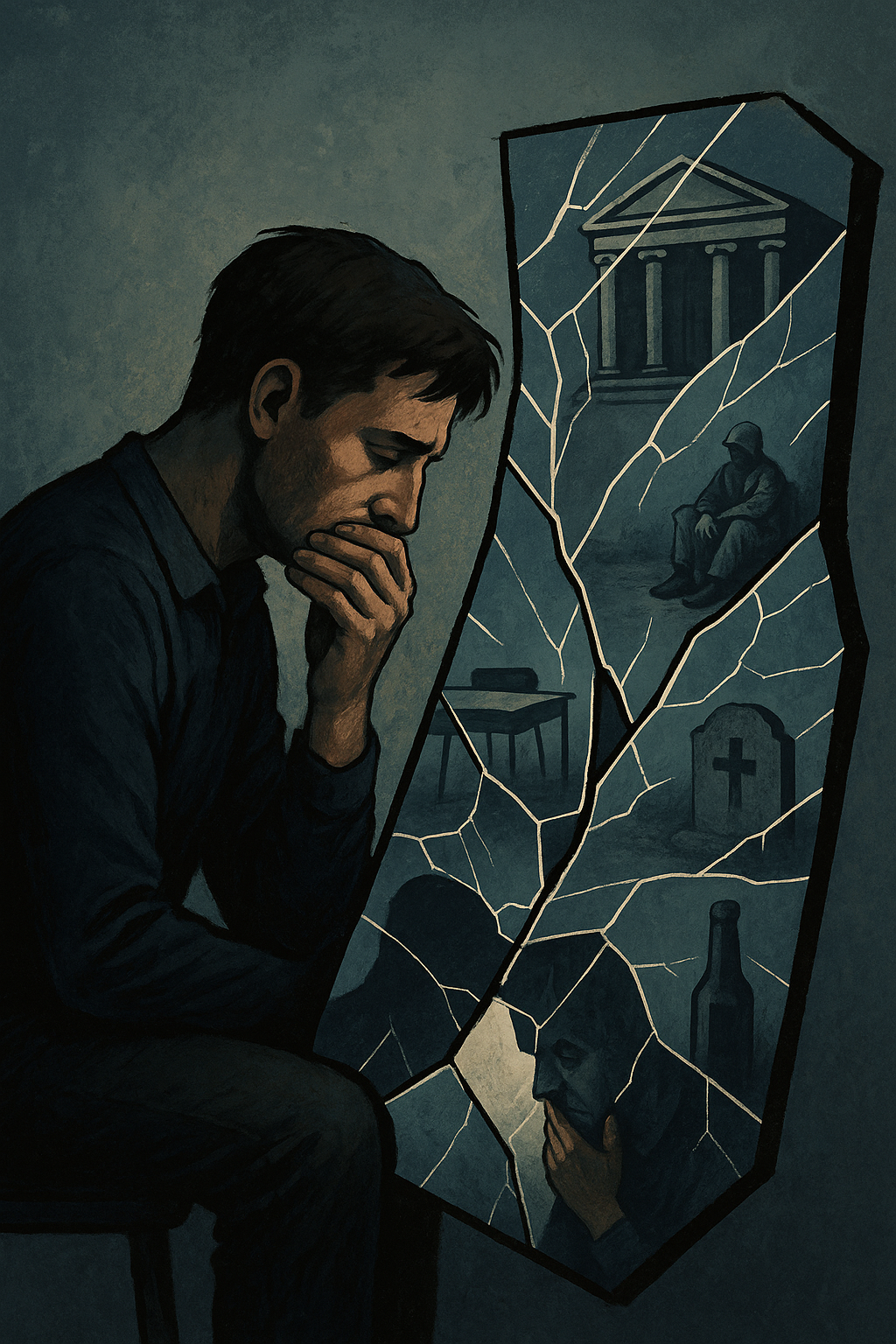
Even the modern man today fights less often against armed enemies on the battlefield. His arguments take place in other places: at work, in relationships, in economic insecurity, in family conflicts, in unwanted separation from one´s own children or in the silent struggle with his own inner self. He fights against excessive demands, loneliness, addictions, loss of meaning or the creeping experience of losing sight of himself. Often also against negative stereotypes of toxicity and violent behaviour. Modern psychology knows this phenomenon well. Many soldiers do not experience the most severe psychological stress at the front, but only afterwards on their way home or at home. Managers get into existential crises after professional successes. Top athletes report deep emptiness after great victories. In this context, Viktor Frankl spoke of the "existential vacuum" – the state in which external goals are achieved, but inner orientation is lost. Many men lack an inner compass after such experiences. Often it is as if the inner mirror of the self is broken. Homer describes this very experience almost three millennia earlier. It is therefore generally human and occurs especially in the lives of men who have suffered a lot and do not find their way out.
The Long Time of Trials
If you read the Odyssey not as an adventure epic, but as a story of search and development, its character changes completely. The islands on which Odysseus lands are then no longer geographical places, but landscapes of the human soul. Each location confronts him with a different fundamental question of life. Every trial calls into question a virtue without which maturation is not possible. This is precisely where Homer's psychological genius lies.
“The islands on which Odysseus lands are then no longer geographical places, but landscapes of the human soul. Each location confronts him with a different fundamental question of life. Every trial calls into question a virtue without which maturation is not possible.”
Polyphemus – The Power of the Unbridled I.
The polyphemus story stands for the man who can control his emotions even in the face of the greatest dangers and losses. Circe – The Danger of Self-Forgetfulness. The story of the encounter with Circe, which in the end lasts a whole year, shows how the loss of inner strength due to external seduction and how a man can withstand it. In his books on male development, the American psychoanalyst James Hollis describes this process as a creeping loss of one's own vocation. Many people do not fail spectacularly. They are moving away from themselves step by step. They still only function and meet expectations. They are successful. And at some point they realize that they have made a career, but have lost their inner compass in this process. It is a silent self-alienation.
In the end, Odysseus finds his way again by succeeding with cleverness and clarity in winning Circe's support. He conquers her with devotion and sex and gets her loyalty and closeness. As soon as he perceives being with her as superficial and narrow, he has to leave her in order not to lose himself any further.
The Sirens – Why Freedom Needs Self-Limitation
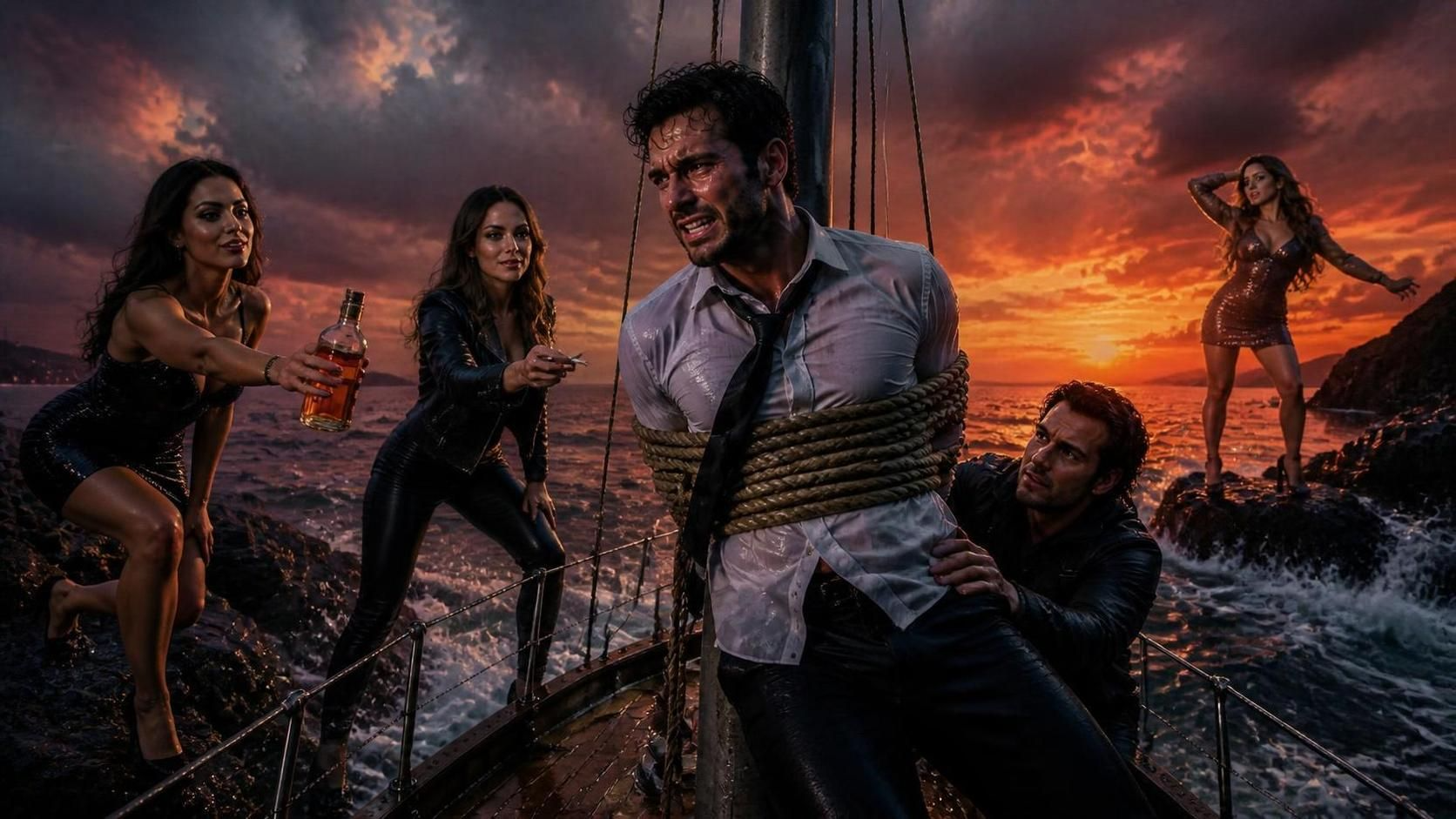
This is about false promises. They promise knowledge, insight, happiness, and final wisdom. Everything. They are the perfect seductresses. Whoever follows them will perish. Odysseus decides for a third way, and this makes up his special cleverness. He closes the ears of his companions with wax. He has himself to be tied to the mast of his ship in order to listen to their seductive songs, but not to surrender to them – and thus not to have to follow them into sure death. Odysseus does not trust his willpower at the moment. He knows very well the limits of humans in the face of manipulation and seduction. He knows that no one remains master of himself in every situation. Therefore, he does not decide at the moment of temptation, but beforehand. The truly free person is the one who can give himself reasonable rules. Freedom needs responsibility and rules. Then he can survive and succeed. The rules serve self-protection and the development of personality and maturity. Today more than ever.
Calypso – The most dangerous temptation and the strongest dependence.
Odysseus' greatest temptation lies neither in violence nor in eroticism. It is the convenience of everyday life. The nymph Calypso offers him everything a man usually strives for. Eroticism, closeness, security, comfort, total provision, loyalty, devotion and even immortality. Nevertheless, Odysseus leaves her after seven years. This decision shows the deep motives in his actions. Calypso offers him a pleasant, carefree and highly erotic life. It takes away any risk, but also any development of his own. On closer inspection, it keeps him in dependence, deeper in captivity. A golden cage for a man who wants to experience, act and create. Viktor Frankl, Austrian psychiatrist and concentration camp prisoner, formulated a fitting thought for the 20th century, which seems like a commentary on this scene: Ultimately, man does not strive for happiness. He strives for meaning. Happiness can always arise from meaning. However, meaning does not arise from convenience. Odysseus therefore decides against security and for his further path. This irrepressible pursuit of goals, tasks and content shows itself as a deep form of male resilience, as vividly described by the experienced American male and couples therapist David Deida in his book "The True Way of the Man". This also includes not wanting to avoid pain at all costs, but the willingness to accept it where it inevitably belongs to life. All of these trials ultimately lead to the same question: What must a man preserve so that he does not lose himself?
What Men Are Really Looking For Today.
At this point, a crucial question arises. Why does the story of Odysseus still touch us? So much, in fact, that Hollywood blockbusters are made with the old material. Although the Odyssey tells many legends and detailed sailor's yarns in addition to a historical core, the entirety of the narrative is timeless in its deep structure. It tells of an anthropological constant. Man must find his way to find his self. For men, however, this task has a special character. For thousands of years, they were the ones who set out, hunted, fought, traded, provided for families or waged wars, while women mainly looked after the house and raised the children. This division of labour was not easy and by no means just, often brutal and often associated with considerable personal sacrifices. All too often, men were the real victims, paying for their destiny with death or serious injuries. Men had to prove themselves again and again. They developed a variety of strategies for this – from mere combat and diplomatic skill to cleverness, cunning and deceiving. All this is Odysseus.
Modern society has fundamentally changed many of these roles – and for good reasons. Education, partnership and family can be shaped more freely today than ever before. Nevertheless, basic psychological questions do not simply disappear with social changes.
“the Odyssey does not tell of heroism, but of the virtues necessary for character formation. The cultural decline of the West is based on the lack of real virtues – gratuitousness, conformism and wokeism count as the opposite – and the loss of orientation in terms of immortal values and morals.”
Especially nowadays, many men ask: What is worth living for or even fighting for? What am I responsible for? How do I find meaning in my life? This is exactly where the Odyssey becomes surprisingly modern. For it does not answer these questions with success, power or wealth, but with patience, clarity, determination, i.e. overall with maturation. The relevant virtues today are the same as they have been 3,000 years ago: prudence, courage, justice and wisdom. The disappearance of the concept of virtue from modern everyday life alone shows what the core problem is: the arbitrariness, ambiguity and diffusion in relation to values, morals and behaviour.
Virtues are timeless
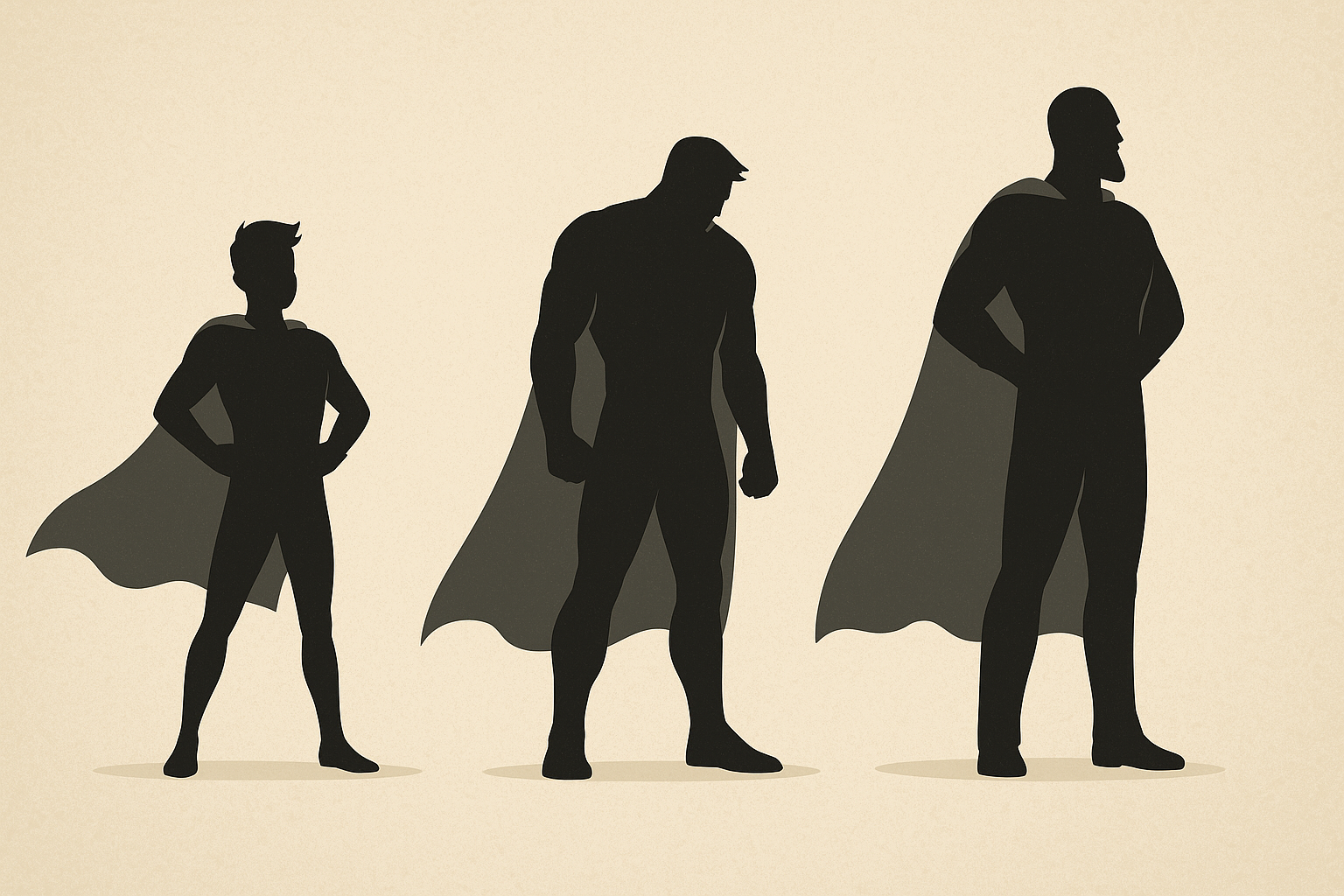
Ancient philosophy did not understand virtues to mean moral strictness, but the practice of good character traits. Aristotle spoke of areté, human excellence. In his opinion, virtues arise neither through good intentions nor through theoretical knowledge, but through repeated exemplary action. Courage was developed by acting courageously. Prudence came about through prudent decisions. Character was not a possession, but a lifelong practice. Often these virtues are only achieved by growing maturity during life. Odysseus embodies exactly this understanding. He is not remarkable because he is flawless. He is remarkable because each of his trials shapes his character deeper. The young, cunning war hero is not the characterful person who strands on the beach of Ithaca 10 years after the end of the war.
Defeats give rise to prudence, temptations to self-control, losses to humility, experiences to maturity. In this sense, the Odyssey does not tell of heroism, but of the virtues necessary for character formation. The cultural decline of the West is based on the lack of real virtues – gratuitousness, conformism and wokeism count as the opposite – and the loss of orientation in terms of immortal values and morals. This certainly does not mean the often invoked value-based politics of recent years which only is superficial. This means a chimera for left-wing, socialist politics without deepness, i.e. another deception like the song of the sirens. The practice of virtues is timeless and does not depend on wrong confessions.
The magic word is resilience
The Odyssey is all about resilience, the ability to withstand even the greatest stress. Resilience does not mean becoming invulnerable. Resilience means finding one's way despite vulnerability and defeats, revising mistakes and readjusting one's inner compass. This explains how Odysseus can fail again and again without losing his dignity. The classical philologist and author Raimund Schulz, University of Bielefeld, rightly sees Odysseus as a person full of mistakes and weaknesses, but who is able to get the best out of his strengths and never completely despairs of himself.
“Odysseus does not change because others change him. He changes because every trial forces him to evolve.”
Resilience also explains why returning home is more than just returning to Ithaca in the end. It is the return to that man who, despite all temptations, defeats and dangers, has not ceased to want to become himself. This is exactly the deep, often not even recognized, longing of many men of our time. Odysseus does not change because others change him. He changes because every trial forces him to evolve.
The Odyssey is not about power or dominance. Nor is it about the return of past, dysfunctional role models, but about an orientation that reconciles freedom and responsibility. The Odyssey provides the timelessly fitting answers. The seeking man is strong and sensitive, clear and empathetic, clever and reflective. From today's point of view, the fierce and bloody revenge on the suitors, who harassed his wife Penelope for years, and on the unfaithful maids and servants, also appears psychologically as a consistent action. It stands for consistency and clarity and can only be understood if it is transferred to today's non-agrarian and largely unstructured world of the 21st century. His final action there stands for regaining his position in accordance with his wife (Penelope) and son (Telemachos) and fulfilling his way. The man who has found himself shows not only empathy but also clarity and self-confidence - in the face of all adversities and hostilities.
Odysseus and the women
Finally, a word about Odysseus and women: Raimund Schulz sees him as the first great women “whisperer” in literature history. Whether or not this is true, in any case, it is striking that in the second part of the Odyssey encompasses numerous encounters with women. They shape Odysseus so much that he also spends most of the ten years until his return home with them. He is aware of his masculinity. He must have possessed a very special libido and potency, which also made him the favourite of these women. But women also teach and perfect it, which is essential and important. These include Circe, Calypso, Nausicaa, of course especially Penelope and, in a spiritual sense, the divine Athena. She sees his growing wisdom as a mirror of herself and therefore loves him as goddess could love a human being in ancient times. Her anima parts make Odysseus mentally rich and diverse. Without these shares, he would be a warhorse and daredevil. But with her parts being part of his soul, he is not only the clever, cunning hero, but also matures into a man with depth, self-control, clarity and consistency.
And he is a man in his "prime". For Penelope, the best conceivable partner. The secret of the two is their like-mindedness (“homophrosyne”) that wonderfully confirms the results of today's partnership research. Only those who develop and pursue the same and similar content, values and goals over years and decades will be deeply satisfied in a couple relationship and, on top of that, live healthier and thus even longer.
Scroll down to join the conversation
Disclaimer: This article is for information purposes only and is not a substitute for therapy, legal advice, or other professional opinion. Never disregard such advice because of this article or anything else you have read from the Centre for Male Psychology. The views expressed here do not necessarily reflect those of, or are endorsed by, The Centre for Male Psychology, and we cannot be held responsible for these views. Read our full disclaimer here.
Like our articles?
Click here to subscribe to our FREE newsletter and be first
to hear about news, events, and publications.

















Have you got something to say?
Check out our submissions page to find out how to write for us.













.