
Beyond the Stereotype: Men, Emotional Intelligence and Social Expectation
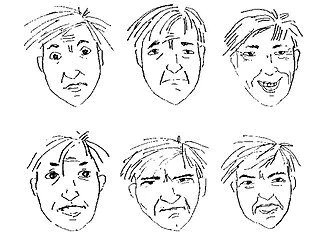
Image: Six basic emotions that people recognize in the same way, from the Estonian Association of Communication Trainers, licensed under the Creative CommonsAttribution-Share Alike 4.0 International license.
The claim that men have lower emotional intelligence is often presented as fact in popular psychology, therapy spaces, and social discourse. The problem is that emotional intelligence research remains vulnerable to epistemic bias, particularly when broad conclusions are drawn after collapsing unlike constructs into a single label.
This vulnerability arises because emotional intelligence is not a single, unified ability. It is measured through multiple frameworks, often relying on self-report, shaped by social desirability, and sensitive to culturally legible forms of emotional expression.
As a result, claims that men have lower emotional intelligence are not stable across definitions of the construct, and cannot be treated as general conclusions about emotional capacity.
This distinction matters because discussions about emotional intelligence often focus on its most visible forms. The ability to talk about feelings, openly express emotion and provide verbal affirmation are routinely treated as evidence of high emotional intelligence. These are undoubtedly valuable skills, but they are not the only emotional skills. The capacity to regulate emotions under pressure, tolerate distress, maintain relationships through action, set boundaries, or remain functional during adversity are also forms of emotional functioning. The question therefore becomes not whether emotional intelligence is present, but which expressions of emotional intelligence are most readily recognised, valued and measured.
The most widely used EQ instruments include the Bar-On EQ-i, the Trait Emotional Intelligence Questionnaire (TEIQue) and the Schutte Self-Report Emotional Intelligence Test (SSEIT), all of which ask people to judge their own emotional abilities. As Petrides and colleagues (2007) argue, this is about how people perceive their emotional intelligence, rather than demonstrated performance. This is often shaped by social desirability bias. People do not always report what they are; they report what they feel is desirable and socially viable. A man may report lower emotional intelligence because he has internalised the expectation that men have lower EQ, or because he does not feel he demonstrates the socially understood version of emotional intelligence. Women may report greater emotional intelligence because it is expected and accepted, or may report factors that feel socially desirable rather than fully accurate.
There are also performance-based measures, such as the Mayer-Salovey-Caruso Emotional Intelligence Test (MSCEIT), but care is still needed in how these systems are scored and interpreted. If the scoring frameworks are shaped by dominant verbal, social, or ideological expectations of emotional intelligence, then even performance-based tests may miss important parts of the construct.
We therefore need to expand our ability to verify emotional intelligence beyond the forms that support one recognised route to resolution. It should also include the capacity to adapt to different ways of understanding, managing and resolving a problem. That adaptability, including the ability to recognise what another person may need rather than simply offering what is most socially legible, is also part of empathy and emotional intelligence.
When those measures are shaped by social norms, particularly around gender, the results become harder to interpret. If empathy and emotional expressiveness are more visible and socially affirmed as indicators of emotional intelligence, then they become easier to recognise, easier to report, and easier to score. Other forms of emotional intelligence, such as regulation, restraint, containment, or the ability to act under pressure, may be less readily named as emotional skills, even though they sit within the same domain of emotional functioning. The issue is not just difference. It is which differences we choose to notice and count.
Yet many measures of empathy that are treated as indicators of high emotional intelligence privilege spoken affirmation and emotional articulation. In doing so, they risk narrowing the construct itself. Action-based forms of care are not necessarily absent, but they are less likely to be recognised, less likely to be captured, and therefore less likely to register as emotional intelligence within the model being used. This is partly because, socially, these forms of care have become less recognised as emotional intelligence, and in some cases are even described as an erroneous way of being emotional.
Martin Seager and John Barry's concept of gamma bias offers another lens through which to view this issue. Gamma bias proposes that society often magnifies female disadvantage and male privilege while simultaneously downplaying female advantage and male disadvantage. Whether one agrees with the framework in full or not, it raises an important question for emotional intelligence: are some forms of emotional functioning more visible because they align with culturally favoured narratives about vulnerability, care and emotional competence? If so, differences in recognition may tell us as much about social perception as they do about emotional capability itself.
“…emotional intelligence is not only about recognising or expressing emotion. It also includes […] emotional restraint, silence, distancing, boundary setting and action-oriented support”.
From that perspective, the question becomes less about whether men have lower emotional intelligence, and more about how the construct itself is framed. If the definition leans toward certain expressions, then it is unsurprising that those expressions become the benchmark against which others are measured. These benchmarks often favour female-coded ways of showing empathy rather than male-coded ones. Even in common relationship literature, embodied empathy and practical support can be treated as controlling or unhelpful behaviours when the person simply wishes to be heard.
Social expectation plays a role here too, as social/cultural norms define how emotional intelligence is perceived. It does not only shape behaviour, it shapes reflection on behaviour. When individuals respond to self-report measures, they are not reporting in a vacuum. They are responding through an internalised sense of what is appropriate, desirable, or valued. That can shift responses in ways that are systematic rather than random, which means that differences in scores may reflect differences in expectation as much as differences in capacity.
According to Higgins’ self-discrepancy theory. People do not exist in a single state. They move between who they are, who they would like to be, and who they feel they should be. The strain between those positions is constant and regulating that strain is itself a form of emotional functioning. The idea of self-discrepancy theory here can also explain mis-reporting regardless of gender, based on what the individual perceives to be a desirable trait.
Seen this way, emotional intelligence is not only about recognising or expressing emotion. It also includes how someone manages that distance. How they regulate, contain, and hold steady as they move between expectation and reality.
In this way, emotional restraint, silence, distancing, boundary setting and action-oriented support can all be understood as elements of emotional intelligence, and as different ways of expressing empathy. There is a tendency to pathologise these traits, as though we should all behave in a prescribed way, and to act outside of that is somehow less emotionally intelligent.
Seeing these actions as negative creates a separate challenge: the person being empathised with may fail to see the value in what is being offered, losing support and potentially damaging the relationship because they have been socially conditioned to expect empathy in a particular form.
Extending these arguments to practical examples of a two-tier value system within emotional management, consider questions of conflict and resolution. Different emotional responses are often assigned different values, with immediate engagement and verbal processing frequently regarded as healthy or emotionally intelligent, while distance, silence or delayed responses are more readily interpreted as problematic. Yet these responses can also serve important regulatory functions. Creating space can allow time to process both the situation and the emotions involved, whereas pursuing an immediate resolution can itself become intrusive or harmful. Here, I am referring to the overuse of the term stonewalling in situations where conflict has escalated to a point that one person needs distance in order to regulate before returning to the discussion, or before recognising that resolution on that particular issue may not be possible.
Are men less emotionally intelligent? The more accurate position is that this is a loaded, emotionally charged, and epistemologically unstable question.
Observed differences in emotional intelligence are better understood as differences in expression, reporting, and social interpretation, rather than clear differences in underlying capacity. When emotional intelligence is defined through socially favoured forms of expression, those who align with those forms are more easily recognised, measured, and valued. Also, framing emotional intelligence as something one group lacks risks turning a measurement claim into a social judgement, where differences in style are interpreted as deficiencies.
The most emotionally and socially intelligent response is not to rank one form above another, but to recognise the limits of the construct itself and adapt to different forms of emotional communication.
Scroll down to the comments section to join the discussion
Disclaimer: This article is for information purposes only and is not a substitute for therapy, legal advice, or other professional opinion. Never disregard such advice because of this article or anything else you have read from the Centre for Male Psychology. The views expressed here do not necessarily reflect those of, or are endorsed by, The Centre for Male Psychology, and we cannot be held responsible for these views. Read our full disclaimer here.
Like our articles?
Click here to subscribe to our FREE newsletter and be first
to hear about news, events, and publications.





















Have you got something to say?
Check out our submissions page to find out how to write for us.














.