


Image. Tense penalty shootout at the meeting. Concept by John Barry, rendered using AI (Duck-ai).
Success in many enterprises comprises many factors, including knowledge, skill, ongoing practice, tenacity, an understanding of the bigger picture, and confidence that what you want to do is achievable.
“confidence is not something evident generally in English football amongst all the top players, neither in 2018 nor 2026”.
In the FIFA World Cup England vs Sweden match in 2018, the Telegraph news story commented on Harry Kane after his carefully timed goal, saying that at age 21 he had “always been a player with unwavering confidence in his own abilities”. Les Ferdinand, former under-21 coach at Tottenham, confirmed: “What he was, he was very single minded. He always knew precisely where he wanted to go”. At the time of writing (26th October 2026) England Captain Kane has just been awarded the immensely prestigious “Ballon d’Or” 2026 , only the fifth Englishman to win the award since 1956. Kane’s contributions helped England to be placed third in FIFA 2026. However, that confidence is not something evident generally in English football amongst all the top players, neither in 2018 nor 2026.
Watching the FIFA 2026 semi-final football match between England and Argentina on Wednesday July 15th, it was really interesting to see the psychological dynamics being played out on the pitch. The cameras zoomed out and in, showing distance perspectives of the whole field alternating with close up shots of the players.
What I saw was a complete contrast between the confidence displayed by the English players in relation to the Argentinian ones, who, perhaps not surprisingly, won the game (2-1). I particularly remember the Argentinian player Messi whipping up fan support in the stands after Fernandez’s goal. I felt the English team begin to lose heart from that moment.
“When boys and men feel safe, connected, purposeful, and supported, everyone benefits”.
Recent research shows that many men struggle with confidence on a daily basis. Dr Alex Maxwell, president of the British Society of Lifestyle Medicine, comments on a 2025 report which highlights what he has witnessed in his work with teenage boys: “Honestly, the predominant emotion was sadness that so many men are struggling. There was also a sense that this legitimately represented my experience caring for and supporting boys and young men. I also felt a real sense of urgency because the scale of this is not niche. It is widespread and national.” Maxwell continues: “Supporting boys and men is not a distraction from equality. It is a requirement for it. When men do better, society does better. When boys and men feel safe, connected, purposeful, and supported, everyone benefits.” He then comments on the loneliness that so many men experience: “45% of men have thought about self-harm or suicide…almost two-thirds of men say they have to look out for themselves because no one else has their back.”
The Mental Health Foundation discusses the fact that many men worry about their physical appearance – something that used to be much more a female problem. Referring to a 2019 report, it is stated that almost three in ten adult men (28%) aged 18 and above have felt anxious because of body image.
“nearly as many men as women are unhappy with how they look”.
One in five (21%) said concerns about body image had caused them to dress in a way that hid certain parts of their body in the last 12 months.
The relatively new term “looksmaxxing” refers to a popular idea which results in men believing that their intrinsic worth depends on their physical appearance. It leads to depression, anxiety and BDD (Body Dysmorphic Disorder). One American study revealed that: “the percentage of men dissatisfied with their overall appearance (43%) has nearly tripled in the past 25 years and that nearly as many men as women are unhappy with how they look.”
The National Office for Statistics (2026) confirms these worrying figures by summing up general life satisfaction differences between men and women. While 73% of women reported high levels of hope for the future, the figure for men came in at only 65%.
If we add to this male underachievement at school and university, we then have a context for the high male suicide rates (3/4 of all suicides in the UK). The House of Commons Research Briefing (2024) stated that “boys are more than 1.5 times more likely to be suspended than girls, and more than twice as likely to be permanently excluded.”
As a psychotherapist I work every day with people who have essentially lost confidence in their ability to manage their lives effectively. The reasons for this are varied, ranging from feeling overwhelmed and unable to prioritise what is important, to genuinely “not knowing” what to do about a particular problem. For men this confusion often relates to being unsure as to what women want, and to feeling alienated when after a breakdown of the relationship, access to children is restricted. Suicide in men is most common after a breakdown in a partnership or marriage.
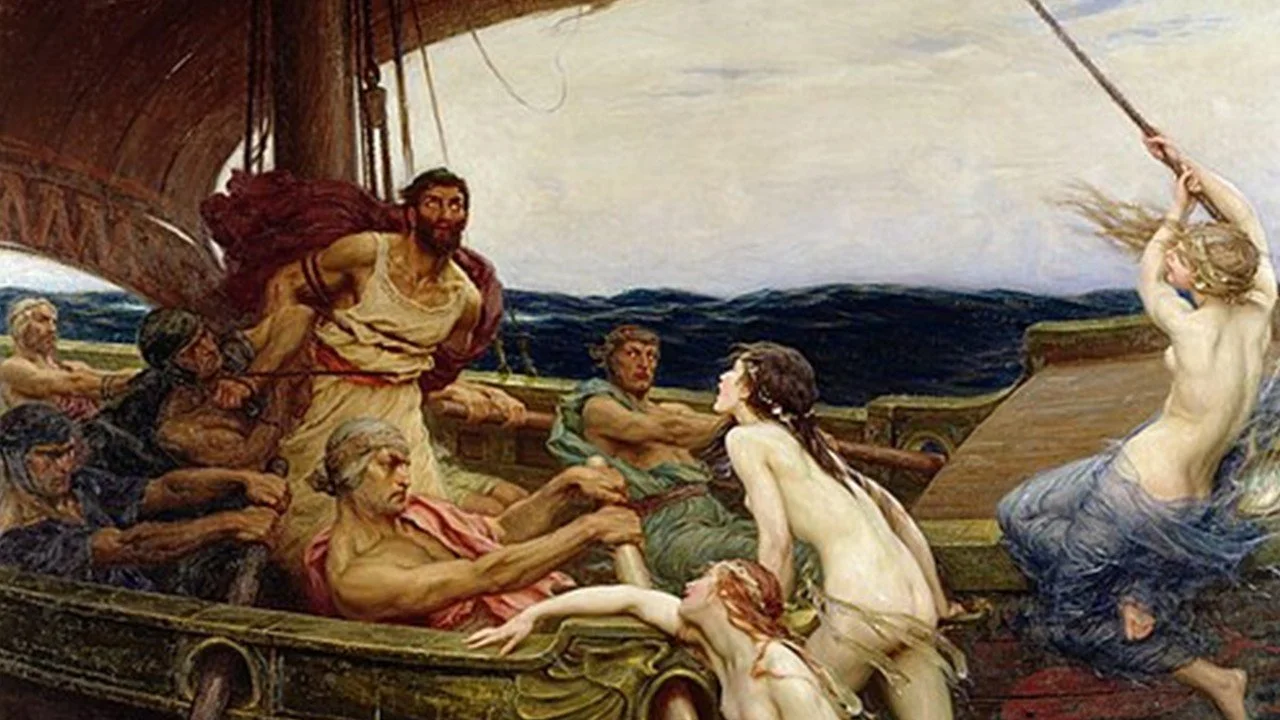
In the Maritime tradition, protocol dictates that women and children should be evacuated first during emergencies, implicitly prioritizing female survival over male survival. Sometimes historians attribute this idea to an 1852 social convention following the sinking of the HMS Birkenhead. However, in evolutionary terms the idea of men being more expendable has always been related to ensuring the survival of the physically weaker and more vulnerable.
Cultural expectations have evolved historically, so that men have continued over generations to sacrifice their own needs to provide for and protect the women in their lives. A change in female ambitions from home-based child rearing to workplace opportunity and financial independence, has led to a focus on what has made this a slow process. Feminist perspectives still blame “the patriarchy” for the late flowering of equal opportunity and the oppression of women, but fail to notice that times have changed, and that the “failure to launch” of young men is a serious issue.
“I find it quite extraordinary that so few people seem to notice not only that men too can be victims of violence, but also victims of misandry campaigns spearheaded by women”.
Getting back to football, it is arguable that British men do better in football under a nurturing style of management which bolsters confidence, as opposed to a more detached pushing of tactics to win.
This is set against the backdrop of a gradual government led change from pride in British achievements to abject apologies for our “colonial” past along with a minimisation of facts such as Britain leading the way in the abolition of the slave trade. There was a time when Britain, a small but gallant and audacious nation, “ruled” the waves, but now we have reframed this period of our past as “oppression”, whilst stopping short of a blanket apology in the ongoing calls for “reparative justice”.
Argentina’s national confidence and sense of pride however, remains strong, in spite of a turbulent past. Lionel Messi comments (06.10.26) that he is “grateful and proud to be an Argentine” as he bid farewell to the national football team, playing his last-ever game for the Albiceleste in a 3-0 win over Benin in a friendly match. He added that the Argentine team always felt “like we were playing at home, everywhere”, in spite of ultimately losing the FIFA World Cup 2026 to Spain (1-0).
“We talk a lot about the importance of diversity, but the specific needs of boys and men often escape our notice.”
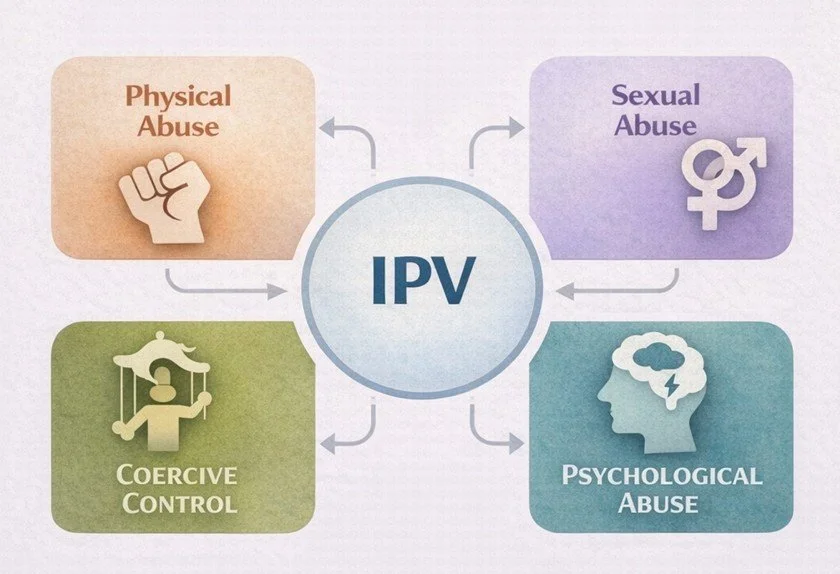
Where does this leave our men, and how does a confident sense of personal identity feed into a sense of national pride? It is telling that on the same day that Kane’s triumph in being awarded the “Ballon d’Or” made newspaper headlines, the British government announced plans to pour vast sums of money (15 million over 3 years) into an “Anti-Misogyny” campaign. I find it quite extraordinary that so few people seem to notice not only that men too can be victims of violence, but also victims of misandry campaigns spearheaded by women. In the year ending March 2025, an estimated 1.5 million men aged 16 and over in England and Wales reported experiencing domestic abuse, accounting for roughly 6.5% of the male population. The numbers are probably significantly higher, as men are typically more reluctant to come forward with the humiliating facts about female abuse.
We talk a lot about the importance of diversity, but the specific needs of boys and men often escape our notice. The “Failure to Launch” of our young men, not just on the football field but in the work place, (gaining fewer qualifications than women, living at home longer and more often out of work), should concern us all.
As we come close to International Men’s Day on 19th November 2026, it’s good to consider what initiatives we can actively support. As this year’s slogan says, “The Future is Everyone”, and that means genuine collaboration and respect between female and male.
Scroll down to the comments section to join in the discussion
Disclaimer: This article is for information purposes only and is not a substitute for therapy, legal advice, or other professional opinion. Never disregard such advice because of this article or anything else you have read from the Centre for Male Psychology. The views expressed here do not necessarily reflect those of, or are endorsed by, The Centre for Male Psychology, and we cannot be held responsible for these views. Read our full disclaimer here.
Like our articles?
Click here to subscribe to our FREE newsletter and be first
to hear about news, events, and publications.






















Have you got something to say?
Check out our submissions page to find out how to write for us.


















.

London Transport trains are used by people of all kinds from all over the world, including ordinary people from cultures where staring is not seen as threatening e.g. Spain