


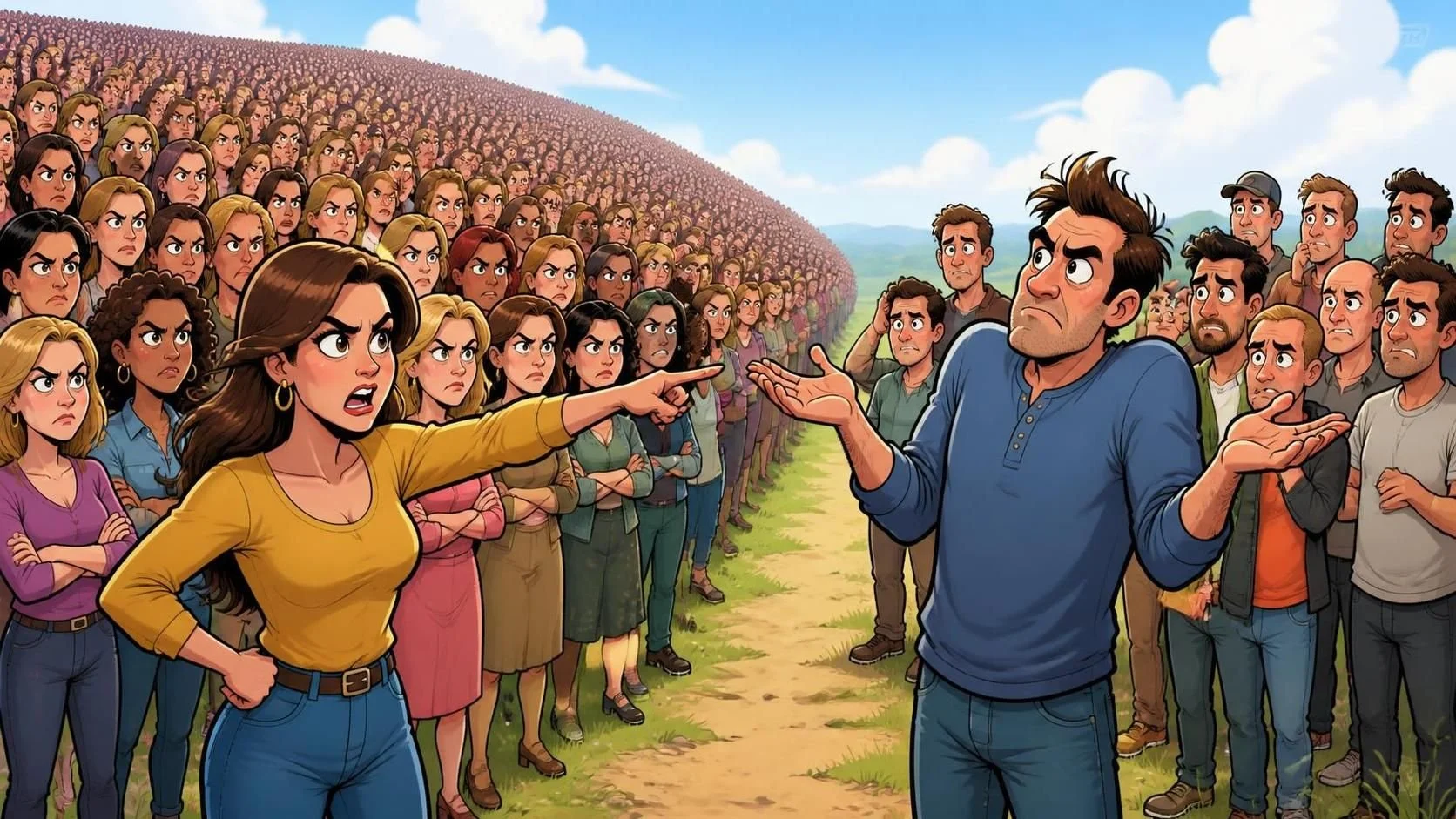
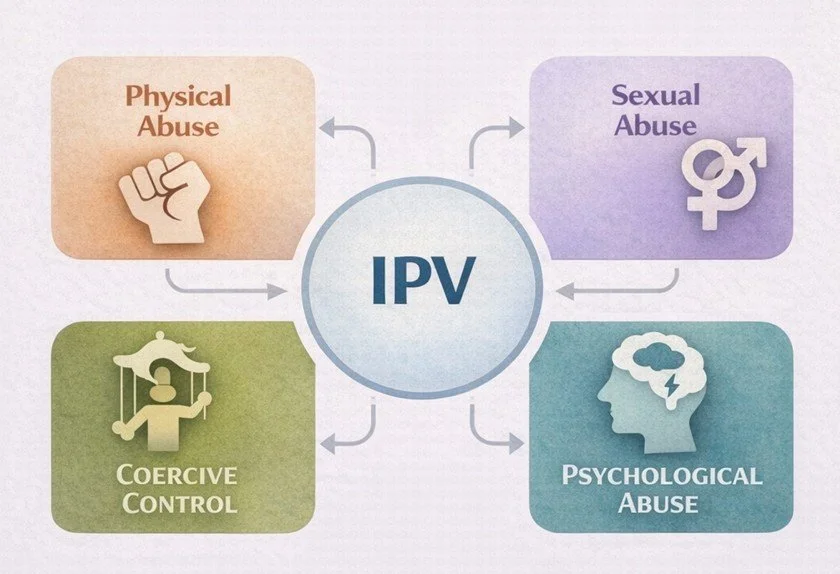
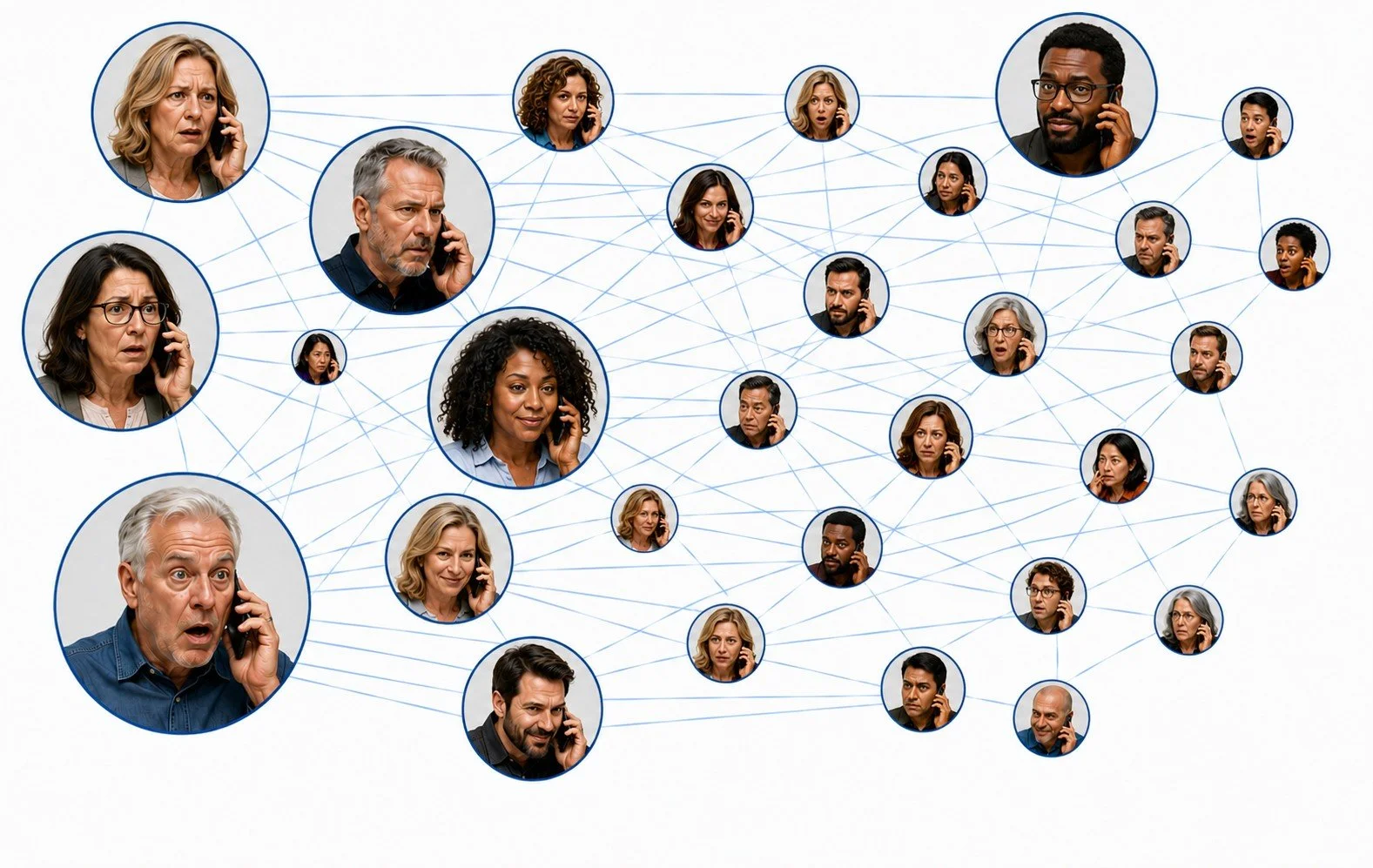
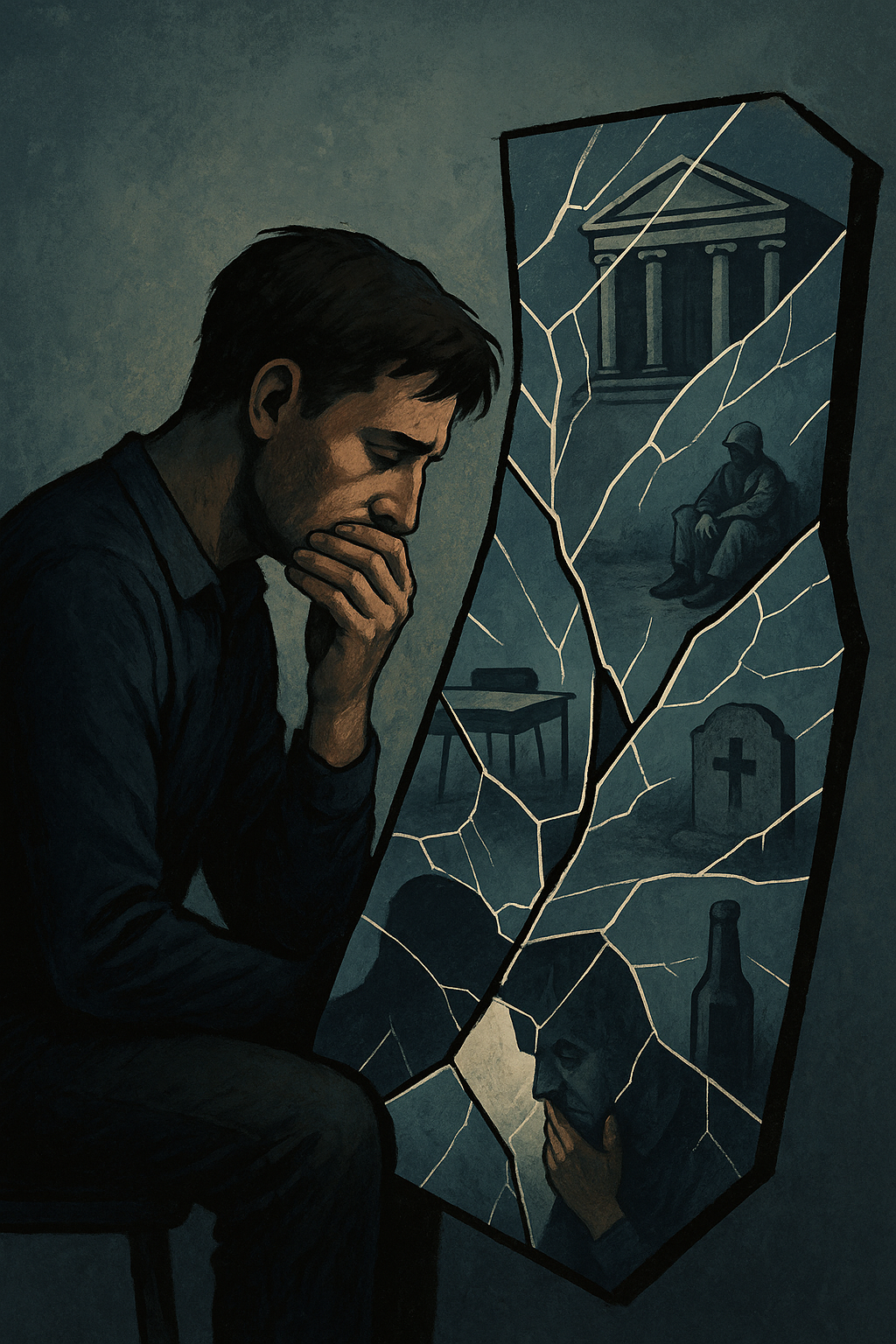
Image: The co-construction of a boy’s
Identity. Concept by John Barry, rendered using AI (GPT Luna 6).
The problem is not only how masculinity is described
When I completed my undergraduate degree in 2020, I became fascinated by the growing prominence of the term “toxic masculinity”. I found the phrase troubling because it appeared to move easily from describing harmful behaviours or restrictive norms to framing maleness itself through deficit. It seemed to position boys and men as needing to be corrected before asking what a positive, meaningful or self-directed male identity might look like. More recent research has similarly questioned approaches that concentrate on what boys and young men should not do without also offering agentic ways of understanding who they might become (O’Gorman et al., 2025).
This concern with negative framing developed into my undergraduate dissertation, which explored how masculinity is constructed through conversation. The research took place over Zoom during the first pandemic lockdown, after an intended in-person focus group had to move online. Two men and two women discussed what masculinity and being a man meant to them. A four-person study cannot answer wider questions about men, fathers or children, and I make no claim that its findings are generalisable. It was an undergraduate study and was never published. Its value here lies instead in the questions the interaction exposed, questions I have continued to explore through reading, practice and reflection.
The focus group showed how ideas about maleness and masculinity unfolded through interaction: participants contested, negotiated and sometimes agreed upon meanings drawn from media, emotional connections, parenting and relationships more generally. Fathers repeatedly appeared as more than examples of manhood or role models; they became reference points through which participants discussed desirable and undesirable traits. What fascinated me was this process. Participants were not simply reporting settled ideas about masculinity but interpreting, challenging and negotiating them with one another. It is this relational process that I return to throughout the article.
“what happens when frameworks created to explain harmful behaviour become part of the everyday language through which boys and men are interpreted?”
My concern is not that harmful behaviour should be excused, nor that gendered patterns of harm should be ignored. Aggression, coercion and control can have profound consequences and require appropriate scrutiny. However, I do not examine questions of prevalence, recognition or gendered patterns of harm in this article. My focus is narrower: what happens when frameworks created to explain harmful behaviour become part of the everyday language through which boys and men are interpreted?
This article argues that such language does more than describe male identity from outside. It enters the relationships through which male identity is constructed. It can influence what boys feel able to express, how others respond to them, which behaviours are recognised as care or harm, and which versions of manhood remain socially available. Theories of masculinity therefore do not necessarily stand apart from the lives they interpret. They may become active materials within those lives.
“Someone may have the biological potential for considerable physical strength, for example, but training, nutrition, opportunity, motivation and social support will influence how that potential develops.”
It is important here to clarify what I mean by co-construction. I am not suggesting that humans are simply social constructions, nor that our identities are biologically predetermined. Biology matters, providing capacities, tendencies and constraints, while the social world shapes how these are developed, understood and expressed. Someone may have the biological potential for considerable physical strength, for example, but training, nutrition, opportunity, motivation and social support will influence how that potential develops. More importantly for this article, biology does not tell us what that strength means. Whether it becomes understood as protection, attractiveness, dominance, competence, threat or simply physical ability depends upon the contexts and relationships through which it is interpreted. By co-construction, I mean how a person’s strength, their understanding of it and others’ responses to it shape their interactions and, through those interactions, part of their identity. I will not repeatedly restate the role of biology throughout the article; rather, when I refer to a boy’s or man’s lived experience, his biological reality should be understood as one of the conditions underlying that experience and its interpretation.
My initial concern with the term ‘toxic masculinity’ was that I regarded it as sexist. My dissertation complicated that position by shifting the question from whether the terminology was simply negative to how it might enter the relationships through which identity develops. My youth work practice deepened this question and prompted me to seek a broader framework for understanding it. Such terminology can shape what society expects of boys and men, how their behaviour is interpreted, what they come to expect from themselves, and whether they trust those around them to understand their experiences fairly. Understanding these possibilities requires an account of masculinity as something expressed, interpreted, negotiated and socially permitted through interaction.
Identity as an interaction, not a possession
Psychological and social cues operate within a biological and evolutionary framework. My central argument rests on the idea that identity is not something that simply resides within us; it is co-created through interactions between individuals and the worlds they inhabit. West and Zimmerman’s (1987) concept of “doing gender” presents gender as an accomplishment produced through socially available scripts and negotiated through social norms. Phoenix and Frosh’s (2001) examination of London schoolboys similarly shows how particular masculine identities become meaningful through interactions with peers and teachers. Male identity is therefore not merely possessed. It is continually enacted, interpreted and responded to within social environments. Understanding this process requires attention to all participants in these interactions and their effects, rather than to boys’ and men’s contributions alone.
“Male identity is therefore not merely possessed. It is continually enacted, interpreted and responded to within social environments.”
Social identity also involves belonging and distinction. People signal connection to groups with which they identify, distance from those they view as adjacent and opposition to those positioned as “other” (Tajfel & Turner, 1986). These performances can communicate what people value, what they believe about themselves and how they understand their place in the world. Across adolescence, identity trajectories can move towards greater stability and commitment or continue through uncertainty and change (Branje et al., 2021).
Narrative, or the stories through which young people make sense of their experiences, is one process through which identity develops. Through autobiographical reasoning, they connect significant experiences to their understanding of who they are, creating continuity or recognising change. Agency is associated with exploration and commitment, while available narratives offer possible ways of interpreting those experiences (Branje et al., 2021; van Doeselaar et al., 2020). Language gives young people a vocabulary through which to explain their position, communicate needs, distinguish themselves from others and describe where they belong.
Available narratives do not predetermine outcomes. Boys are not passive recipients of masculine scripts; they can negotiate the meanings offered to them. Yet individual and structural factors affect their ability to contest the meanings placed upon them, and participants in co-construction do not necessarily have equal influence. Identity emerges through this unequal, ongoing interaction between cultural narratives, other people’s interpretations and the boy’s own meaning-making. His lived experience of being male, including how others respond to his expressions of maleness, forms part of that process.
The relational sites in which manhood is constructed
Relationships are where this interplay becomes visible: boys experience being biologically male while encountering other people’s interpretations of, and responses to, that maleness. This creates a more complex picture of identity formation than either passive absorption of social narratives or simple imitation of the men around them. Boys engage with the relationships through which manhood acquires meaning; behaviours may be modelled, but they are also interpreted and negotiated.
Phoenix and Frosh (2001) showed masculine performances gaining social meaning among peers and teachers, while Trotter’s (2009) work on pro-social modelling offers a way of understanding how responses within relationships can reinforce behaviour. In this way the significance of a father or father figure for example may therefore lie not only in what he does, but in how the child and others interpret what he does.
“because girls and women are not merely observers of male identity. As peers, partners, parents, teachers and practitioners, their responses may also become part of the relational environment through which boys evaluate, negotiate and adapt their developing identities.”
This raises questions that cannot be resolved by labelling a father as either a good or bad role model. Do fathers make themselves emotionally available differently to sons and daughters? Do children construct different meanings from similar paternal behaviour? How do the responses of mothers, siblings, peers and professionals influence what that behaviour eventually comes to represent? These are research questions rather than conclusions, but they direct attention towards the interaction through which a model acquires meaning.
Peers and intimate partners also participate in this process. Scholz et al. (2025) describe a boy who felt ashamed after crying in front of his girlfriend and reflected negatively on his emotional expression. The account establishes his shame, but it does not report how she responded. It therefore cannot show whether his interpretation arose primarily from prior expectations of masculinity, from anything that occurred within the interaction itself, or from some relationship between the two. This missing perspective matters to the argument I am developing here because girls and women are not merely observers of male identity. As peers, partners, parents, teachers and practitioners, their responses may also become part of the relational environment through which boys evaluate, negotiate and adapt their developing identities. Recognising that identities are formed through interactions involving all participants is not about shifting blame. It is about moving beyond isolated deficit models and involving everyone in building healthier relationships.
“Self-reliance may express confidence in one context and prevent help-seeking in another.”
Media supplies another set of cultural materials. In my dissertation, familiar images of male physicality, presence and behaviour became reference points through which participants discussed masculinity. Those images were not simply absorbed. Men and women recognised, challenged and reconstructed their meanings. Media may therefore create pressures and scripts, but it can also provide raw materials that people use collectively to explain, question and negotiate manhood.
Care, authority and the problem of interpretation
Care offers a useful test of this interpretive process. Scholz et al. (2025) found that care played a significant part in boys’ lives, took different forms and did not necessarily require the rejection of traditional masculine norms. Boys could listen, share feelings, support others and take responsibility while retaining characteristics conventionally associated with masculinity. They might also use humour to reduce the strain of a difficult conversation, distract somebody from distress or respond with uncertainty because they did not know what to say.
“A father who allows a child to take a manageable risk may be supporting independence, or he may be withholding needed support. The outward behaviour alone does not settle the question.”
These responses should not automatically be treated as evidence of either emotional competence or emotional avoidance. Their meaning depends on the person, relationship, context, function and effect. Humour may provide connection in one encounter and shut down disclosure in another. Self-reliance may express confidence in one context and prevent help-seeking in another. Contextualisation is not exoneration. It is the discipline of determining what a behaviour is doing before assigning it a fixed gendered meaning.
The same applies to fatherhood. A parent-child relationship is necessarily unequal in responsibility. Leadership and authority within it need not be incompatible with care, but neither are they automatically benign. The relevant questions are how authority is exercised, for what purpose, with what effect and how the child experiences it. A father who allows a child to take a manageable risk may be supporting independence, or he may be withholding needed support. The outward behaviour alone does not settle the question.
“delta bias proposes that traditionally masculine characteristics may be celebrated when displayed by females and denigrated when displayed by males”.
The question of how authority is interpreted also raises the possibility of unequal judgements. Gamma bias asks whether the significance of gendered behaviour is selectively magnified or minimised, while delta bias proposes that traditionally masculine characteristics may be celebrated when displayed by females and denigrated when displayed by males (Seager & Barry, 2019; Seager & Barry, 2020). Applied here, these concepts invite us to ask whether leadership, independence, resilience or authority are sometimes interpreted negatively when presented as masculine, while related qualities are valued as autonomy, empowerment or strength elsewhere. A possible asymmetry does not establish that every criticism is biased; it gives us a reason to examine the criteria used to judge similar characteristics.
Traditional masculinity also requires careful interpretation. If the masculine norm of self-reliance has been associated with restricted help-seeking, That does not establish that everything historically associated with masculinity is harmful. A balanced account must also investigate when self-reliance, purpose, courage, responsibility, resilience and commitment may function protectively or support wellbeing. Barry (2025) challenges a tendency to begin with masculinity as an explanation for poorer mental health and suicide, arguing that doing so can divert attention from other potentially significant causes. The evidence should be examined in both directions rather than beginning with the conclusion that a traditional characteristic is either inherently harmful or inherently beneficial.
What hegemonic masculinity explains, and what it may obscure
This difficulty in interpreting authority and care brings me back to hegemonic masculinity, one of the frameworks through which I originally approached male imagery and identity. Connell and Messerschmidt’s (2005) reformulation proposed multiple masculinities and a more complex process than a single ideal imposed uniformly upon men. The framework was an attempt to explain how certain masculinities become culturally recognisable and how power and hierarchy influence gender relations.
My disagreement is not that the framework has no explanatory value. It is that it may be insufficient as a complete explanation of male identity construction. Even in its more nuanced form, hierarchy and power remain central. This can make it harder to distinguish between outwardly similar behaviours that perform different functions in different relationships. Authority, leadership, resilience, physicality or hierarchy do not carry the same meaning in every context.
““positive” or “flexible” masculinity should not become another model imposed upon boys. Who defines the positive outcome? Which forms of emotional expression are preferred, and by whom?”
A strong response to my criticism would be that “toxic masculinity” refers to harmful norms rather than to males as toxic, and that hegemonic masculinity already recognises diversity, context and change. Both points deserve to be taken seriously. Intent, however, does not exhaust effect. A concept may be defined carefully in scholarship yet acquire broader and less precise meanings in professional or public use. Likewise, recognising multiple masculinities does not by itself prevent male behaviour from being interpreted predominantly through dominance, deficit or risk.
My question here is not whether hegemonic masculinity can incorporate complexity, but whether it permits that complexity to challenge its underlying assumptions. Masculinity may be influenced by wider social and cultural forces, biology, male and female agency, and the relationships through which boys and men construct meaning. If contrary observations can always be broken down into gendered hierarchies and ultimately explained through patriarchy, then we need to ask what evidence could cause us to reconsider that explanation. Curiosity requires us to allow the observation to challenge the theory, rather than continually reshaping the observation until it fits the idea.
The examples of care, authority and emotional expression lead to the proposition at the centre of this article. Hegemonic frameworks may sometimes operate less as instructions that boys directly follow when constructing masculinity and more as languages through which behaviour is subsequently interpreted. Boys and men may draw on familiar masculine narratives to explain themselves, while others use those narratives to interpret male behaviour and their own responses to it. In this way, a framework can become part of the interaction it seeks to explain. This possibility becomes particularly important when characteristics associated with masculinity are labelled ‘toxic’ without first establishing whether their expression is harmful in the context concerned. A boy may then come to understand his way of relating to the world as harmful, or as likely to be perceived as harmful by others. The proposition advanced here is that this interpretive process may affect interaction, trust and honesty when harmful behaviour has not been distinguished from personality traits or behaviours appropriate to the context.
“If I approach a boy expecting him to avoid emotional language, I may structure the interaction around that expectation and then interpret his response as proof that the assumption was correct.”
O’Gorman et al.’s (2025) “flexible masculinities” may better reflect part of this complexity. Boys and men do not necessarily choose between traditional masculinity and its total rejection. They may retain, adapt and reject different characteristics while embracing emotional openness, close male relationships and vulnerability. Yet “positive” or “flexible” masculinity should not become another model imposed upon boys. Who defines the positive outcome? Which forms of emotional expression are preferred, and by whom? Genuine co-construction requires boys to participate in developing the language through which their identities are understood.
Practitioners are part of the interaction
These questions have been shaped by more than ten years of working with children and young people aged between 5 and 25 across varied experiences and identities. This has included young people affected by poverty, asylum, care experience, county lines and violence, and LGBTQIA+ young people. Through that work, I have become increasingly interested in how assumptions about boys develop before we arrive at visible outcomes such as harm, violence or entitlement.
One familiar assumption is that boys and men do not readily “do talking”, or that meaningful conversation is more likely to occur alongside an activity. My experience has been that I have often sat with a boy or young man simply talking and learning together, sometimes while eating or listening to music. What has often helped is depersonalising difficult subjects. A film, song, political event or news story can create enough distance for an idea to be explored without making the young person feel that he is immediately on trial.
The practitioner is not a neutral observer. Our expectations, communication styles and responses become part of the situation. If I approach a boy expecting him to avoid emotional language, I may structure the interaction around that expectation and then interpret his response as proof that the assumption was correct. I may inadvertently narrow the ways in which he can present himself. Equally, I must recognise that young people may sometimes have adapted to my preferred communication style rather than I have adapted to theirs.
There is therefore a risk of circularity. A theory shapes the interaction; the interaction produces a constrained response; and that response is then used to confirm the theory. The important question is not simply whether boys communicate differently from girls. It is whether different relationships, expectations and settings make different forms of communication possible.
Curiosity as an evidential and ethical discipline
This brings me to a principle familiar within youth work and many frontline practices: lead with curiosity rather than ideology. In my own practice, I have seen curiosity disappear when boys and young men are approached through predetermined ideas about masculinity, dominance and harm. I have repeatedly encountered boys reporting abuse who were met by professionals whose first response was to question whether they were actually the perpetrators. Whatever the intention, such an approach begins from suspicion and requires the boy to disprove a gendered assumption before his account can be heard on its own terms.
These assumptions can make it harder for a boy or man to have the harm he is experiencing recognised. When he is approached as a perpetrator first, his actions may be interpreted primarily as evidence of harm towards the other party, rather than considered in relation to the harm he reports experiencing. Viewed through the lens of gamma or delta bias (Seager & Barry, 2019; Seager & Barry, 2020), this raises questions about which behaviours are magnified, minimised or judged differently. The risk is that the harm he experiences goes unrecognised and he faces sanctions rather than support. If boys and men encounter these responses when reporting harm, what might this mean for their developing identities, their sense of who they are, who they can become, and what they are safe to share?
Working with boys and young men therefore requires us to ask questions without presupposing guilt, harm, dominance or privilege. This does not abandon professional scrutiny. It permits scrutiny to begin with the person and the evidence rather than with a theory that has already assigned him a role. We need to understand his world before making it fit our theory.
“Working with boys and young men therefore requires us to ask questions without presupposing guilt, harm, dominance or privilege. This does not abandon professional scrutiny. It permits scrutiny to begin with the person and the evidence rather than with a theory that has already assigned him a role.”
Curiosity does not mean accepting every account uncritically or postponing judgement indefinitely. It means withholding premature judgement long enough to hear, examine and test the individual account, without delaying necessary safeguarding action. Professional curiosity should be open without being naïve: guided by evidence, attentive to the person’s account, willing to revise assumptions and ready to act on concerns about risk. This scrutiny must extend to the questions themselves, which can be loaded or coercive, and to the assumptions they contain and the way they are presented.
Working with boys and young men therefore requires us to ask questions without presupposing guilt, harm, dominance or privilege. This does not abandon professional scrutiny. It permits scrutiny to begin with the person and the evidence rather than with a theory that has already assigned him a role. We need to understand his world before making it fit our theory.
This returns directly to identity formation. If we want boys to develop diverse and personally meaningful understandings of manhood, we must allow them to participate actively in constructing those identities. Co-construction cannot mean simply replacing an older prescription with a new prescription that is no better. It must include space for boys to name their experiences, test ideas, encounter challenge, revise their thinking and develop language that is genuinely their own.
“This is where concepts such as hegemonic masculinity and toxic masculinity require particular scrutiny. If they establish in advance which expressions of masculinity are acceptable and which are harmful, they risk becoming part of the very problem they seek to explain.”
In practice, this means taking seriously boys’ lived, biological and social realities, and listening to the challenges, privileges and ideas they bring to us. Scrutinising their accounts does not require us to determine in advance what their experiences mean or what position they occupy within them. Our responses are already part of the process of co-construction. The risk is that, by allowing assumptions to precede listening and exploration, we constrain the meanings boys can express rather than remain open to what the individual experience reveals.
Opening questions rather than closing identities
The conclusion is not a final prescription for masculinity, but a different starting point for understanding it: we must examine the assumptions through which we interpret maleness, the language with which we explain behaviour and the effects those interpretations have within relationships. This article has opened more questions than it has answered because there is no single final version of masculinity waiting to be prescribed. Those questions follow from the argument rather than standing in place of a conclusion.
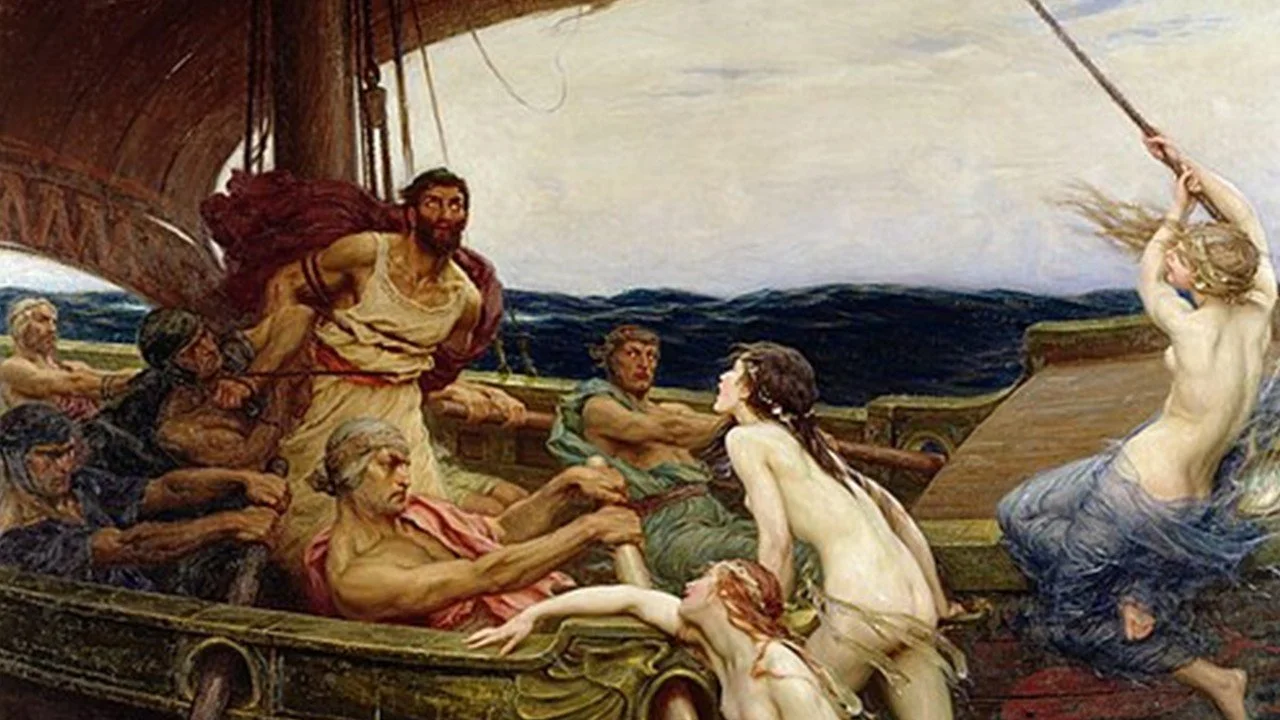
The question of who defines the boundaries of curiosity brings me to Pandora’s mythology. Her story has often been used as a warning about dangerous curiosity, yet Pandora was created within a punishment devised by Zeus after Prometheus defied the gods. Read differently, the story offers an uncomfortable analogy: powerful and deeply flawed figures construct the conditions around somebody, define what is permitted and then make curiosity itself part of the transgression.
Prometheus bringing fire to humanity was not the deeply flawed outcome; fire became fundamental to human development and, ultimately, technological advancement. The lesson need not therefore be that the box should remain closed. Applied to masculinity, closing it risks deciding in advance which forms of manhood are permissible, based on our existing assumptions rather than what might emerge through exploration. Remaining curious allows boys and men greater space to develop while allowing us to better understand both the strengths and weaknesses that emerge. This is where concepts such as hegemonic masculinity and toxic masculinity require particular scrutiny. If they establish in advance which expressions of masculinity are acceptable and which are harmful, they risk becoming part of the very problem they seek to explain. Rather than helping us understand boys and men, these flawed applications can constrain their identities and cause harm by interpreting them through assumptions that have already determined what their behaviour means.
Our response should not be to become less curious. With boys and men, we need the willingness to open questions rather than close them, to hear answers that may challenge our theories and to remain attentive to the person in front of us. If manhood is co-constructed, curiosity creates space for that construction to remain relational rather than predetermined. Let us be curious about the boys and men who inhabit our lives so that our relationships are with who they are, and who they might become, rather than with the narrower versions of them we have already constructed.
Scroll down to the comments section to join the discussion
Disclaimer: This article is for information purposes only and is not a substitute for therapy, legal advice, or other professional opinion. Never disregard such advice because of this article or anything else you have read from the Centre for Male Psychology. The views expressed here do not necessarily reflect those of, or are endorsed by, The Centre for Male Psychology, and we cannot be held responsible for these views. Read our full disclaimer here.
Like our articles?
Click here to subscribe to our FREE newsletter and be first
to hear about news, events, and publications.

















Have you got something to say?
Check out our submissions page to find out how to write for us.













.