

Fathers care deeply, but our systems need to do better

Rob and Jenny are expecting their second child. Their first, Macie, is 18 months old. Rob is a young health professional in a leadership role. He is ambitious, capable, and increasingly anxious about what the next few years will demand. He wants to be an involved father, yet he worries that prioritizing family will stall his career, and trying to do both will burn him out.
At home, the pressure shows up in the ordinary moments. Their weeks aren’t planned; everything is reactive. They argue about who’s carrying which household jobs. Jenny feels she’s doing the lion’s share. Rob insists he’s doing his best, then feels guilty, because he also knows he often drops the ball. Part of the problem, he admits quietly, is that he never saw his own dad run a home. He’s trying to invent a new kind of fatherhood without a roadmap.
This is not a rare story. It is common for many. And new global data suggests it’s not primarily a motivation problem, either. Fathers are often told to “step up”, be more hands-on, more emotionally present, and more equal partners at home. Many fathers are already responding to that call in identity and intention. What holds them back is the bind of provision: economic pressure, workplace policies, and societal norms that still define “good fathering” as primarily being a provider.
Fathers want to care and most believe they can
The State of the World’s Fathers 2026report coordinated by Equimundo across 16 countries surveyed approximately 8000 parents and conducted 400 in-depth interviews. Its central finding challenges a common stereotype, being that fathers are less involved because of a lack of willingness. Across the study, nine in ten fathers reported that caring for their children is one of the most enjoyable things in their lives, and 93% said they felt competent as caregivers. A large majority of fathers and mothers agreed that it is far more normal for men to do care work today, than it was in their own father’s generation. These are encouraging findings. Confidence is one of the foundations of involvement. If men feel capable and trusted, they are more likely to step into the day-to-day work of caring.
But willingness and capability are not the same as opportunity. And that’s where systemic factors impact negatively for fathers. The real barrier is the squeeze of time, money, and work.
The global data paints a stark picture of the economic strain shaping family life. Seventy percent of fathers and 62% of mothers identified financial provision as a father’s core role. Only a third of parents saw unpaid care as central to fatherhood. Further, 58% of men across the 16 countries agreed with the statement: “I don’t think I am man enough unless I can provide for my family”.
So while public conversation encourages men to become more emotionally available and hands-on, many young fathers are still aligning with a traditional message of their value being in financial provision. Or is this really the case? Could social and economic pressures, such as the ever-present cost-of-living pressures in today’s zeitgeist, be seen to be locking young fathers into a provider role?
The report documents constraints that would pressure any household:
• Only 17 per cent of fathers and 18 per cent of mothers reported having enough time for caregiving responsibilities.
• 47 per cent of fathers reported struggling to balance their job with care responsibilities.
• 76 per cent of fathers and 82 per cent of mothers worried constantly about their family's financial future.
• Half of all parents reported that caregiving costs consume at least half their income.
These socioeconomic pressures don’t only limit time; they also shape roles. Crucially it is perceived financial insecurity - not income alone – that predicted stronger endorsement of traditional gender norms.
Before the Industrial Revolution, “Men worked long hours, certainly, but they worked alongside other family members, within their communities, close to the daily lives of their children, providing, protecting, and helping to shape the next generation.”
When families feel precarious, many retreat into what seems most stable, often being the safety of more ‘traditional’ gender roles. In essence, couples are not choosing to be more ‘traditional’. It means they’re often choosing what feels survivable.
But what do we actually mean by ‘traditional’? Anthropologist David Gilmore argued that across cultures, manhood has historically rested on three imperatives: to provide, to protect, and to procreate, also meaning not just fathering children, but raising them to be competent, capable members of their community. My ancestors come from Rawdon, a small town in Yorkshire. Thanks to the detailed family history research of a distant relative, we know a good deal about how those families lived in the generations leading up to the Industrial Revolution. They worked in the woolen industry, but it was cottage-based, woven into the rhythm of village and family life. It was this fuller version of fatherhood, described by Gilmore, that my ancestors lived. Men worked long hours, certainly, but they worked alongside other family members, within their communities, close to the daily lives of their children, providing, protecting, and helping to shape the next generation.
The advent of the Industrial Revolution slowly swept through England. One relative, returning from visiting the city of Leeds in the early 1800s, recorded the circumstances of the "wretched, stunted and decrepit and frequently mutilated appearance of the broken down workers”, men who spent the bulk of their days in mills and factories, and rarely any time with their families. Soon, my own ancestors would be impacted. This period of human history saw men ripped from the heart of their homes. Many have struggled to make their way back ever since.
The idea that fathers today are "returning to traditional norms" is, in an important sense, inaccurate. The male breadwinner, the father-as-provider role that we label as “traditional” is only 200 to 300 years old, a creation of the Industrial Revolution. What preceded it, for centuries, was something far more integrated, where fathers were present in the daily texture of family life, working and caring side by side.
“Fathers who take an active, hands-on role in parenting, including the rough-and-tumble play many enjoy, also help children develop stronger emotional regulation, better social skills, and greater self-control.”
In the current climate, when economic precarity pushes today's fathers back toward an allegedly “traditional”, provider-only identity, it is not a return to some deep ancestral truth. It is one-dimensional, stripped of the other imperatives that shaped men for centuries. It is a repetition of a pattern that was itself born from economic coercion, and one we should be working to undo, not reinforce.
The “care tax” locks families into unequal patterns (even when no one wants it)
This leads to families feeling locked into what the report describes as a “care tax”: the cumulative personal and financial costs families pay to keep care functioning. These costs are widespread - less time for self, delayed purchases, reduced savings, disrupted careers.
Both mothers and fathers report personal sacrifice, but the direction differs in ways that reinforce the provider bind:
• Nearly six in ten mothers reduced their work hours because of caregiving.
• Half of fathers picked up second or third jobs to compensate.
• More than half of both parents drained their emergency savings — money meant for crises became routine survival funds.
• Four in ten parents stayed trapped in precarious jobs because they needed something to meet care needs.
Those patterns become self-reinforcing. Mothers reduce their hours, making them the default caregiver and household organizer. Fathers’ increased hours make them more financially “essential” and less physically available at home. Over time, it can start to feel like there is no alternative.
We’re shaping the next generation of fathers long before adulthood
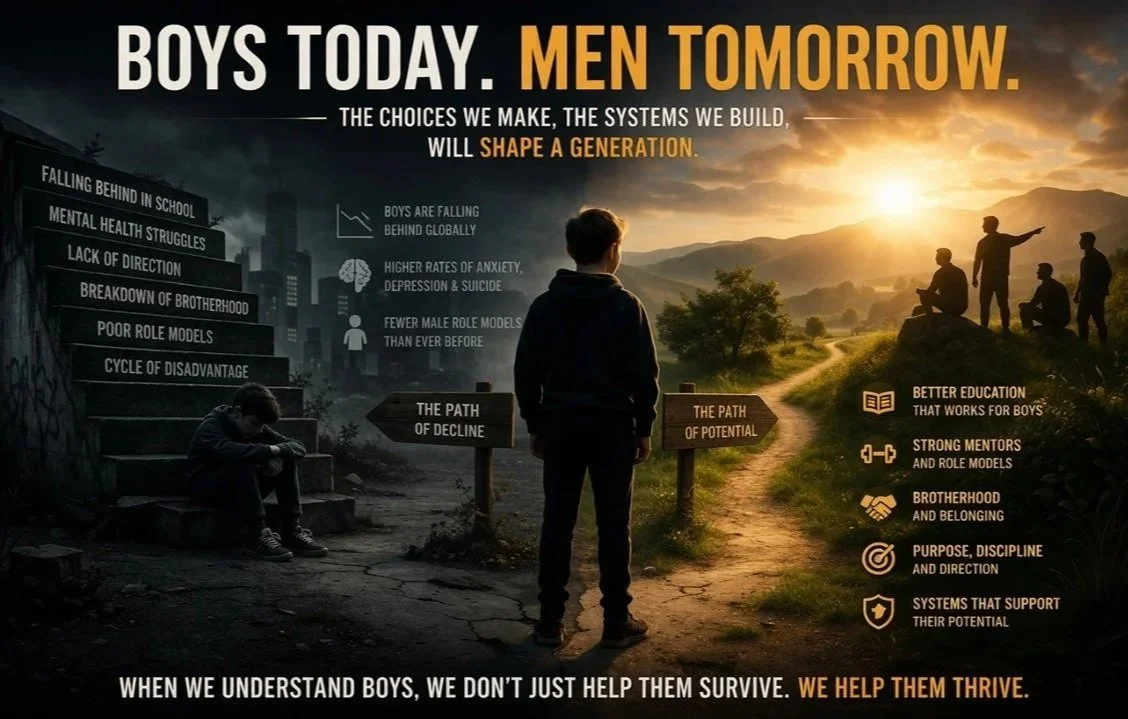
Importantly, the provider script does not start when men become fathers or face financial pressure. It starts in boyhood, in what boys are taught to do and what they are excused from learning. The report found that 40 per cent of fathers and 29 per cent of mothers believed boys should not be taught to cook, sew, clean, or care for younger siblings. In 2023, the figures were 25 per cent of fathers and 18 per cent of mothers, which means agreement among fathers has almost doubled in just three years.
These attitudes matter. Skills build competence, competence builds confidence, and confidence shapes behaviour. Boys who grow up without basic domestic skills may become men who want to be involved fathers but feel awkward and sidelined at home. The report reflects that tension: just over 40 per cent of men said they “never seem to get it right” when doing care or housework.
Coming full circle, it is understandable that in this displacement, they might choose the safety of a provider norm that feels ancient but is, in truth, barely older than the steam engine. The question isn’t why fathers are retreating to the provider role - given the pressures they face, it makes perfect sense. The question is why we've built systems that make it feel like the only viable option, and what it would take to finally stop asking fathers to choose between earning a living and being present in the lives of their children. Because shaping the next generation — not just funding it — is the truly “traditional” role of fathers worth fighting to restore.
Why father involvement matters — for children and for fathers
The evidence for involved fathering is compelling. Children with engaged fathers tend to do better at school, show fewer behavioural difficulties, and experience lower rates of depression and substance misuse. Fathers who take an active, hands-on role in parenting, including the rough-and-tumble play many enjoy, also help children develop stronger emotional regulation, better social skills, and greater self-control. In this sense, father involvement is a protective factor that can strengthen resilience across a child’s life. The benefits also extend to fathers themselves. Fathers who are actively involved in caregiving report greater life satisfaction, stronger bonds with their children, and better mental health. In Gilmore’s terms, the procreator role, meaning the work of raising competent and capable human beings, is not a burden fathers simply carry. It is often one of the most meaningful and rewarding parts of their lives. Nine in ten fathers in the global study already understand this.
“The research does not indicate that most fathers wish to give up paid employment and become full-time stay-at-home dads. [They want] the chance to be more involved in caring for their children while continuing to work.”
What would actually help fathers “step up” in real life?
Fathers around the world want to care. They understand the need for their involvement in the lives of their children. What stands in the way is not a failure of will, but a failure of systems.
To clarify, the research does not indicate that most fathers wish to give up paid employment and become full-time stay-at-home dads. Consistent findings from cross-cultural studies show that this pattern is rare, even in societies with high levels of gender equality. What fathers are expressing, both clearly and consistently, is a desire for the chance to be more involved in caring for their children while continuing to work. One father in the Equimundo study captured this sentiment, saying, "If I had had the financial means, would I have worked less to spend more time at home? Yes, of course." The aim is not to exchange one inflexible role for another. Rather, it is to break down the false divide that suggests a man must choose between being a good provider or being an engaged father. What fathers are seeking is flexibility, not simply a reversal of roles.
We should also acknowledge that choosing involvement is not cost-free for individual men. Research consistently shows that fathers who take extended leave or reduce their hours can face career penalties, social stigma, and reduced respect from peers and partners, a pattern researchers call the "flexibility stigma." Men who prioritise caregiving over career advancement are often judged more harshly. These costs are real, and fathers considering a different path deserve to understand them clearly. But that is precisely the point. Individual willpower is not enough. The risks men face when choosing to be present fathers are not a reason to abandon the goal. They are a powerful argument for structural change.
At The Fathering Project, we are very serious about father involvement, and the need for action within this space is imperative. Engaged fathers change children’s lives. This is our mission. The levers to pull within the system are clear:
First, employers. Flexible work must become a normal, career-safe option for men, not a rare exception. Across the 16 countries, 83 per cent of fathers said their employer does not allow flexible working. Men are often praised for being fathers but penalised for prioritising fathering, a pattern researchers call the "flexibility stigma." Fathers need workplace cultures where taking leave or leaving on time does not quietly signal a lack of commitment.
Second, government. Parental leave must be clearly explained, genuinely accessible to fathers, and financially realistic for families to use. Globally, paid paternity leave averages just 2.2 weeks, compared with 24.7 weeks for mothers, a gap of more than five months. One in four parents in the study did not know their full leave entitlements. Fathers also tend to take less leave than they can access, and for the 60 per cent of the global workforce in informal employment, leave often does not exist at all. Affordable childcare is not just a “women’s workforce” issue. It is essential infrastructure for father involvement.
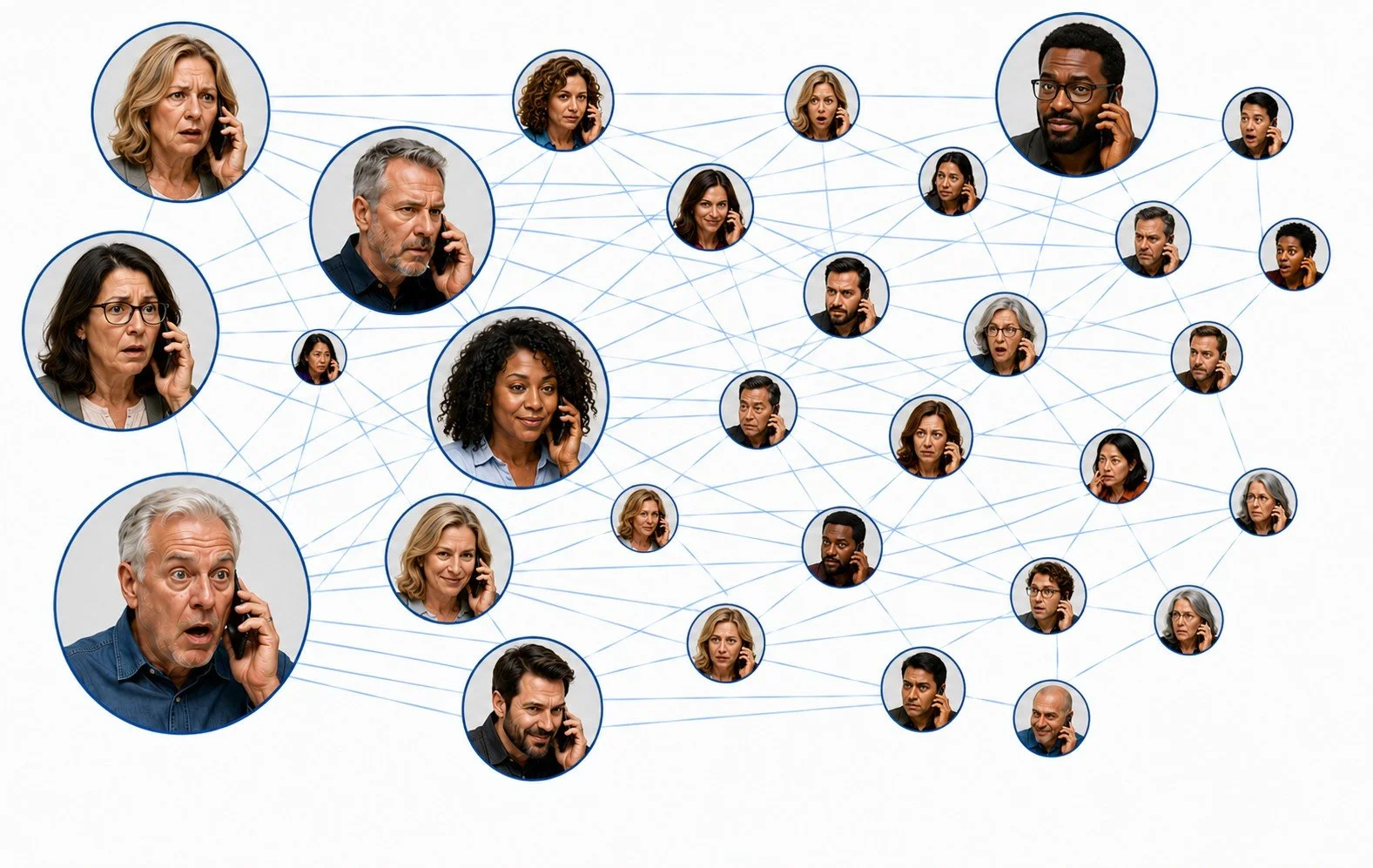
Third, health and community services. Fathers need clear, father-specific pathways into support from the start, including peer groups and routine screening for paternal distress. In the global study, fewer than half of fathers even knew that parenting support services for fathers existed, and only 39 per cent had ever been offered any. A striking 87 per cent said they do not receive all the support they need. Men cannot rely on networks they do not have, and many fathers say they were never offered support designed for them.
It is time for systems, services, and government to step up. Dads are stepping in, but without wrap-around, holistic support, we will continue to repeat outdated patterns and norms that fail to meet the needs of both fathers and children to truly thrive.
Disclosure: Dr James Brown is a board member of The Fathering Project, the Australian partner organisation for the 2026 State of the World’s Fathers study.
You can find out more about traditional gender roles, including Gilmore’s cross-cultural research, in the online course ‘Masculinity: Theory and Practice’, by the Centre for Male Psychology.
Scroll down to the comments section to join the discussion
Disclaimer: This article is for information purposes only and is not a substitute for therapy, legal advice, or other professional opinion. Never disregard such advice because of this article or anything else you have read from the Centre for Male Psychology. The views expressed here do not necessarily reflect those of, or are endorsed by, The Centre for Male Psychology, and we cannot be held responsible for these views. Read our full disclaimer here.
Like our articles?
Click here to subscribe to our FREE newsletter and be first
to hear about news, events, and publications.





















Have you got something to say?
Check out our submissions page to find out how to write for us.

















.