

The theme of the 2025 World Suicide Prevention Day is ‘change the narrative’. The narrative about male suicide for the past decade or so has been that it is caused by masculinity. However the evidence for this hypothesis is weak, and focusing on masculinity distracts us from focusing on more significant risk factors (e.g. family breakdown), and from focusing on other factors that may well be significantly linked to suicide but are under-researched (e.g. false accusations of abuse). Let me explain this, by looking at perhaps the most influential paper in this field.
In 2017, a paper called ‘Masculinity and Suicidal Thinking’ was published, and almost immediately received a wave of positive attention. This isn’t surprising because the lead author, Prof Jane Pirkis, featured in a 3-part documentary called ‘Man Up’, which was broadcast in 2016 across various media in Australia, funded by Movember. In the documentary Pirkis talked about how masculinity, mental health and suicide were linked.
The 2017 paper ‘Masculinity and Suicidal Thinking’ had an impressive design: it had a very large sample size of nearly 14,000 men, and was part of the Australian Longitudinal Study on Male Health (also called Ten to Men). The Pirkis et al survey asked men about suicidal thinking and used hierarchical multiple regression to assess links between masculinity and suicidality after first testing the links between other factors (demographics, behaviour, mental health) and suicidality.
“So although the title of the paper was ‘Masculinity and Suicidal Thinking’, a more accurate title would have been ‘Help-seeking and Suicidal Thinking’.”
Given that the title of the paper is ‘Masculinity and Suicidal Thinking’ you would be forgiven for thinking that masculinity was the strongest predictor of suicidality, and indeed the paper is almost always discussed as if this was the main finding. However what the paper actually found was that masculinity was only weakly predictive of suicidality, and four other variables (depression, stressful life events, being single, and alcohol abuse) were stronger predictors of suicidality.
But that’s not all. What the title of the Pirkis et al paper referred to as ‘masculinity’ was in fact just one aspect of masculinity: self-reliance, conceptualised in the CMNI questionnaire as ‘refusing to seek help’. You should pause here and ask yourself: isn’t the desire to seeking help (or not) much too narrow a concept to define something as complex as masculinity? So although the title of the paper was ‘Masculinity and Suicidal Thinking’, a more accurate title would have been ‘Help-seeking and Suicidal Thinking’’. Note that none of the other 10 CMNI masculinity subscales were significant predictors of suicidality. On the contrary, two of them - Heterosexual Presentation and Pursuit of Status - were very close to being significantly protective against suicidality.
Nonetheless, ‘Masculinity and Suicidal Thinking’ is widely cited in academia, and has also been influential beyond academia in shaping the narrative. Unfortunately, instead of focusing on, for example, the types of stressful life events most linked to suicidality, websites supporting men have tended to focus on the dangers of masculinity.
A note for those with knowledge of statistical analysis: Pirkis et al used hierarchical multiple regression, which is a legitimate procedure, but as Jacob Cohen et al (2003) have pointed out: “A major criticism of hierarchical regression is that the order in which variables are entered can affect the results, potentially leading to overemphasis on variables entered later [e.g. masculinity] and underestimation of those entered earlier [e.g. depression, life events etc.], especially if important predictors are omitted initially.” In other words, researchers have to be careful to make sure decisions about analysis don’t lead to misinterpretations of their data.
“The field of suicide prevention research will benefit hugely from moving away from the ‘masculinity causes suicide’ narrative and focus on issues that might actually help to prevent suicide, such as interventions related to family breakdown”.
Pirkis and colleagues aren’t responsible for creating the ‘masculinity causes suicide’ narrative. It’s been part of the ‘paradigm fixation’ on a ‘deficit model’ of masculinity, which sees masculinity as implicated in bad behaviour and poor physical and mental health. Research of this kind has been around since the 1980s, and has gathered pace in the past decade or so. In the same way, the narrative is not the fault of most of the well-meaning researchers who have followed this well-worn research path. Indeed, when I first started researching men’s mental health in 2011, our first survey was based on the previous research in the field, and as a result fell straight into the same trap. However upon looking at the findings we realised that something wasn’t quite right, and our initial mistake led us to explore other ways of understanding men’s mental health and the risk factors for suicide. We started to see there was a serious problem with research in this field, and we made sure we didn’t fall into the same trap twice. My view today is that the field of suicide prevention research will benefit hugely from moving away from the ‘masculinity causes suicide’ narrative, and focus on issues that might actually help to prevent suicide, such as interventions related to family breakdown.
Despite the ongoing, seemingly unending, production of flawed research based on the deficit model of masculinity, there is evidence that masculinity is in fact good for mental health. Research by my colleagues and by other groups has found that masculinity is related to better self esteem and mental positivity, less risk of depression, and lower suicide risk. More research of this kind could potentially make suicide prevention strategies more realistic and effective.
Sadly the education and training in psychology and therapy tends to have a blind spot for male psychology, and where this topic comes up at all it is usually dealt with in terms of negative ideas about masculinity, such as hegemonic masculinity, toxic masculinity, or patriarchy theory. One of the most important things we can do to change the ‘masculinity causes suicide’ narrative, is for universities and therapy training schools to take responsibility for giving their students a proper grounding in male psychology, which will allow students and trainees to go on to deal more effectively with issues, such as suicide, that continue to disproportionately impact men and boys.
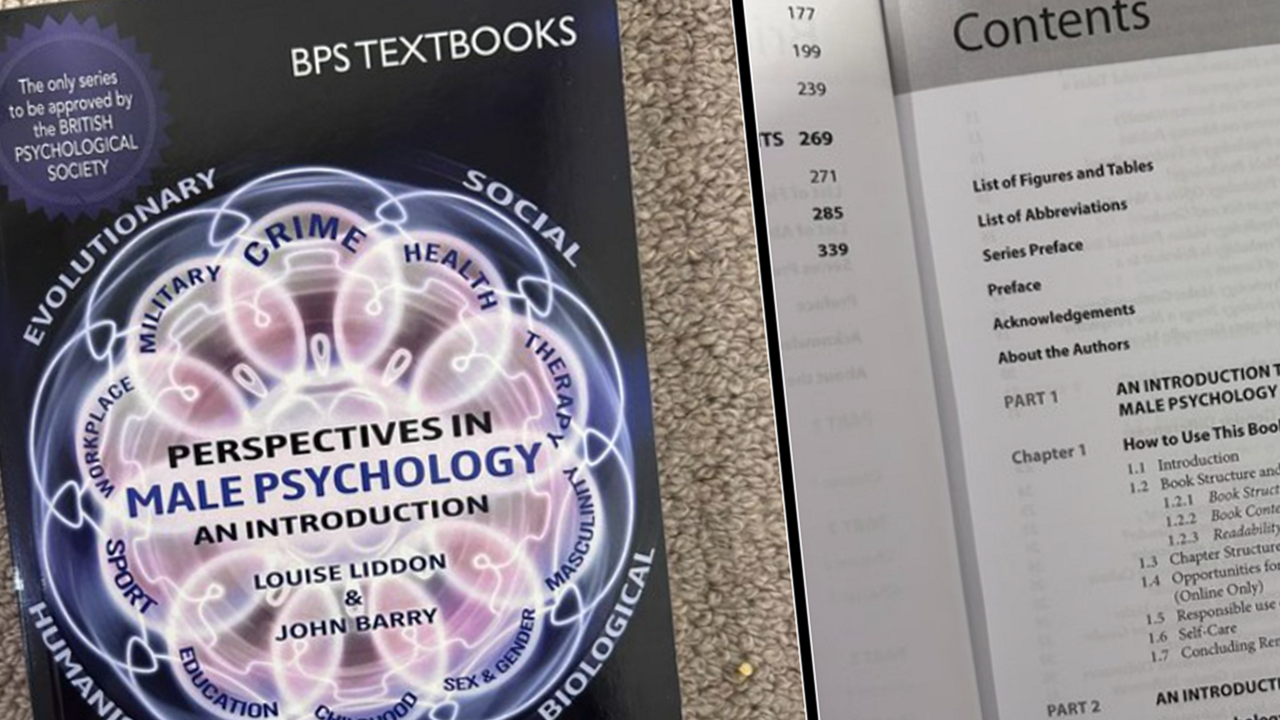
You can learn more about this issue in our magazine articles, our BPS textbook (Perspectives in Male Psychology), and our online courses.
Scroll down to join the discussion
Disclaimer: This article is for information purposes only and is not a substitute for therapy, legal advice, or other professional opinion. Never disregard such advice because of this article or anything else you have read from the Centre for Male Psychology. The views expressed here do not necessarily reflect those of, or are endorsed by, The Centre for Male Psychology, and we cannot be held responsible for these views. Read our full disclaimer here.
Like our articles?
Click here to subscribe to our FREE newsletter and be first
to hear about news, events, and publications.










When a male is in a power imbalance, at least two masculine instincts are disempowered…


…people – men and women alike – respond less positively to male-favouring sex differences than they do to female-favouring sex differences.
hyper-masculine gender norms are typically embedded within military institutions, and while adherence to these norms can contribute to combat and military success, they conversely make clinical work challenging
Men might benefit greatly from a government strategy aimed at improving their health. Here are suggestions from the Centre for Male Psychology on how that might be done. This article ends with some comments on potential pitfalls in the process of putting this strategy in place.




…people – men and women alike – respond less positively to male-favouring sex differences than they do to female-favouring sex differences.



… many papers do not even bother to identify or justify the nationality of their samples…

Have you got something to say?
Check out our submissions page to find out how to write for us.
hyper-masculine gender norms are typically embedded within military institutions, and while adherence to these norms can contribute to combat and military success, they conversely make clinical work challenging

hyper-masculine gender norms are typically embedded within military institutions, and while adherence to these norms can contribute to combat and military success, they conversely make clinical work challenging
hyper-masculine gender norms are typically embedded within military institutions, and while adherence to these norms can contribute to combat and military success, they conversely make clinical work challenging

hyper-masculine gender norms are typically embedded within military institutions, and while adherence to these norms can contribute to combat and military success, they conversely make clinical work challenging

hyper-masculine gender norms are typically embedded within military institutions, and while adherence to these norms can contribute to combat and military success, they conversely make clinical work challenging

Much of our attitudes, theorizing and public debate around men and masculinity is influenced by high profile feminist and Gender Studies scholars in academia. But what is the scientific quality of publications from these scholars?

Some people blame drill music – a form of rap - for the rising murder rate in London. Drill is known for aggressive lyrics about gang violence, but rather than seeing this as a valuable way for young men to express their feelings, some people want to ban it.

To survive… cultures have to use men and women effectively and … in fact, most cultures have used men and women in different ways… what our culture does is [grant] greater status to men and greater protection to women

hyper-masculine gender norms are typically embedded within military institutions, and while adherence to these norms can contribute to combat and military success, they conversely make clinical work challenging

There are around 300,000 veterans living with hearing loss in the UK, according to The Royal British Legion. In addition to being at a greater risk of PTSD, depression, and anxiety, many vets are also battling psychological distress from hearing problems.

The book begins with a description of her therapeutic approach, and an illustration of how to understand and work with the rage often seen in male CSA clients.

I felt in my dealings with some police officers, as though I were treated firstly as a man (assumed to be a perpetrator), but they’d overlooked risks associated with my impairment. Example: How can you dodge a missile you don’t see coming?

The Panorama programme on domestic violence failed to adequately highlight two important issues: male victims and female perpetrators.

your photograph, name and address, might appear in the local and national press and on TV, insinuating what an evil monster you are

…an attack upon masculinity is an attack upon one’s sense of self, of identity. …What, then, is the right psychological defence against such an attack?

The male has been designed to “look”, not only at the female, but to “look out” for prey, for danger, and for ways to protect his family unit.

If his child is allowed to live, this man must be available, for the rest of his life, to love and provide for his child… If, on the other hand, it is decided that his child is to be destroyed, he should be able to go about his life as if nothing has happened

Socialising is a basic human need. The opposite – social isolation – is one of the worst forms of torture. Some people look down on the local pub as a place for undesirable riff raff, but that narrow viewpoint misses entirely the community value of the pub

Male psychology is a recent development in academia. Unlike gender studies, feminism, and men’s studies, male psychology takes the view that we can gain more by recognising and harnessing the positive aspects of masculinity than we can by taking a relentlessly negative approach to men.

.