
Support for Fathers in Crisis During Family Breakdown and Family Court Processes

Family breakdown and divorce leaves men at significantly increased risk of a range of physical and mental health problems, and suicide. Loss of contact with one’s children is at the heart of distress experienced by many fathers who go through family breakdown. Difficulties with family court process – especially obstacles to fathers staying in contact with their children – can have a chronic and significant impact on a father’s mental wellbeing. Ultimately, loss of contact with one’s children can lead to suicide.
Family breakdown can harm children too. The harm is expressed in various ways such as physical health, emotional health and cognitive ability. Boys and girls may be impacted by fatherlessness differently. Delinquency is a well-recognised consequence for boys, with 76% of children in custody reported an absent father. However, girls are more likely to have lower self-esteem, eating disorders, depression, problems with relationships, early puberty and become sexually active at an earlier age. The scale of the harm to children is daunting when you consider that 1 in 5 children in the UK do not live with a father figure.
“If a perfectly decent father suffers through family court processes, then the children suffer, and if the children suffer, it is difficult to see how this benefits the mother, grandparents, or indeed neighbours, peers etc.“
Although shared parenting after family breakdown is the ideal, it’s important to recognise there are occasional situations in which shared parenting is not indicated, such as child abuse. Most parents love their children and are much more likely to protect them than harm them, but red flags should not be ignored.
Getting support from Both Parents Matter (BPM)
Both Parents Matter – formerly Families Need Fathers - is a UK-based charity dedicated to supporting parents and families as they navigate the challenges of separation and divorce. Their primary focus is to ensure that children maintain meaningful relationships with both parents and extended family members during and after family breakdowns.
To find out how much benefit their support activities have, they ran a survey in 2025 of their members. The anonymised dataset was analysed by Dr John Barry of the Centre for Male Psychology. 240 fathers responded. 37% (85 of the 228 who answered this question) of participants said they had experienced thoughts of suicide prior to contacting the charity. It is testament to the difficulties faced by those going through family breakdown that the rate of suicidal thinking is almost twice what would be expected (the usual rate among UK men of ever experiencing suicidal thoughts is 18.7%). Compared to those who reported not feeling suicidal, those who had suicidal thoughts before contacting Both Parents Matter were significantly more likely to feel unconfident about coping emotionally with their circumstances.
Stressful court processes
Three major challenges for people facing family courts are:
· Confidence about progressing their child's contact issues
· Knowledge of how family law works and how they approach their case
· Ability and confidence to cope emotionally with their circumstances
These three issues were asked about in relation to the member’s experience before and after engaging with the charity.
Around a third of respondents said they became a member of Both Parents Matter either to “receive help with my case”, and another third joined “to obtain information”. This aspiration worked out well for most fathers, because their confidence about child contact issues almost doubled from 3.7 out of 10 to 6.7 out of 10 (see Figure 1). Similarly, the reported levels of knowledge almost doubled from 3.7 out of 10 to 6.6 out of 10. Also, their ability and confidence to cope emotionally with their circumstances before attending the charity increased substantially from 4.0 out of 10 to 6.3 out of 10. All three of these increases were highly statistically significant (conservatively, p<.0001). Both Parents Matter online support groups helped many of these men to cope better and improve their knowledge of the family courts.
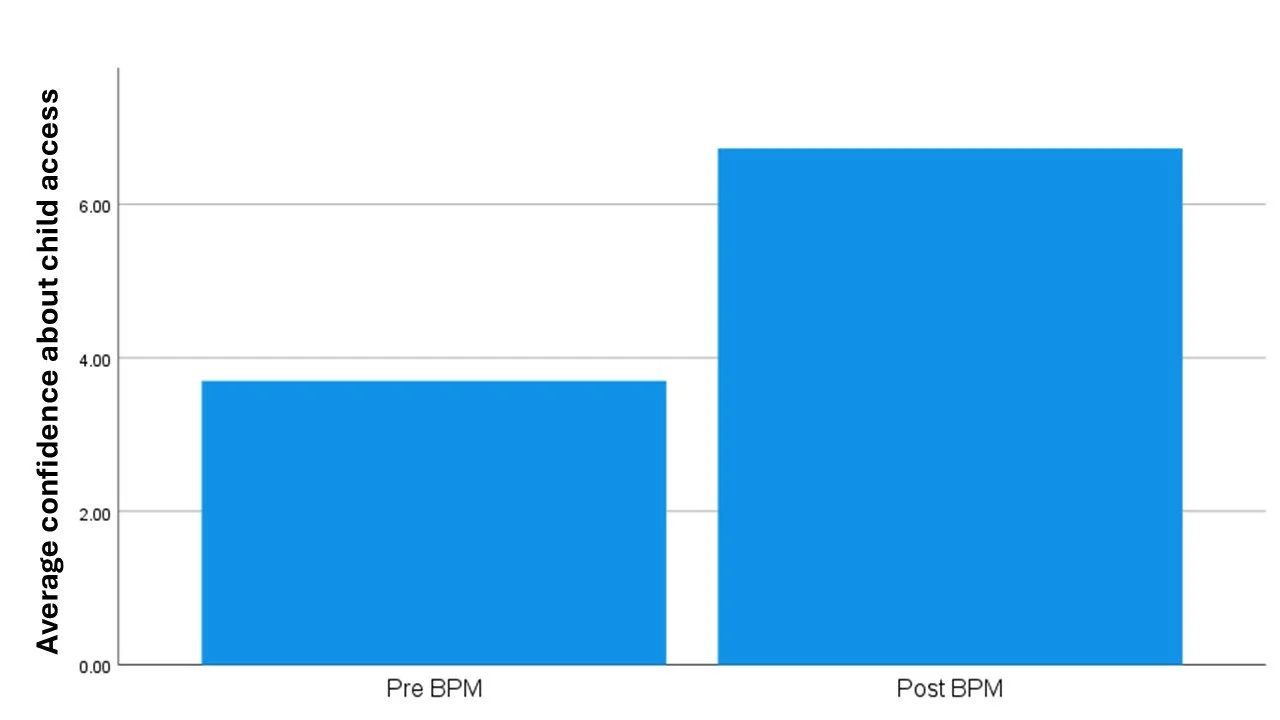
Figure 1. Increase in confidence about progressing their child's contact issues from before engaging with Both Parents Matter (BPM) to after engaging with Both Parents Matter.
Many of the fathers were troubled by issues related to family breakdown and family courts, an issue explored in detail in a previous study of Both Parents Matter fathers. In the present survey, suicidal thinking was reported in a worryingly high percentage of participants, around twice the rate in the general UK population of men, and it was encouraging that many found the charity’s support helpful and would recommend it to others.
“Although many people talk about the ‘lack of role models’ in boys’ lives, what they really mean is a lack of fathers.”
Nonetheless, one has to ask whether the stress placed on fathers is necessary, or whether the family laws and procedures might reasonably be changed to make the process less stressful. If fathers are forced to be absent due to legal orders that prevent them from contact, or are unable to be fully there for their children due to mental health problems caused by court orders etc, then the whole family suffers. Unless the father is a violent or otherwise a negative influence, it is normal that having a father in the home is good for the family. On the other hand, if a perfectly decent father suffers through family court processes, then the children suffer, and if the children suffer, it is difficult to see how this benefits the mother, grandparents, or indeed neighbours, peers etc.
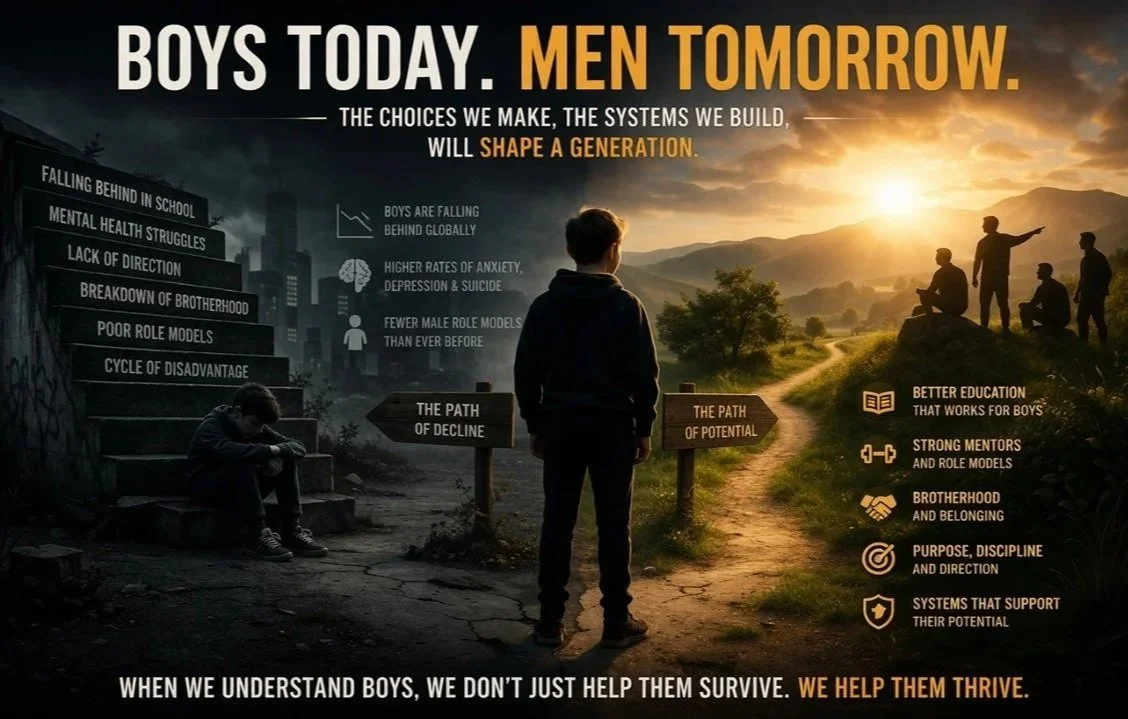
Although many people talk about the ‘lack of role models’ in boys’ lives, what they really mean is a lack of fathers. The absent father leaves a vacuum, and this is all too conveniently filled by gang membership, online influencers and other opportunists, leading boys into harmful attitudes and behaviours. These harmful attitudes and behaviours are then labelled as ‘toxic masculinity’, but research shows that denigrating masculinity is linked to worse mental wellbeing, and it is known that boys with poor mental health are more likely to act out their feelings in violence or substance abuse. But the bad influences and delinquency are symptoms of the problem not the cause, and the cause can’t be properly addressed by treating the symptoms.
We must be realistic in how we deal with problem behaviour by boys. The Netflix drama ‘Adolescence’ is about a 13-year-old white boy who stabs a girl to death because he has been influenced by the ‘manosphere’. In other words, it describes a crime that is highly unusual and a motivation that is highly unlikely. One could reasonably point out that it’s a work of fiction, not intended as a documentary, and treating a fictional drama as if it’s a documentary is unlikely to offer workable solutions. The cause of these problems is not toxic masculinity, it is the absence of fathers, and in some cases the inability of some father to be properly present due to mental health issues related to the stress of the family breakdown. As last year’s Lost Boys report put it “There is a crisis of masculinity in this country… part of the systemic crisis of masculinity is simple: fatherlessness”. It is heartening that the modest efforts of a small organisation like Both Parents Matter can have a positive impact on fathers, reducing the psychological and emotional burden, and giving hope for a better outcome in terms of staying in contact with his children, with all the benefits that may bring. But this is a drop in the ocean. Fathers have never been more needed than today, so it is imperative that we support them in trying to be present for their children, even after their family breaks down.
Both Parents Matter would like to thank all of those who responded to the survey. This article is based on the report published by Both Parents Matter in November 2025. To request a full copy of the Impact Survey please contact admin@bothparentsmatter.org.uk You can find out more about Both Parents Matter here, including their helpline (0300 0300 363) and how to make a donation.
Scroll down to join the discussion
Disclaimer: This article is for information purposes only and is not a substitute for therapy, legal advice, or other professional opinion. Never disregard such advice because of this article or anything else you have read from the Centre for Male Psychology. The views expressed here do not necessarily reflect those of, or are endorsed by, The Centre for Male Psychology, and we cannot be held responsible for these views. Read our full disclaimer here.
Like our articles?
Click here to subscribe to our FREE newsletter and be first
to hear about news, events, and publications.















Have you got something to say?
Check out our submissions page to find out how to write for us.














.