
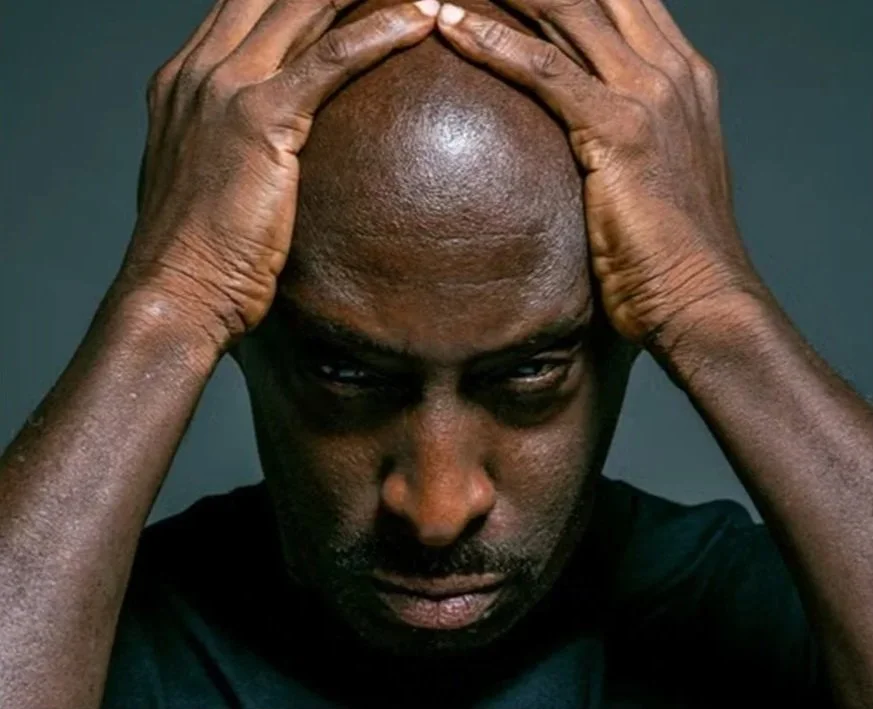
Men’s Depression Cross-Culturally: Externalizing Depression in Global Contexts

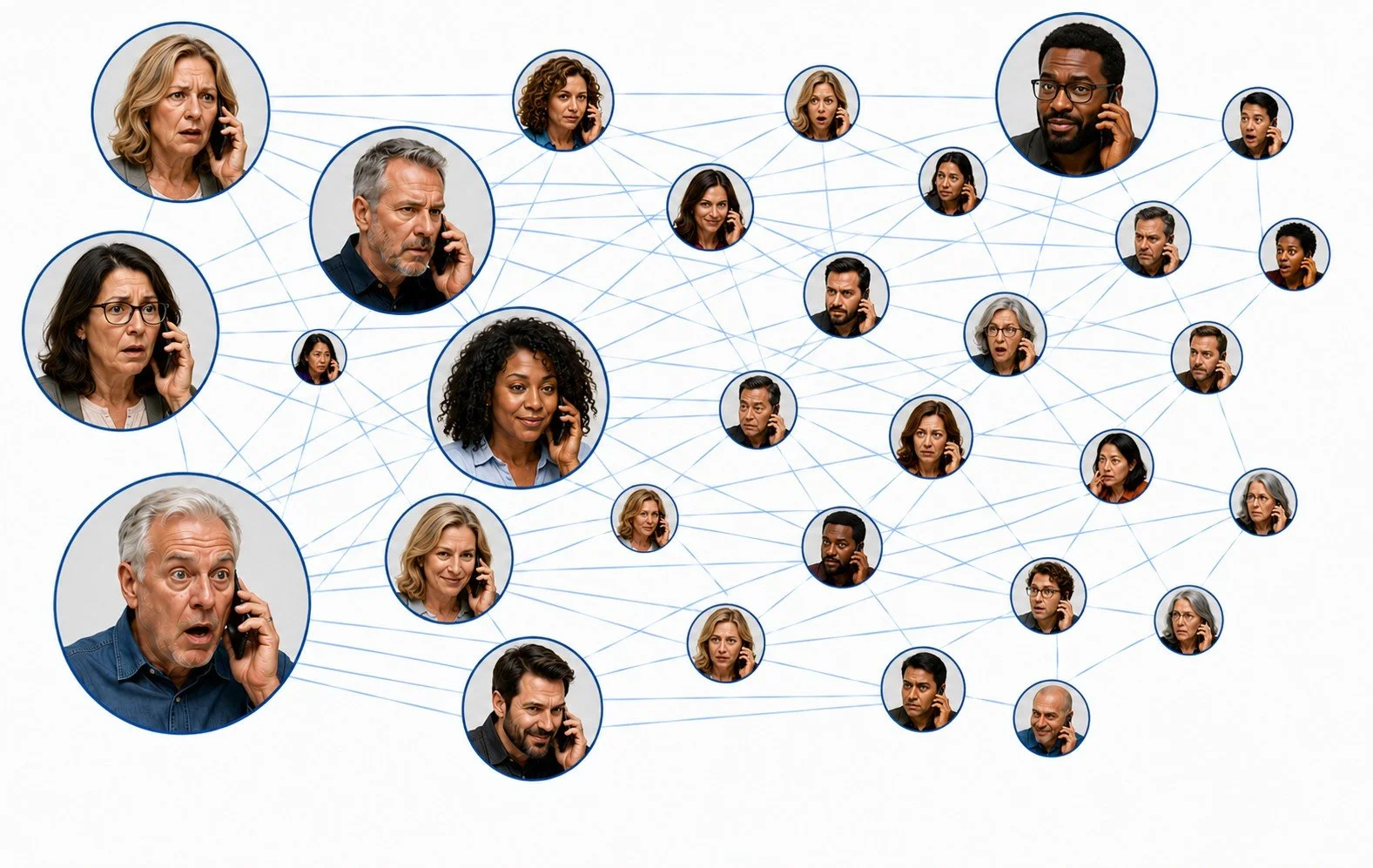
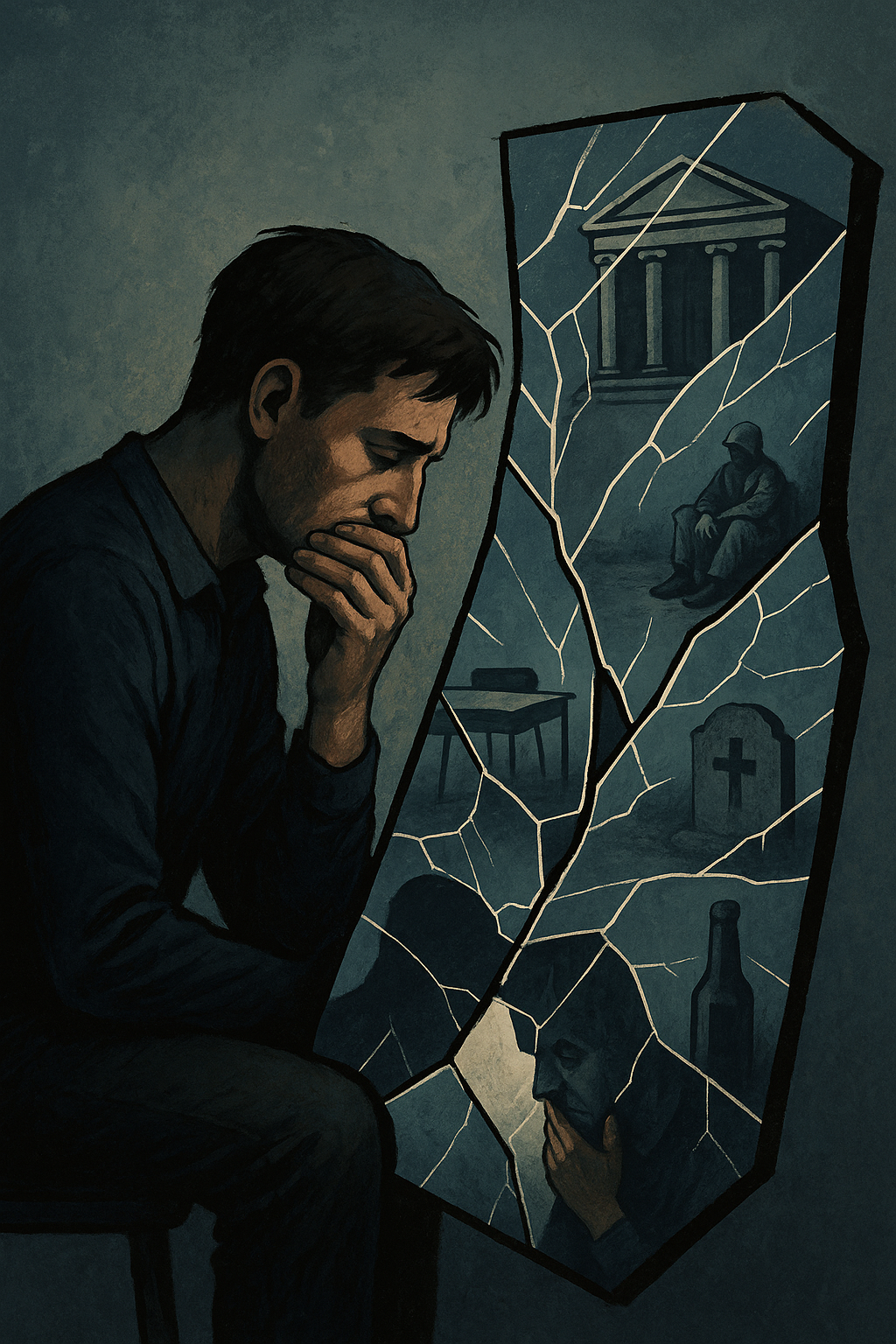
Image: Male depression across cultures. Created using AI image generation (ChatGPT 5.6 Luna) with prompts by John Barry.
This is Part II in a series of articles on cross-cultural comparisons of men’s mental health issues. Part 1 can be found here.
Most research on how men express depressive symptoms have been conducted in Western contexts. There remains much to be learned about the extent to which men outside of Western cultures similarly externalize their depression.
Men’s depression in the West
After long assuming that women experience higher rates of depression than men, researchers and practitioners are now paying more attention to the gender-specific ways men experience and express depressive symptoms. It was previously assumed that since men’s symptoms often did not neatly fit the criteria for depression established by the DSM-V and ICD-10 - two major tools for diagnosing depression - men’s rates of depression were lower.
There is growing evidence that men’s rates of depression are underreported because traditional diagnostic tools rely on internalizing criteria more common in women and because men experience and express depression differently. Internalizing symptoms include a range of emotional indicators that can signal depression, such as low mood, prolonged sadness, anxiety, and a sense of hopelessness, among others. One study reported that when externalizing symptoms are considered, this gender discrepancy in depression rates nearly disappears.
Research suggests that men are more likely to experience depression through externalizing their symptoms. This externalization occurs in various forms, including irritability, anger, impulsivity, hostility, engaging in risky behaviors, abusing substances, workaholism, experiencing increased interpersonal conflict, trouble sleeping, or using pornography and having sex more frequently. When men do describe their symptoms to clinicians, they may use indirect language, such as saying they are “stressed,” “tired,” “angry,” or “burnt-out” rather than saying directly that they are “sad” or “depressed.” It is plausible that many men do not even recognize these symptoms as potential signs of underlying depression or mental distress. Men may also display slowed movements, reduced gestures, and slower speech, and they may use fewer words to actually describe their depressive symptoms.
These differences have led to the development of more dynamic diagnostic tools to better identify depression in men. These include the Gotland Male Depression Scale, the Masculine Depression Scale, and the Male Depression Risk Scale, which all screen for a wider range of symptoms and behaviors than traditional diagnostic tools. This suggests that conventional diagnostic tools have been underdiagnosing depression in men, which carries important implications for researchers and clinicians.
Men’s Depression in Global Perspective
Studies on depression worldwide almost universally report higher rates of depression in women than men. Admirably, there appears to be a growing interest in research that does consider the gender-specific ways men experience depression worldwide. When studies do consider how men externalize depressive symptoms, the results largely appear consistent across cultures, typically showing that men around the world do in fact exhibit more externalizing symptoms and behaviors when experiencing depression and mental distress. Many such studies also add cultural nuances to understanding men’s depression that are highly relevant to local practitioners and clinicians working with men.
“Merely considering the amount of alcohol a man consumes may not be insightful for diagnosing depression, since Korean men are often expected to consume large amounts of alcohol due to interpersonal and professional relations.”
South Korea
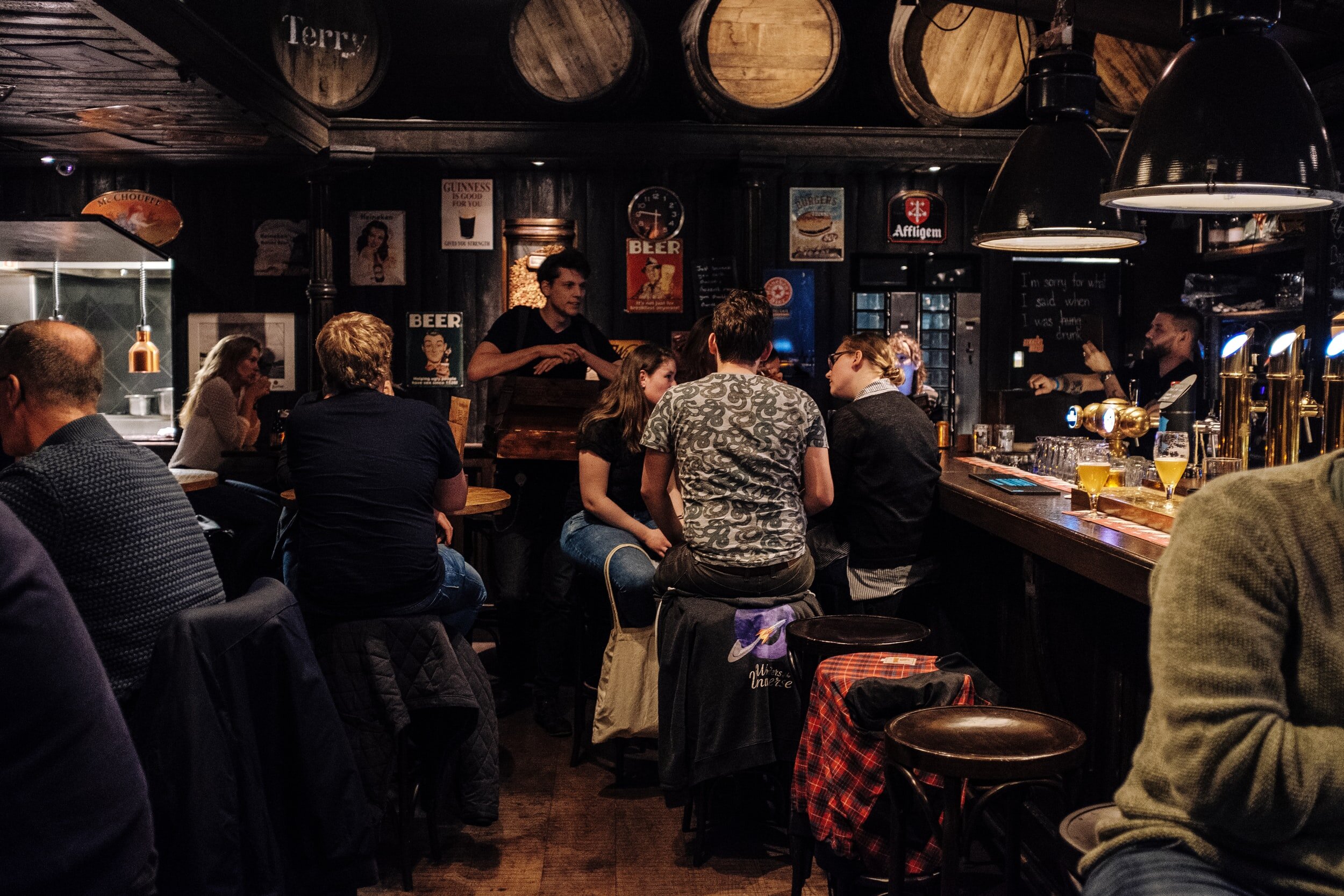
One study by Korean scholars on South Korean men found that anger, hostility, and aggression may be symptoms of depression in men, and that problematic drinking and engaging in risky behaviors can also be indicative of depression and heightened suicide risk. While these findings are consistent with those from Western studies, these behaviors take on slightly different dimensions that are unique to the Korean cultural context. For instance, when considering alcohol consumption as a symptom of underlying depression, the authors caution that drinking among Korean men needs to be interpreted within a broader social context because of the important role alcohol plays in South Korean social life; merely considering the amount of alcohol a man consumes may not be insightful for diagnosing depression, since Korean men are often expected to consume large amounts of alcohol due to interpersonal and professional relations. Additionally, the study suggested a constellation of risk-taking behaviors - including illicit drug use, risky sexual activity, and gambling - clustered into a single factor during a factor analysis, which led the authors to suggest that these behaviors may be closely associated as manifestations of a broader tendency toward high-risk, stimulation-seeking, or addictive behavior, and thus signs of underlying mental distress.
Taiwan
One study from scholars in Taiwan found strong reliability and construct validity of the Gotland Male Depression Scale among Taiwanese men. Another study reported that externalizing depression scores were significantly associated with childhood physical neglect. The authors suggest that this may be a result of Taiwanese gender norms that teach men to be independent, strong, and stoic in the face of hardships. Because masculine scripts compel Taiwanese men to take control of their circumstances and support themselves, it is possible that men learn to cope with hardships by trying to take control of their lives and suppressing feelings of sadness or hopelessness rather than expressing them. This higher degree of independence and autonomy may be the reason physically neglected men’s depression manifests through externalization rather than internalized feelings of sadness and hopelessness. These scripts that Taiwanese men develop in childhood are similar to scripts men develop in other cultures around the world, and further research into the extent to which other scholars find similar experiences of associating childhood neglect with these outwards symptoms warrants further comparative attention.
Columbia and Mexico
A study from Colombia found that depression in men is underreported when standard measurement tools are used and that social expectations influence how men experience and express their distress. The study also found that self-reported moderate-to-low support from family members was more likely associated with severe depression, leading the authors to suggest that this combination of factors lead men to avoid the problem and try to escape it or reduce emotional discomfort and that failure to meet expectations for masculine norms (provider, stability, etc.) led to internal conflict among men. A study from Mexico measured masculinity-norm conformity using the CMNI-22 and found that men who scored higher also scored higher on the MDRS-22’s externalizing dimensions in terms of alcohol use, anger/aggression, drug use, emotional suppression, and risk-taking. The authors suggested this reflects masculine norms being associated with externalizing depressive symptoms rather than internalizing expressions like sadness or withdrawal. However a weakness of this study is that although the CMNI comprises 11 subscales which cover a wide range of interpretations of masculinity, only a composite score of the 11 subscales was used, making meaningful interpretation of the findings an uncertain task.
Sub-Saharan Africa
Studies from Sub-Saharan African contexts have also identified cases of men externalizing their depressive symptoms. One survey of Ethiopian college students found that men with high outward expressions of anger had three to four times higher odds of depressive symptoms. A study on East Africa (Kenya and Tanzania) noted that men often verbalize their distress by using terms like “thinking too much” and “gone crazy from confusion,” suggesting these symptoms are signs of mental health struggles. A thesis on Black South African men found evidence for men externalizing their symptoms, such as exhibiting aggression and substance abuse, as well as symptoms that were more in line with DSM criteria. Interestingly, the author also included “partying, womanizing or buying expensive items” in the externalizing behaviors observed in the study. Other studies in South Africa have further observed the externalization of depressive symptoms among men. A cross-sectional study on men in Tanzania found “men with higher anxiety or depression scores reported lower levels of condom use and were more likely to report sexual concurrency than men with lower anxiety or depression scores.” A thesis on African men in Canada also found that men expressed their distress through anger, aggression, alcohol use, workaholism, and somatic symptoms such as “fatigue, irregular eating patterns, and sleeping disturbances because they felt mentally drained and stressed.” While there remains much to be learned about men’s mental health in Africa, there is already strong evidence that men externalize their depressive symptoms.
Studies from the Philippines, Japan, Hong Kong, Thailand, and Bangladesh have reported similar findings in some form or another. These studies offer strong evidence that men around the world experience depression in similar ways, which do not neatly match many standard diagnostic criteria. Externalization of depressive symptoms and indirect explanation of somatic symptoms to clinicians appear common in men worldwide, which carries important ramifications for how researchers, clinicians, and policymakers should conceptualize and engage with men’s depression. These findings suggest that externalized depression is not unique to men in Western contexts but may very well be a universal phenomenon.
“If the aim is to help men, then attacking masculinity - even with the best of intentions - doesn’t seem an empathic way of doing so”.
However, there remain geographic and cultural areas where research into men’s externalization of depressive symptoms remains exceptionally rare or practically non-existent. The importance of cross-cultural collaboration when conducting men’s mental health research is something I have noted elsewhere. More international and intercultural collaboration is necessary to advance men’s mental health globally and to better understand the dynamics of men’s mental health in comparative perspective.
Culpable Masculinity
While one might be inclined to view this increased attention the gender-specific ways men experience depression optimistically, there is also reason for concern. Many studies on men’s mental health approach the topic from deficit models that view masculinity as problematic and harmful, as evidenced by frequent reference to constructs like “hegemonic masculinity” and “toxic masculinity,” which feature prominently in many global studies on men’s mental health. These theories argue that adherence to masculine norms contributes to men’s adverse mental health outcomes and advocate for “transformative approaches” to men and notions of masculinity. They also typically advocate for compelling men to change and by encouraging practitioners to adopt therapeutic approaches that compel men to change.
Demonstrating this sentiment is the aforementioned study of men in Mexico. This study was conceptually informed by hegemonic masculinities and linked men’s externalizing depression symptoms to problematic masculine behaviors. It argues that a masculinity defined by deviations from ordinary conduct becomes normalized, and that this normalization is what renders certain ailments or their seriousness invisible: “prevalece la normalización de una masculinidad caracterizada por la presencia de ciertas desviaciones de la norma, lo que genera que se invisibilicen ciertos padecimientos o su gravedad” [“the normalization of a masculinity characterized by the presence of certain deviations from the norm prevails, which causes certain ailments, or their severity, to be rendered invisible”]. Beyond being very much in in line with what a hegemonic masculinity approach would suggest, this sentiment also reflects a general predilection to not see such behaviors as male distress and view outcomes through a gendered lens e.g. a drunk woman might be view as being in distress, but a drunk man is looked down on for being irresponsible. Accordingly, the article’s prescriptions are much in line with what a hegemonic masculinities framework would recommend: “Resulta necesario una mejora en las políticas de género” [“an improvement in gender policies is necessary”] and “se debe trabajar en iniciativas transformadoras para la igualdad de género” [“work must be done on transformative initiatives for gender equality”]. The article deploys this theoretical framing alongside a separate methodological issue: the masculinity-conformity instrument required substantial modification to reach acceptable model fit, and several of its reported associations track constructs that overlap conceptually with the scale itself.
Many studies on men’s mental health outside of Western contexts, including some mentioned above, adopt similar approaches. Unsurprisingly, there is a noticeable lack of male-friendly and positive masculinity approaches used in these studies. Positive masculinity and male-friendly approaches aim to recognize the positive aspects of masculinity and incorporate these positives into approaches that improve men’s mental health. For example, rather than blaming men for their mental health struggles and compelling them to change, positive approaches use male-friendly language and concepts to promote mental health in a way that does not completely upend male archetypes and social expectations of men. This balances the need for therapeutic interventions while recognizing masculinity’s positive aspects and does not castigate men for their mental health problems. There is evidence that these approaches can also better critically engage some of the problematic aspects of masculinity - internalized shame, relentless pursuit of financial or material gain, and problematic aggression or dominance - while ensuring practitioners do not throw the baby out with the bathwater by casting blanket blame on masculinity and men for their struggles. It is hard for approaches that blame men for their mental health challenges to adopt male-friendly approaches to therapy and the management of mental illness.
Thus, while it is admirable to see more innovative approaches to men’s mental health being adopted in diverse cultural contexts, it is also important that more balanced approaches be utilized. If masculine norms do in fact discourage help seeking, should the focus of health promotion campaigns be on aggressively compelling men to change or on meeting them where they are? If the aim is to help men, then attacking masculinity - even with the best of intentions - doesn’t seem an empathic way of doing so.
You can find out more about the cross-cultural approach to masculinity in module 2 of the Centre for Male Psychology’s online course.
Scroll down to the comments section to join the conversation.
Disclaimer: This article is for information purposes only and is not a substitute for therapy, legal advice, or other professional opinion. Never disregard such advice because of this article or anything else you have read from the Centre for Male Psychology. The views expressed here do not necessarily reflect those of, or are endorsed by, The Centre for Male Psychology, and we cannot be held responsible for these views. Read our full disclaimer here.
Like our articles?
Click here to subscribe to our FREE newsletter and be first
to hear about news, events, and publications.




















Have you got something to say?
Check out our submissions page to find out how to write for us.













.