
‘Some guys have all the luck’. Bachelorette Parties, Lonely Boys, and De Facto Polygyny.

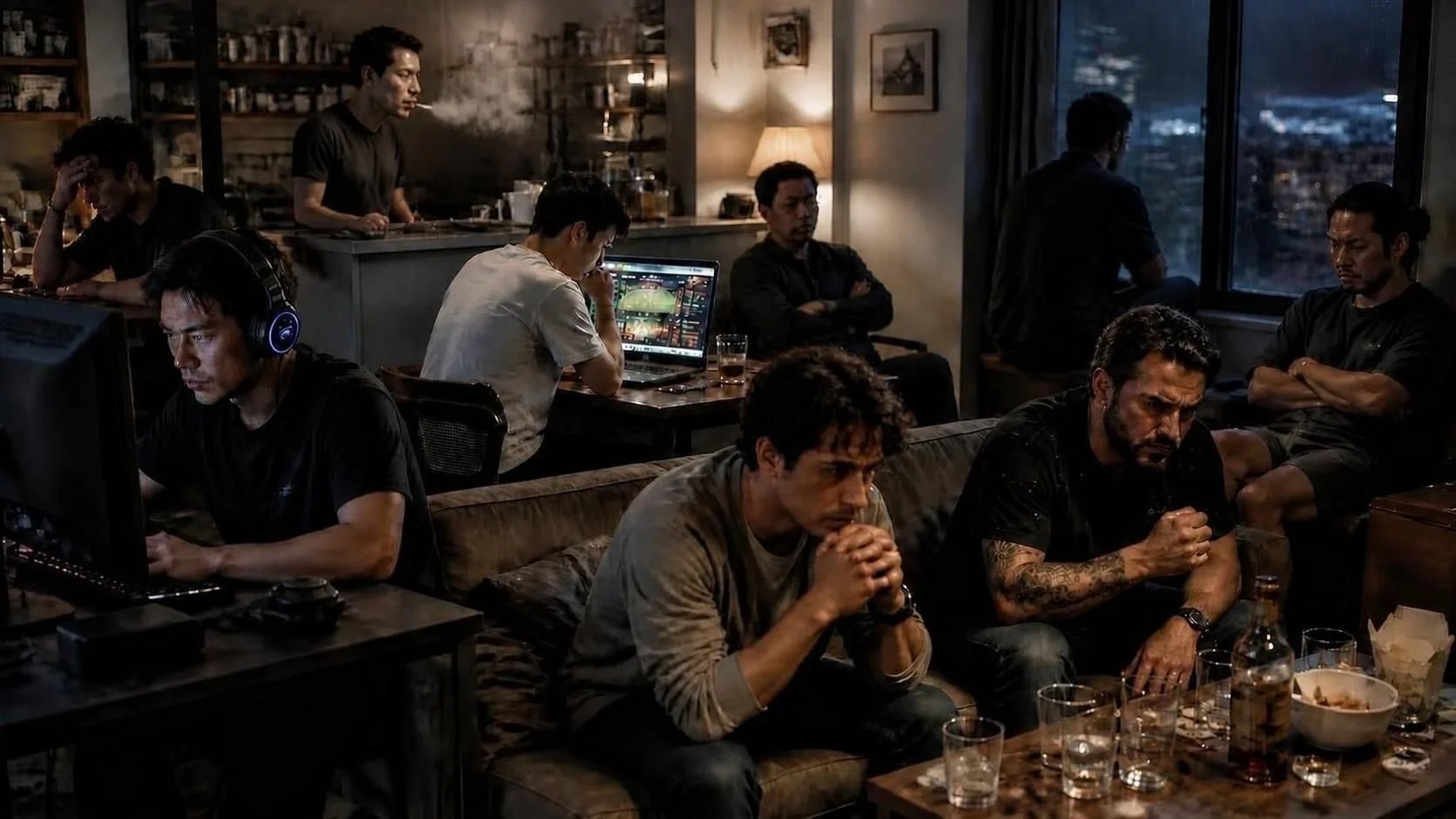
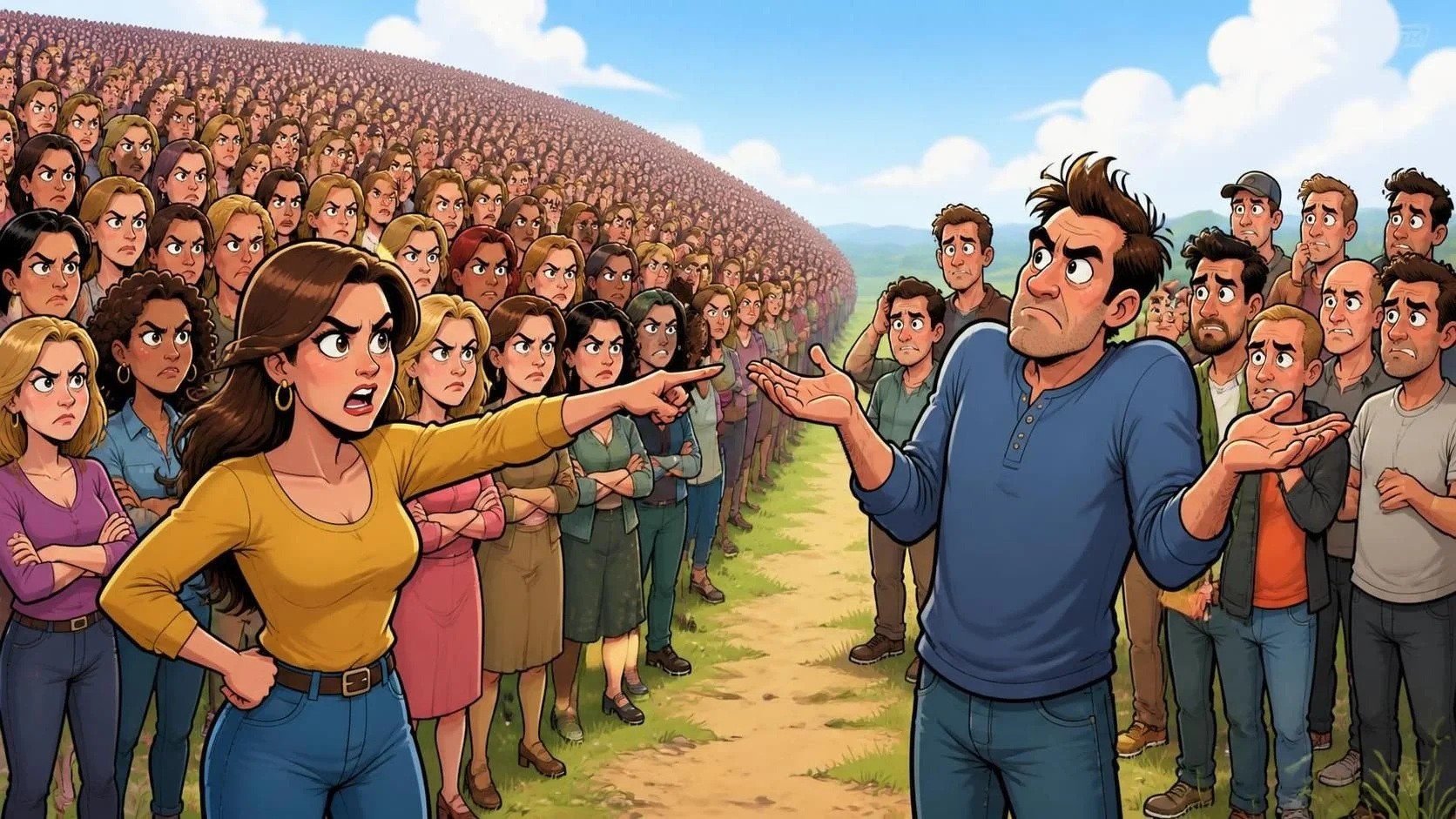
Image: Image suggested by John Barry and created using AI image generation (ChatGPT).
In contemporary Western societies, patterns of sexual and romantic behaviour have produced what some observers describe as de facto polygyny: a relatively small percentage of high-value men receive disproportionate sexual and romantic access, while many average men experience reduced opportunities for relationships. This dynamic has measurable consequences for male psychology, including elevated loneliness, social isolation, and risks to mental health.
Bachelorette parties and related female behaviours can illustrate these selective patterns.
Behaviours Observed at Bachelorette Parties
Bachelorette parties have evolved from relatively restrained pre-wedding celebrations into events that frequently feature male strippers or exotic dancers. While many remain light-hearted, numerous accounts from performers, attendees, and online discussions describe more explicit interactions, particularly in private or home settings.
“Society frequently frames such behaviour as an empowering ‘last hurrah’, while equivalent male behaviour at bachelor parties attracts sharper criticism.”
Reports describe aggressive physical contact, including grabbing, pressing faces into the crotch area, spanking, and similar acts. Kissing, licking (sometimes with edible props), and oral sex performed by women on the performers appear repeatedly. In some cases, these interactions progress further in private. Group dynamics often intensify the experience, with multiple women interacting with one performer while others encourage participation. Same-sex contact among the women themselves is also commonly reported.
These accounts are largely anecdotal and do not describe every event. Many parties remain theatrical or restrained. Nevertheless, recurring reports suggest that in certain younger or urban circles the events function as outlets for sexual gratification through collective access to high-value male performers. Society frequently frames such behaviour as an empowering ‘last hurrah’, while equivalent male behaviour at bachelor parties attracts sharper criticism.
The Broader Pattern: Sharing High-Value Men
Similar dynamics appear in everyday mating behaviour. Large-scale data from dating platforms show that women, on average, rate the majority of male profiles as below average in attractiveness and concentrate attention on a smaller high-value tier. This creates a winner-take-most environment in which higher-value men receive abundant options, including casual encounters and concurrent arrangements, while many other men receive little interest.
Some women appear to maintain access to more sexually desirable men while partnering with more stable partners for resources, emotional support, or long-term security. Reports of casual phases, concurrent partners, and paid encounters with high-value male performers fit this pattern of selective female attention. Interest concentrates on sexually attractive men; when direct access to such men is limited, some women obtain it through group events or paid arrangements. The result is that a relatively small number of higher-value men receive sexual interest from multiple women, while many average men receive little. At bachelorette events, performers have described married or engaged women participating enthusiastically, sometimes treating the experience as a final fling or occasional outlet.
In these cases, a high-value man may supply sexual gratification while another man supplies stability or resources. When this occurs inside what the second man believes is an exclusive relationship, it undermines the reciprocity that pair-bonding requires and often weakens the sexual relationship with that partner, leaving him bearing costs without the corresponding benefits.
Psychological Consequences for Men
These modern mating-market patterns have implications for male psychology. Young men currently report higher rates of loneliness than young women in several large datasets. Gallup data, for example, found that 25% of US men aged 15–34 reported feeling lonely a lot of the previous day, compared with 18% of women in the same age group. The share of men reporting no close friends rose from 3% in 1990 to 15% in 2021, while the share with six or more close friends fell from 55% to 27%.
“Men who experience repeated rejection or remain outside pair-bonds for extended periods often report diminished self-worth, reduced motivation, and higher loneliness.”
Relationship status itself is strongly linked to men’s mental health. A 2025 meta-analysis of global data found that divorced men had nearly three times the odds of death by suicide compared with married men, and recently separated men—especially those under 35—faced even higher relative risk. Single and divorced men also show elevated rates of depressive symptoms in multiple studies.
Prolonged low mating success and thinner social networks can compound these effects. Men who experience repeated rejection or remain outside pair-bonds for extended periods often report diminished self-worth, reduced motivation, and higher loneliness. When higher-value men absorb a disproportionate share of female sexual and romantic attention, a larger pool of men is left with fewer pathways to the intimate relationships that research consistently links to better male mental health outcomes.
These outcomes are multifactorial. Economic pressures, educational barriers, technological changes and cultural shifts in relationships and gender expectations all contribute. Not every woman participates in concurrent or highly selective patterns, but the consequences for many men are significant.
Nevertheless, the current distribution of mating opportunities appears to leave a substantial minority of men with reduced access to relationships, physical affection, and the psychological benefits that typically accompany them.
Toward Honest Discourse
Bachelorette parties and the broader pattern of shared access to high-value men illustrate how gender equality and reliable birth control can restructure mating markets and relationships in ways that were not widely anticipated. Higher-value men gain abundant low-commitment access. While many women gain excitement, validation, gratification, and/or resources through selective channels, average men encounter exclusion from the relationships that remain central to well-being for most people.
Male psychology has long recognised the importance of social connection, status, and pair-bonding. The present mating market, and the loneliness and mental-health correlates that accompany low success for many men, deserve closer empirical and clinical attention. Greater transparency about how these markets actually function may help men, clinicians, and policymakers develop more realistic expectations and more effective forms of support.
Disclaimer: This article is for information purposes only and is not a substitute for therapy, legal advice, or other professional opinion. Never disregard such advice because of this article or anything else you have read from the Centre for Male Psychology. The views expressed here do not necessarily reflect those of, or are endorsed by, The Centre for Male Psychology, and we cannot be held responsible for these views. Read our full disclaimer here.
Like our articles?
Click here to subscribe to our FREE newsletter and be first
to hear about news, events, and publications.





When a male is in a power imbalance, at least two masculine instincts are disempowered…

…people – men and women alike – respond less positively to male-favouring sex differences than they do to female-favouring sex differences.
hyper-masculine gender norms are typically embedded within military institutions, and while adherence to these norms can contribute to combat and military success, they conversely make clinical work challenging
Men might benefit greatly from a government strategy aimed at improving their health. Here are suggestions from the Centre for Male Psychology on how that might be done. This article ends with some comments on potential pitfalls in the process of putting this strategy in place.




…people – men and women alike – respond less positively to male-favouring sex differences than they do to female-favouring sex differences.


… many papers do not even bother to identify or justify the nationality of their samples…

hyper-masculine gender norms are typically embedded within military institutions, and while adherence to these norms can contribute to combat and military success, they conversely make clinical work challenging


Have you got something to say?
Check out our submissions page to find out how to write for us.
…people – men and women alike – respond less positively to male-favouring sex differences than they do to female-favouring sex differences.
There is social power, there is structural power, and there is physical power. What women have in our society is the power of the state behind them, and men do not. Men only have that physical power, and most men don’t want to use it



Masculinity may be just the tonic (remedy) needed by society at a time when it has recently suffered so many fractures.

“The place that people feel least free to speak their minds are oftentimes university, which I found absolutely stunning.”

Peer reviewers seem to be more accepting of my research on physiological differences between men and women (e.g., muscle fatigability) and less accepting of my research on psychological differences.

Generally speaking men’s humour is a good predictor of relationship satisfaction, as long as the woman appreciates it. A lot of studies show that men try to impress women with humour.

I was left with no doubt that men were struggling in myriad ways with stress and psychological illness – yet it has always been the discourse of the ‘desperate housewife’ that has attracted the most publicity, both in medicine and popular culture

…many professionals seem to interpret the evidence “most convicted child sex offenders are men”, as “children are more at risk from their father than their mother.

…people – men and women alike – respond less positively to male-favouring sex differences than they do to female-favouring sex differences.
IMD is not recognized by the UN because many believe we live in a patriarchal world and that the focus of the UN should be on women and children.

I’ve become curious why people, including very smart people with Ph.Ds, tend to leap at moralistic conclusions, adhere to them and consider them “science” when they are no such thing.

…critical gerontology focuses on the political-economic approach and consequently had a limited perspective on women and men: economically the former were seen as deprived and men privileged. Men were therefore disregarded.

…There is a reason why men who speak up on these issues tend to be retired or unemployed.

People depart a man in trouble [but as] soon as a man's got someone to talk to he will pour his heart out.
people are more aware of the fact men can be victims of this type of violence, but this often isn’t translated into policy, practice or indeed provision of resources

The brutality of the person's offence is generally related to the brutality of what they've experienced during childhood.

There is social power, there is structural power, and there is physical power. What women have in our society is the power of the state behind them, and men do not. Men only have that physical power, and most men don’t want to use it

90% of men in prisons have come from generational family violence… So when they're violent - which is what they've learned - we then perpetuate the violence by putting them in prison.

“I feel very strongly that the pendulum has swung too far, as it always does, the swing from a very male dominated patriarchal society to a very, very female dominated society where men …”

…the feminist movement has done inestimable damage to the mental health of boys and men. Making boys second class at school, teaching them that males are bad by nature and that women have suffered at the hands of men inevitably leads to boys feeling unhappy about themselves and adopting the unruly, delinquent behaviour which is expected of them.

Some people blame drill music – a form of rap - for the rising murder rate in London. Drill is known for aggressive lyrics about gang violence, but rather than seeing this as a valuable way for young men to express their feelings, some people want to ban it.

Gender scholars and activists were aghast a few years ago at the depiction of a feminist, in a documentary movie called The Red Pill, who unexpectedly learned to empathise with men. In a rare interview, director and star of The Red Pill, Cassie Jaye, reflects upon the impact the movie has had on herself and others.
.
 Richard Procida
Richard Procida is an attorney, academic author of Social Issues in Global Perspective: Pornography (Lexington Books), and a writer on men’s issues, relationships, and social dynamics.