


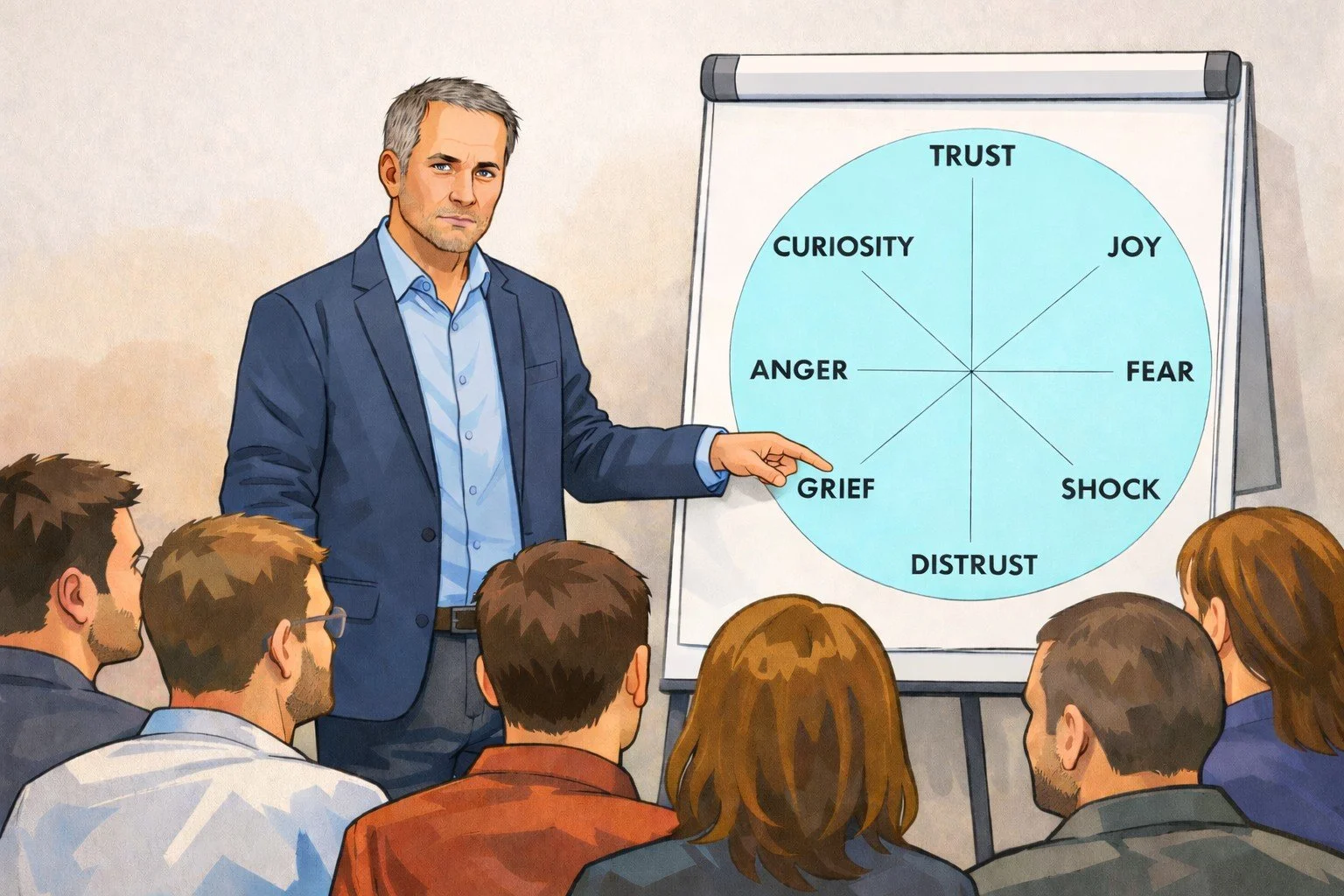
Image: Image suggested by John Barry and created using AI image generation (Duck-ai and ChatGPT Luna 6).
Introduction: The Rebranding of Intimacy
In contemporary cultural discourse, a sophisticated new lexicon of intimacy—comprising terms such as 'ethical non-monogamy' (ENM), 'polyamory', and 'living apart together’ is routinely celebrated across progressive media and university faculty lounges as an emancipatory assault on patriarchal 'mononormativity.’ Yet, once stripped of its high-minded academic obfuscation, this bourgeois linguistic sleight of hand reveals a far more mercenary reality.
Far from representing a courageous leap into human flourishing, these proposed relationship models are little more than a sanctimonious veneer over old-fashioned promiscuity—a female-driven rebranding of the hookup culture designed to legitimise selective access to high-value men without the inconvenience of social stigma, moral guilt, or emotional accountability.
Box 1: Key Concepts and Mating Terminology (Part 1)
De Facto Polygyny: An informal or operational mating pattern in which women share a small tier of high-status or highly desirable men without formal marriage, commitment, or exclusivity while a substantial proportion of average men are excluded from pair-bonding.
Hookup Culture: A contemporary dating norm that prioritises uncommitted, casual sexual encounters over enduring pair-bonding and emotional intimacy. Because sexual selection on digital platforms concentrates disproportionately on a narrow band of desirable partners, hookup culture frequently operates as an unacknowledged rotational system in which multiple women share the same small pool of elite men.
Ethical Non-Monogamy (ENM): An umbrella term for consensual romantic or sexual relationship structures in which all participants explicitly agree to have multiple concurrent partners, distinguished from illicit infidelity through mutual transparency and negotiated boundaries.
Polyamory: A specific branch of consensual non-monogamy characterised by cultivating multiple simultaneous, long-term emotional and romantic commitments with the full consent of all parties involved, rather than engaging exclusively in casual sexual exploration.
Mononormativity is the normative assumption that monogamy is healthier or more natural than ethical non-monogamy, as well as the societal enforcement of such an assumption. It has been widely tied to various forms of discrimination or bias against polyamory.
Living Apart Together (LAT): An intimate, committed romantic relationship in which partners maintain separate primary households rather than cohabiting or commingling domestic finances, often chosen to preserve personal autonomy while circumventing traditional domestic roles.
This fundamental restructuring of Western mating dynamics was precipitated by two pivotal 20th-century developments: widespread access to reliable contraception and the rapid expansion of female financial independence. For centuries, marriage functioned as an indispensable economic contract in which women relied upon male partners for financial provision and physical protection. Today, as more and more women outpace men in higher education and achieve unprecedented economic self-sufficiency, the traditional economic rationale for marriage is strongly called into question, as hasthe societal expectation that a woman should settle into traditional matrimony.
“men are no longer viewed as indispensable heads of households. Instead, there is an emerging functional bifurcation into two narrow categories: elite, high-value men who serve as casual sexual outlets, and average men who are […] expected to perform hazardous physical labour, maintain critical infrastructure, and fight wars”.
Co-living has become more conditional: unless a man possesses exceptional wealth capable of dramatically elevating a woman's lifestyle, modern women increasingly choose to live separately or remain single. In this emerging landscape, men are no longer viewed as indispensable heads of households. Instead, there is an emerging functional bifurcation into two narrow categories: elite, high-value men who serve as casual sexual outlets, and average men who are reduced to disposable financial providers and protectors—expected to perform hazardous physical labour, maintain critical infrastructure, and fight wars, all whilst being stripped of reciprocal domestic respect, companionship, and fatherhood.
De Facto Polygyny and the Modern Sexual Marketplace
The Winner-Take-Most Sexual Marketplace
On modern digital dating platforms, unconstrained female selectivity concentrates romantic and sexual attention disproportionately upon a narrow top tier of highly attractive, high-status men. This dynamic creates a 'winner-take-most' sexual marketplace governed by 'de facto polygyny.' Rather than manifesting through formal, legally sanctioned multi-wife households, de facto polygyny operates informally: a small percentage of desirable men enjoy rotational, multi-partner access to a broad pool of women, whilst average and lower-status men face systematic exclusion.This informal hierarchy exposes a profound cultural paradox when contrasted with theoretical desires. Recent empirical research from the United Kingdom conducted by Andrew G. Thomas and his colleagues reveals that heterosexual men are six to eight times more open to polygynous relationships than women when surveyed in the abstract. Yet, whilst men express far greater theoretical enthusiasm for multi-partner arrangements, the operational reality of the modern dating market functions almost exclusively as female-selected hypergamy.
Women tend to be driven to seek commitment. Even young women pursue security. Empirical data, however, reveals a profound chasm between stated moral sentiment and actual dating behaviour. Survey findings from the Institute for Family Studies (IFS) demonstrate that 76% of young adults intending to marry agree that sexual intimacy outside a committed relationship is never acceptable. At the same time, unrestrained hypergamy also drives women to compete for high value men. The unintended result is that women end up sharing these men.
“The language of 'ethical non-monogamy' functions primarily as a high-status intellectual mechanism to resolve the intense psychological tension between traditional moral rhetoric—which overwhelmingly demands sexual exclusivity—and actual contemporary dating practices that centre upon the selective sharing of elite men.”
While many men experience loneliness and sexual scarcity, many women complain about the hookup culture. Men may dream of having a harem, but in practice, it is female selectivity—sometimes disguised as female empowerment—that dictates which men are showered with attention from multiple female partners.
'Ethical Non-Monogamy' as an Ideological Shield
A calculating hypocrisy underpins this modern mating architecture. Some women demonstrate a complete willingness to share elite male performers, casual playboys, or high-status partners without demanding long-term commitment, yet simultaneously express sharp frustration towards average dating partners who fail to offer immediate marital devotion. In this context, 'ethical non-monogamy' serves as a crucial ideological shield. By recasting casual, shared encounters as an enlightened lifestyle choice, women can indulge their hypergamic preferences and share desirable men whilst insulating themselves from psychological guilt, hypocrisy, and social disapproval.
Box 2: Key Concepts and Mating Terminology (Part 2)
Male Disposability: An evolutionary and sociological concept describing the societal tendency to place lower intrinsic value on the physical preservation and emotional well-being of men, expecting them to absorb lethal occupational and martial burdens while lacking reciprocal institutional guarantees of relational security.
Monogamy: A partnership structure in which an individual pairs exclusively with one partner. In evolutionary anthropology and historical sociology, socially enforced normative monogamy functioned as an egalitarian civilisational compromise that democratised mating access, suppressed destructive male intra-sexual competition, and secured dedicated paternal investment in child-rearing.
Hypergamy: The anthropological and evolutionary tendency of women to select a romantic partner of equal or superior socio-economic status, educational attainment, or perceived social value. In unconstrained digital markets, female hypergamy can lead to concentrated mating interest in a top tier of men.
Polygamy: The overarching practice or legal institution of having more than one spouse or marital partner simultaneously, encompassing both polygyny and polyandry.
Polygyny: The specific form of polygamy in which one male maintains concurrent marital or mating relationships with multiple females. Across human history, societies characterised by high polygyny exhibit steep status inequalities between men, increased male violence, and substantial demographic disenfranchisement.
Polyandry: a form of polygamy in which a woman takes two or more husbands at the same time. Polyandry is contrasted with polygyny, involving one male and two or more females. If a marriage involves a plural number of "husbands and wives" participants of each gender, then it can be called polygamy,[1] group or conjoint marriage. In its broadest use, polyandry refers to sexual relations with multiple males within or without marriage.
Feminist Division and the Gap Between Ideology and Behaviour
While progressive academic circles champion polyamory and separate living arrangements as radical acts of personal autonomy against oppressive marital structures, feminists are divided on the subject. Classical and radical feminist critics, most prominently the British journalist Julie Bindel, contend that polyamory offers women no genuine liberation. These critics argue that multi-partner dynamics inevitably recreate ancient power imbalances, sanitise male privilege, and allow elite men to evade emotional accountability under the guise of 'ethical' freedom.
The language of 'ethical non-monogamy' functions primarily as a high-status intellectual mechanism to resolve the intense psychological tension between traditional moral rhetoric—which overwhelmingly demands sexual exclusivity—and actual contemporary dating practices that centre upon the selective sharing of elite men.
“This female preference historically generated a catastrophic social crisis: a vast demographic of disenfranchised, unmarried men left with no access to women, no family lineage, and consequently no stake in societal peace or stability”.
Monogamy, Polygamy and the Role of The Church
To comprehend the severity of today's mating market collapse, one must dismantle the prevailing progressive myth that historical polygyny was a coercive institution forced upon unwilling women by tyrannical men. It could be argued that historical polygyny was largely propelled by female choice and hypergamy. Given the choice between being the exclusive wife of a destitute peasant or sharing a wealthy king, nobleman, or chief who commanded abundant resources and security, women – perhaps understandably - often chose to share the high-status male.This female preference historically generated a catastrophic social crisis: a vast demographic of disenfranchised, unmarried men left with no access to women, no family lineage, and consequently no stake in societal peace or stability. It could be argued that in response, the Western Christian Church instituted strict normative monogamy not to save women from polygamy, but to save men from total exclusion. By banning polygyny and enforcing strict single-wife limits upon elite men, Christian monogamy provided a crucial social treaty that achieved three vital societal objectives:
Redistributed Mating Access: Capping elite men at one wife prevented female sharing of powerful and resourceful men, securing access to wives for poor and average men.
Curbed Male Violence: Integrating young men into stable family units drastically reduced intra-sexual competition, violent crime, and internal warfare.
Fostered Social Cohesion: Equalising mating opportunities motivated average men to channel their energy into productive labour, civic building, and paternal care.
The Human Costs: Male Disposability and the Crisis of Despair
The structural reality of de facto polygyny inflicts severe, measurable consequences across the social fabric, extending far beyond the immediate frustration of the dating market. For average men, exclusion from pair-bonding dynamics severs access to the domestic partnerships that social science consistently links to emotional resilience, purpose, and mortality protection. Yet, as social and reproductive history demonstrates, this asymmetry carries profound long-term costs for women and wider society as well. While rotational access to high-status men may offer short-term novelty or autonomy, it ultimately dilutes dedicated paternal investment, deprives women of genuine relational security, and fosters widespread emotional disillusionment. At a societal level, when pair-bonding breaks down, the foundational civilisational benefits of normative monogamy—depressed intra-sexual conflict, stable child-rearing environments, and social cohesion—give way to demographic decline and collective fragmentation.
“Deprived of the daily emotional anchorage and social validation that normative pair-bonding historically provided, young men report disproportionate rates of daily loneliness and social disconnection”.
The psychological consequences of this market asymmetry extend well beyond missed romance; they strike at the foundational human need for reciprocal attachment. The sharp divergence in singlehood between young men (63%) and young women (34%) reflects an increasingly stratified mating environment where average men face protracted relational marginalisation. Deprived of the daily emotional anchorage and social validation that normative pair-bonding historically provided, young men report disproportionate rates of daily loneliness and social disconnection. Clinical and sociological literature has long recognised that domestic partnership provides vital mortality and psychiatric protection for men—a reality underscored by the dramatic elevation in suicide risk following separation. When cultural norms dismantle the expectation of mutual, lifelong commitment, average men lose not only a partner, but the core psychological stabiliser that connects them to a hopeful future.
This systemic exclusion of men underscores a tragic societal paradox. Western culture continues to expect average men to perform the most dangerous physical labour, suffer the overwhelming majority of workplace fatalities, and serve as disposable force in the horrors of combat. Yet, whilst demanding these lethal physical sacrifices, modern relationship trends strip average men of the reciprocal institutional rewards—stable companionship, fatherhood, and domestic respect—which historically made those sacrifices meaningful.
“Concepts such as 'ethical non-monogamy' and polyamory are not sustainable models for human flourishing; they are bourgeois intellectual rationalisations for a sexual marketplace”.
Conclusion: The Unraveling Settlement and the Path Ahead
The historic marital settlement, which helped to protect average men from total exclusion and maintain social order, is rapidly unraveling. Driven by widespread contraception and female financial independence, the institutional social contract that sustained monogamy is dissolving, leaving the future of traditional partnership in grave doubt.
The central crisis facing modern civilisation is not merely the decline of traditional marriage, but the systemic reduction of the majority of men to disposable instruments. Concentrating intimate access among a small elite of high-status men whilst expecting the remaining majority to perform hazardous, low-status labour without the prospect of family life creates an inherently unstable foundation for society. Concepts such as 'ethical non-monogamy' and polyamory are not sustainable models for human flourishing; they are bourgeois intellectual rationalisations for a sexual marketplace adapting to unconstrained female hypergamy. Society must confront an urgent reality: a culture that treats the majority of its men as disposable labour in public life while denying them stable partnership in private life is building its future on a foundation that cannot stand.
The author of this article used Gemini Notebook to do research and to draft and redraft the article according to the author’s instructions. The author then reorganised and edited the draft.
Scroll down to the comments section to join the conversation
Disclaimer: This article is for information purposes only and is not a substitute for therapy, legal advice, or other professional opinion. Never disregard such advice because of this article or anything else you have read from the Centre for Male Psychology. The views expressed here do not necessarily reflect those of, or are endorsed by, The Centre for Male Psychology, and we cannot be held responsible for these views. Read our full disclaimer here.
Like our articles?
Click here to subscribe to our FREE newsletter and be first
to hear about news, events, and publications.





















Have you got something to say?
Check out our submissions page to find out how to write for us.


















.

When a male is in a power imbalance, at least two masculine instincts are disempowered…