
Male rape in the media: The forgotten victims.

“A police report described him as 5-foot-9 and 140 pounds - or as his cellmate put it, ‘just right’.”
For years male rape has been shown as comedy, in films to TV shows, so much that it’s now a cliché. It even appears in children’s cartoon shows such as SpongeBob SquarePants and Skylanders Academy.
While there are no current studies that capture the true magnitude of this issue, there have been attempts to collate films that include the comedic portrayals of male sexual assault. For example, Pop Culture Detective showcases how this issue spans genres, and though not a complete list, it shows how the theme repeatedly appears in top blockbuster movies (e.g. The Green Mile, Guardians of the Galaxy, and Groundhog Day).
“Word of advice - Don’t drop the soap”
Most of the depictions of male rape in film media relate to prison contexts, many including the cliché ‘don’t drop the soap’. Younger viewers are most likely oblivious to the actual implication of this phrase. Adults who understand the joke might think it is funny rather than horrific, which highlights how desensitised we are to this issue. The unoriginality of these scenes also shows how viewers have been conditioned to see male rape as a problem isolated to prisons and something almost inevitable for new convicts. However, the reality is men can be raped in any setting, and while male rape is a documented issue in prisons, most prisoners are not raped.
“He’s the one who famously said I’d take a bullet for Donald Trump. Well now that he’s looking at prison time we’ll see if he’s willing to take a dick.”
At first glance, these depictions may seem to be just dark humour and not to be thought about too deeply. However the media has the power to influence cultural views and beliefs, so if the media’s portrayal of male rape is as comedy, this trivialises the experience of male rape victims compounding their trauma and feelings of shame.
These harmful depictions also reinforce the unhelpful male rape myths (MRMs) that are endemic in society, including people making legal decisions about cases of male rape. Although this issue is very under-researched, some people are beginning to highlight the MRMs in the media and society.
These myths include the idea that men cannot be raped; only gay men can be raped; women can’t sexually assault men; men who physically respond to rape must have wanted it. These harmful MRMs are also found in UK newspapers, where male rape is portrayed as consensual and a solely homosexual issue. When the media has such influence over societies’ views, normalising harmful stereotypes, it is vital that more research is conducted into MRMs and their impact on male victims.
“And why does a prisoner drop the soap? Cause no one wants to do it alone.”
These harmful depictions of male rape are in stark contrast to depictions of female rape, which are usually – and rightly - portrayed with the utmost seriousness. Why the contrast? One answer is the cognitive distortion called gamma bias, where problems impacting women are magnified but the same problems impacting men are minimised. Thus one of the greatest and most under-researched examples of gamma bias is the media’s sensationalist and humorous portrayal of male rape.
Unlike MRMs, female rape myths (FRMs) have been challenged by feminists since the 1970s. This effort has led to the countering of many harmful FRMs, such as the stereotype that female victims are ‘asking for it’. By countering these portrayals, feminists are successfully creating conversations around the nature of female rape. There is still a long way to go in solving this issue, but the feminist movement is largely responsible for the increase in awareness of female rape in society.
“This doesn’t end with us riding out into the sunset. It ends with me dying of cancer and you winning the icebox award for softest mouth”
While the work in countering FRMs is incredibly important, these efforts have inadvertently contributed to gamma bias, which has left portrayals of MRMs overlooked, and rape seen as a solely female issue. So today, most conversations around rape disregard the experiences of male victims.
Several issues urgently need to be addressed in male rape research, such as the under-reporting of its occurrence and the low percentage of male victims who pursue any type of support. Fortunately, academics have started to recognise some of the key obstacles to pursuing support which range from the shame associated with help-seeking, general distrust in female-centric support services, and concrete barriers like financial constraints. These obstacles become even more complex in forced-to-penetrate cases where male victims suffer from ‘gendered’ aggression strategies such as threats of false rape allegations. There can be little doubt that the harmful MRMs portrayed in the media are part of the problem, reducing help-seeking and contributing to the mental health impact of male rape, such as PTSD, depression, and suicidal thoughts, which may go unreported and undiagnosed for years.
“Check out the new meat. I’m going to slather you up in Gunavian jelly [laughs] Go to town”
Fortunately, there has been a recent advancement in tackling MRMs. This is the development and validation of the first reliable and comprehensive measure of MRM acceptance, the Male Rape Myth Acceptance Scale (MRMAS). It’s hoped that this will provide a reliable method to identify MRM acceptance in important populations, such as the judicial systems and support services. The MRMAS can then be used to develop and validate any training programmes which aim to reduce MRM acceptance. This process might help reduce many of the problems male rape victims face when reporting and getting support.
While this is a great step in the right direction, it is vital we continue to build momentum in the study of male rape to ensure we challenge MRMs. Currently, many men still feel unable to report their rape or seek support due to the MRMs that the media helps perpetuate in our culture. Hopefully, by continuing this effort, we can help bridge the 20-year gap between female and male rape research so that all rape victims get the support they deserve.
To see the secondary source of the quotations above, see Pop Culture Detective here
Scroll down to join the discussion
Disclaimer: This article is for information purposes only and is not a substitute for therapy, legal advice, or other professional opinion. Never disregard such advice because of this article or anything else you have read from the Centre for Male Psychology. The views expressed here do not necessarily reflect those of, or are endorsed by, The Centre for Male Psychology, and we cannot be held responsible for these views. Read our full disclaimer here.
Like our articles?
Click here to subscribe to our FREE newsletter and be first
to hear about news, events, and publications.



When a male is in a power imbalance, at least two masculine instincts are disempowered…

…people – men and women alike – respond less positively to male-favouring sex differences than they do to female-favouring sex differences.
hyper-masculine gender norms are typically embedded within military institutions, and while adherence to these norms can contribute to combat and military success, they conversely make clinical work challenging
Men might benefit greatly from a government strategy aimed at improving their health. Here are suggestions from the Centre for Male Psychology on how that might be done. This article ends with some comments on potential pitfalls in the process of putting this strategy in place.



…people – men and women alike – respond less positively to male-favouring sex differences than they do to female-favouring sex differences.

… many papers do not even bother to identify or justify the nationality of their samples…
hyper-masculine gender norms are typically embedded within military institutions, and while adherence to these norms can contribute to combat and military success, they conversely make clinical work challenging



There is social power, there is structural power, and there is physical power. What women have in our society is the power of the state behind them, and men do not. Men only have that physical power, and most men don’t want to use it
Have you got something to say?
Check out our submissions page to find out how to write for us.
hyper-masculine gender norms are typically embedded within military institutions, and while adherence to these norms can contribute to combat and military success, they conversely make clinical work challenging

hyper-masculine gender norms are typically embedded within military institutions, and while adherence to these norms can contribute to combat and military success, they conversely make clinical work challenging
hyper-masculine gender norms are typically embedded within military institutions, and while adherence to these norms can contribute to combat and military success, they conversely make clinical work challenging

hyper-masculine gender norms are typically embedded within military institutions, and while adherence to these norms can contribute to combat and military success, they conversely make clinical work challenging

hyper-masculine gender norms are typically embedded within military institutions, and while adherence to these norms can contribute to combat and military success, they conversely make clinical work challenging

Much of our attitudes, theorizing and public debate around men and masculinity is influenced by high profile feminist and Gender Studies scholars in academia. But what is the scientific quality of publications from these scholars?

Some people blame drill music – a form of rap - for the rising murder rate in London. Drill is known for aggressive lyrics about gang violence, but rather than seeing this as a valuable way for young men to express their feelings, some people want to ban it.

To survive… cultures have to use men and women effectively and … in fact, most cultures have used men and women in different ways… what our culture does is [grant] greater status to men and greater protection to women

hyper-masculine gender norms are typically embedded within military institutions, and while adherence to these norms can contribute to combat and military success, they conversely make clinical work challenging

There are around 300,000 veterans living with hearing loss in the UK, according to The Royal British Legion. In addition to being at a greater risk of PTSD, depression, and anxiety, many vets are also battling psychological distress from hearing problems.
The book begins with a description of her therapeutic approach, and an illustration of how to understand and work with the rage often seen in male CSA clients.

I felt in my dealings with some police officers, as though I were treated firstly as a man (assumed to be a perpetrator), but they’d overlooked risks associated with my impairment. Example: How can you dodge a missile you don’t see coming?

The Panorama programme on domestic violence failed to adequately highlight two important issues: male victims and female perpetrators.

your photograph, name and address, might appear in the local and national press and on TV, insinuating what an evil monster you are

…an attack upon masculinity is an attack upon one’s sense of self, of identity. …What, then, is the right psychological defence against such an attack?

The male has been designed to “look”, not only at the female, but to “look out” for prey, for danger, and for ways to protect his family unit.

If his child is allowed to live, this man must be available, for the rest of his life, to love and provide for his child… If, on the other hand, it is decided that his child is to be destroyed, he should be able to go about his life as if nothing has happened
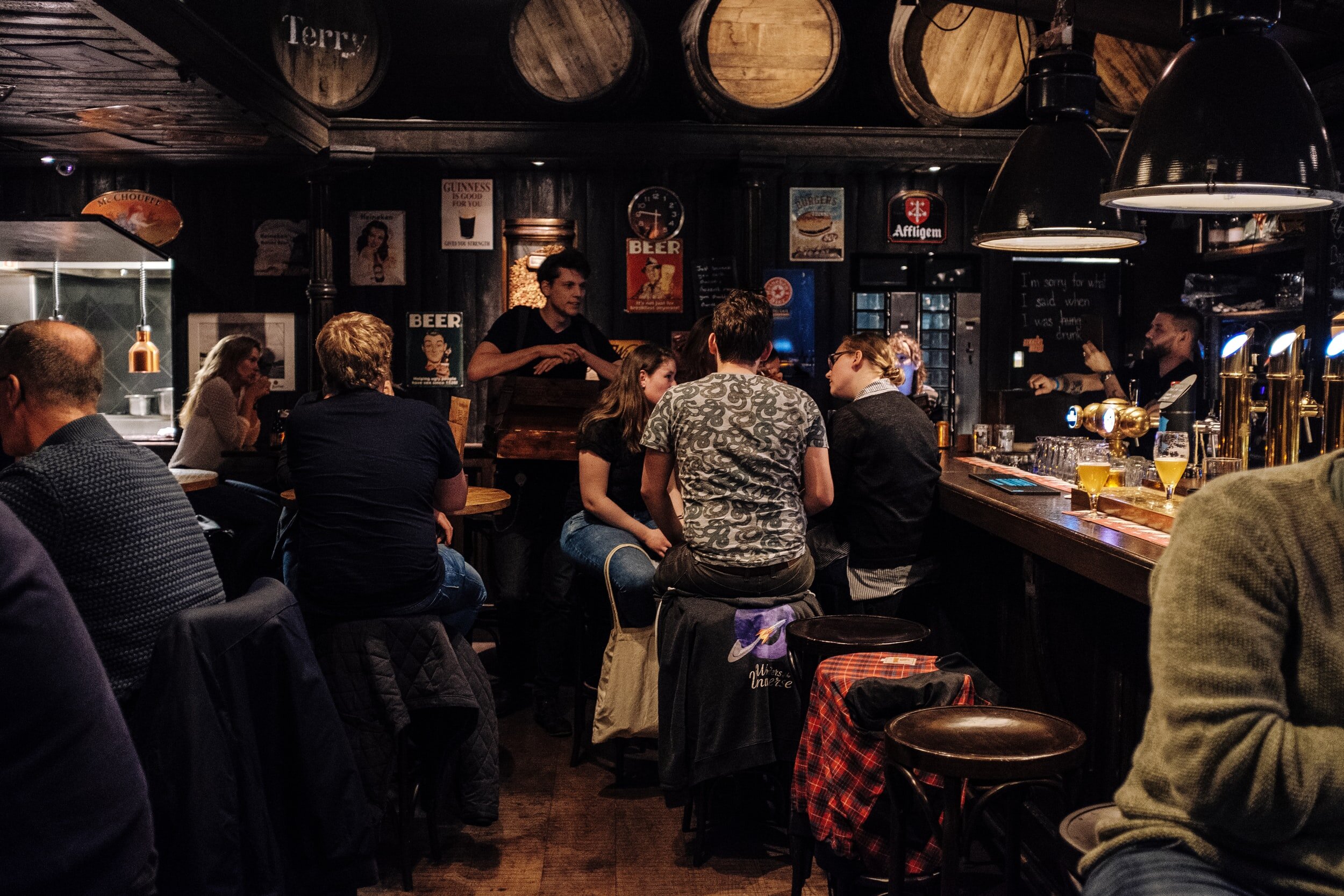
Socialising is a basic human need. The opposite – social isolation – is one of the worst forms of torture. Some people look down on the local pub as a place for undesirable riff raff, but that narrow viewpoint misses entirely the community value of the pub

Male psychology is a recent development in academia. Unlike gender studies, feminism, and men’s studies, male psychology takes the view that we can gain more by recognising and harnessing the positive aspects of masculinity than we can by taking a relentlessly negative approach to men.

.
 Tom Hulme
Tom Hulme is an MSc Psychology student at Birkbeck, University of London. He has a keen interest in mental health research and the study of male psychology. Alongside his academic work, he also runs the @mindful_tom Instagram page, where he promotes mental health, mindfulness, and self-care techniques to help people take control of their mental wellbeing.