
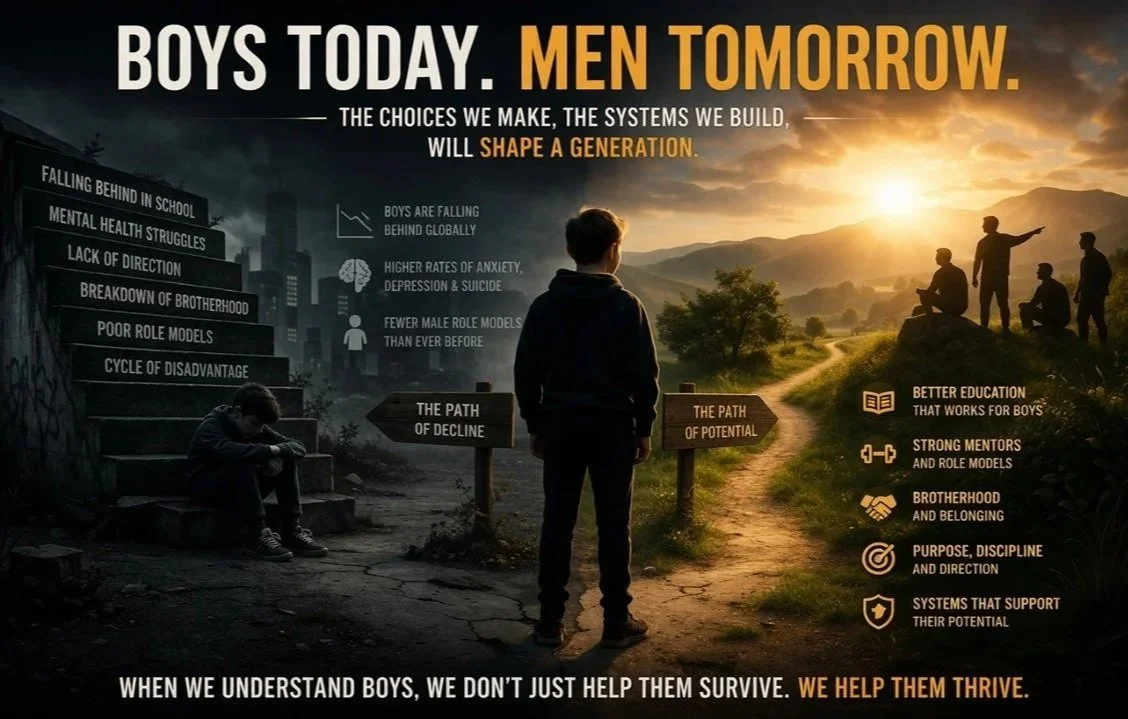
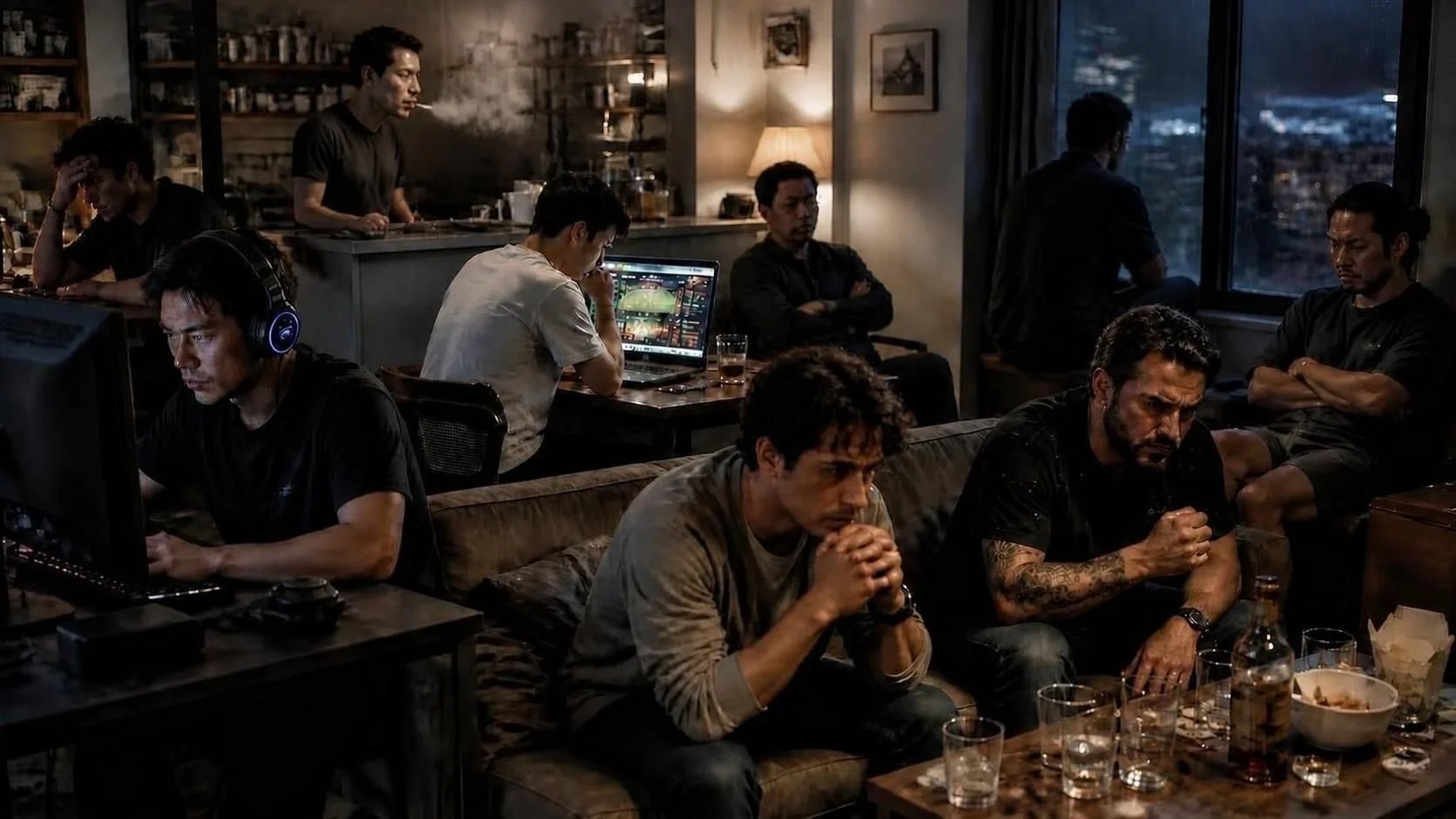
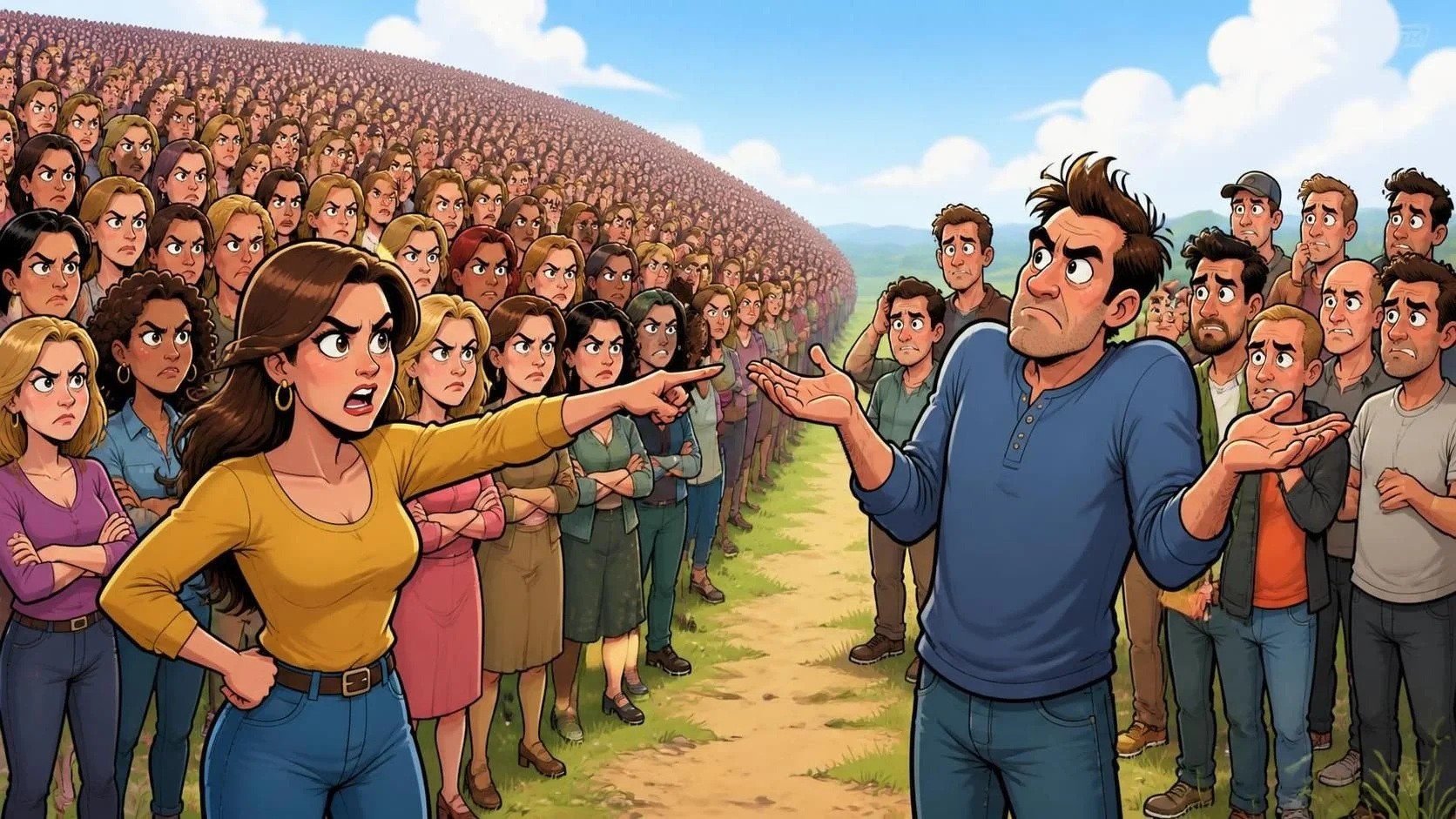
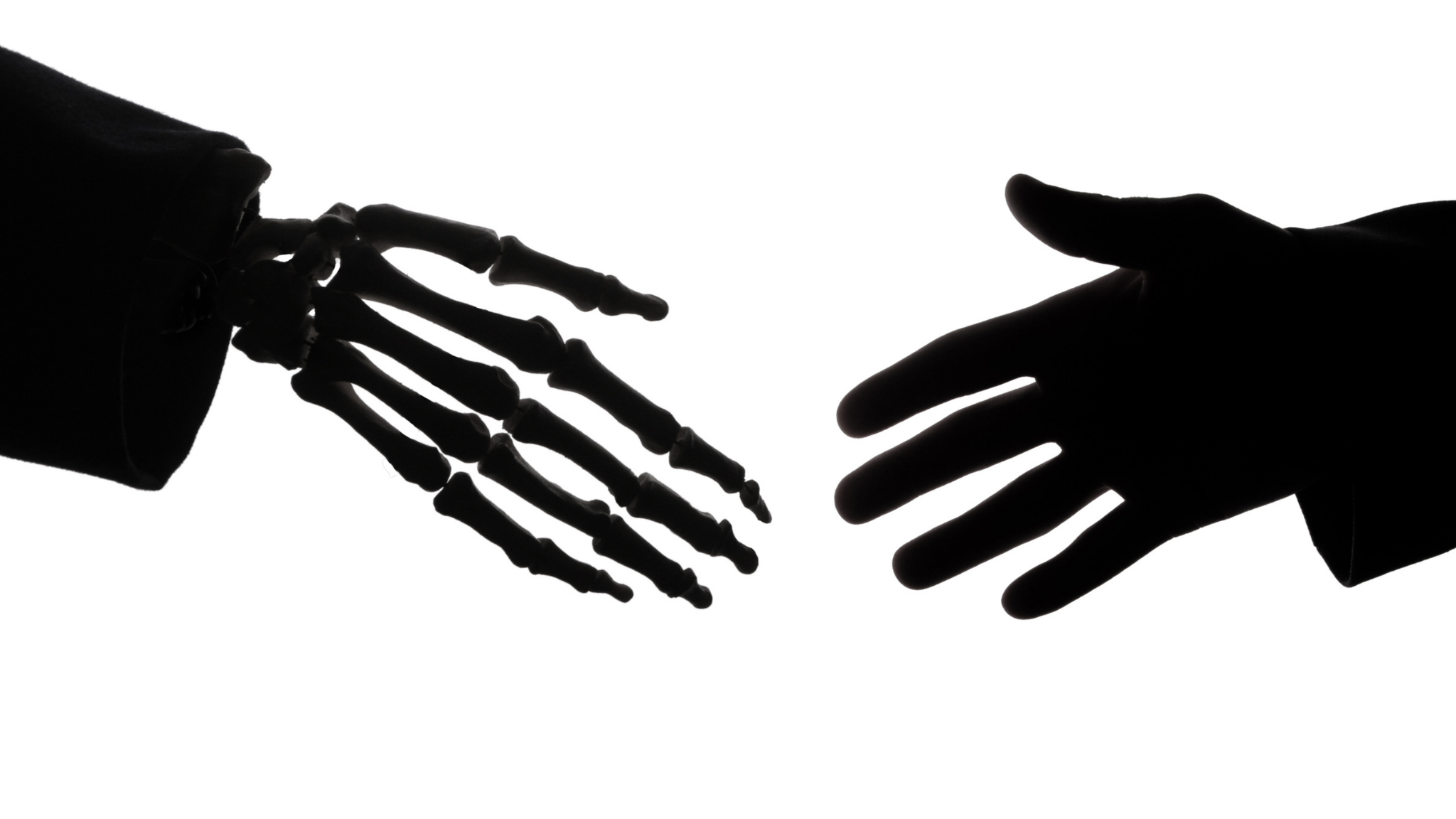
Image: Which way, boys? Picture created by Kane Caballero using AI (Grok).
The Problem Isn’t Masculinity. It’s the Lack of It.
Lost boys of Britain
With the recent commotion surrounding the latest documentary by Louis Theroux (The Manosphere) and the TV series Adolescence, the issues surrounding boys have been once again forced into the spotlight.
The Manosphere
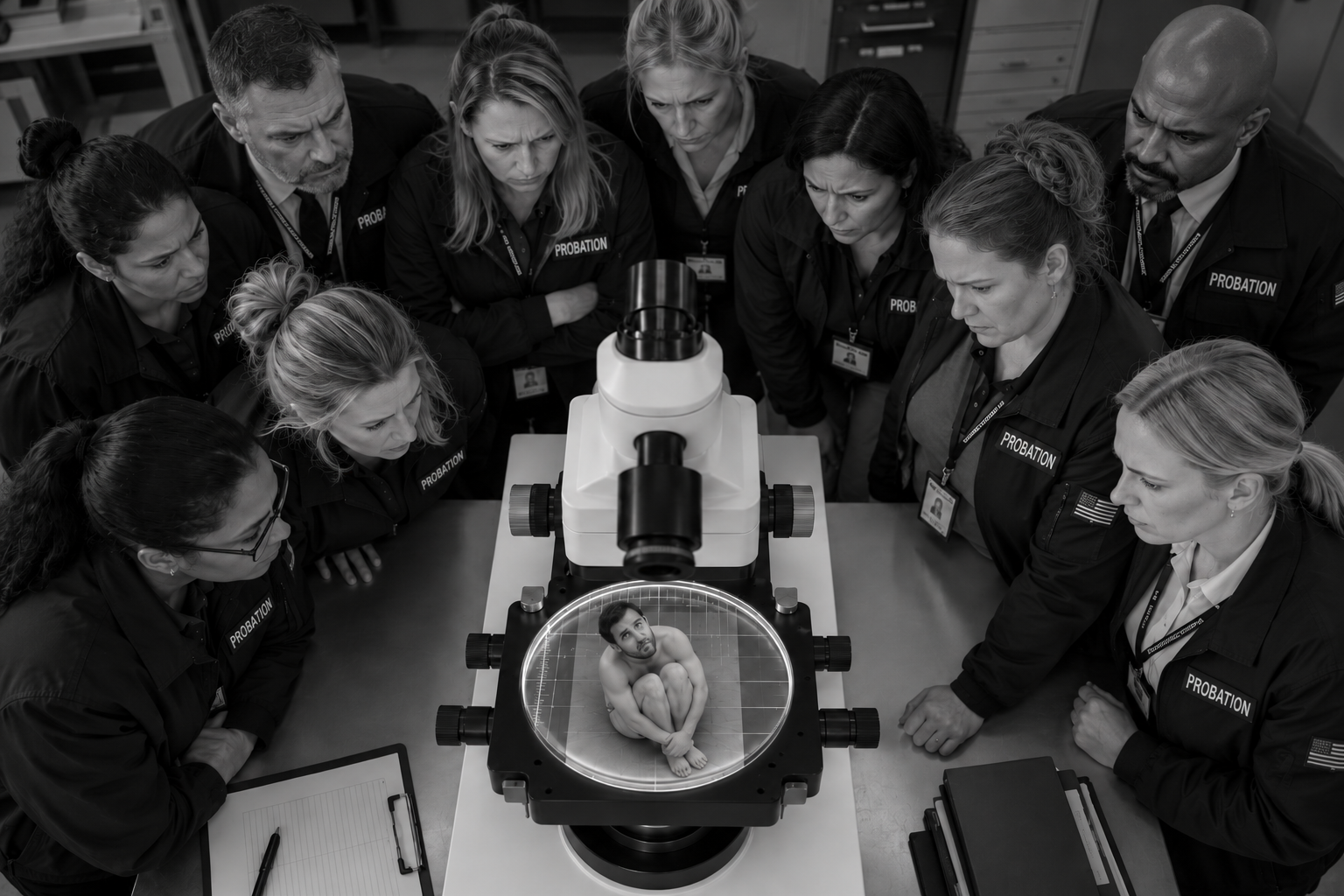
While it’s easy to see why this documentary provoked strong emotions, it’s important to recognise its clear agenda. The male figures featured were hand-picked to highlight the most extreme and negative behaviours in males, and it succeeded! Yet in doing so, the documentary becomes a battering ram to use against boys and men, portraying any form of masculinity as inherently problematic rather than exploring context, development, or social realities.
‘Adolescence’
At times, I found the public’s reaction and the dialogue that followed the release of Adolescence, quite unsettling. I remember feeling a clear shift towards framing anything male as inherently problematic. But not to get lost in the obvious flaws or inconsistencies in the show, at the end of the day, this was a fictional TV series and not a documentary. It seemed to be given real life social commentary status rather than a constructed drama. This blurred the line between fiction vs non-fiction and allowed the show to be wielded as another weapon against boys, framing them as a societal problem instead of presenting a layered, fictional story. In effect, fiction was turned into real world moral judgment, and boys became the targets of a narrative that simply wasn’t rooted in fact.
From TV hype to reality
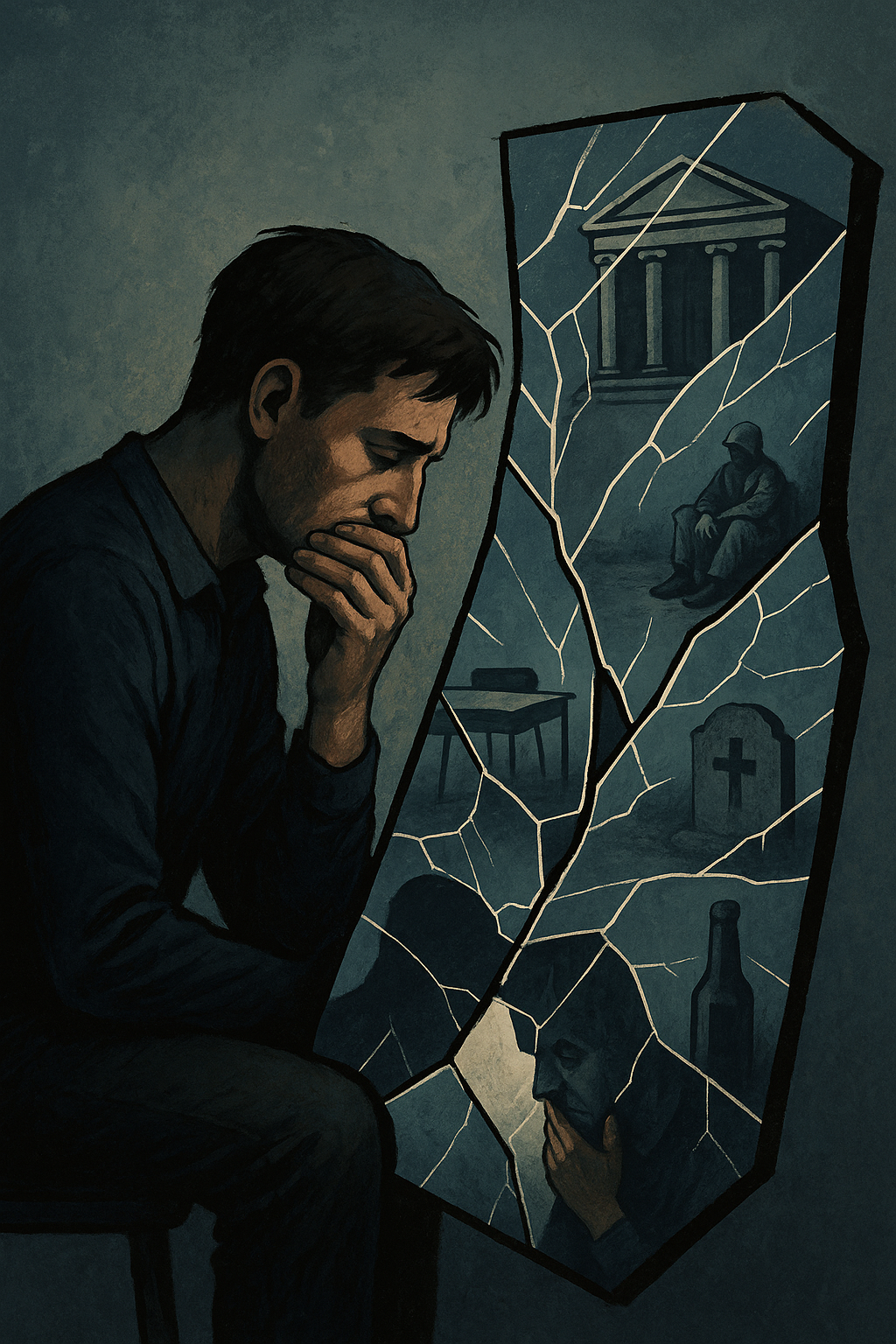
All the way down here on the ground, the reality of the plight facing boys and men has not changed. Across the UK, they continue to be disproportionately represented in some of the most severe outcomes in society. Boys and men account for 75–76% of all suicides consistently underperform at every stage of education and are three times more likely to be excluded from school. They make up 77% of pupils with an Education, Health and Care Plan and 73% of those receiving SEN support. Beyond education, men comprise 95–96% of the prison population, around 85% of rough sleepers, and have a lower life expectancy than females. They also account for approximately 70–72% of drug misuse deaths and an overwhelming 97% of workplace fatalities.
In this article I will offer at least a partial explanation as to why boys and men are struggling and what we can do collectively about it. I will touch on various disciplines throughout, such as, evolutionary psychology, anthropology, psychology, and cross-cultural research.
Men at the top
Paradoxically, men don’t only dominate the lower end of societal outcomes as discussed earlier, they are also disproportionately represented at the top. From wealth creation to infrastructure and innovation, the same pattern emerges. Men are:
· 90%+ in infrastructure and high-risk roles
In other words, it’s true to say men are the top earners in society. But it’s also true to say men are the lowest earners in society. People who focus only on ‘male privilege’ clearly haven’t dealt successfully with the cognitive dissonance of men predominating at both the top and bottom. This is where the greater male variability hypothesis comes in.
The Greater Male Variability Hypothesis
In psychology, the greater male variability hypothesis demonstrates that males tend to show greater variability than females across certain traits, meaning a higher proportion of males appear at both the high and low extremes of ability, behaviour, and outcomes. While average differences between men and women can often be small, men are consistently more likely to be found among both top earners/performers and those struggling most.
This is not just a hypothesis, it reflects a consistent statistical pattern observed across multiple fields. It is not a question of whether it exists, but why it exists.
To solve this puzzle, we need to understand the male brain both neurologically and evolutionarily. We then need to examine our cultural and sociological understanding of what it means to be male—and what it means to be masculine. Finally, we need to take a step back and see what we find.
“Anthropology shows us how masculinity is expressed across cultures; evolutionary psychology helps explain why those patterns emerge in the first place.”
The Neuroscience Perspective
Neurologically the male brain differs to the female’s brain in several ways. I’m not a neuroscientist but I do have a general understanding - like many of us that work in the social, emotional and mental health (SEMH) field - of how the brain works. Here I’ll note some of the more significant differences that I witness on a daily basis.
Prefrontal Cortex – This area of the brain is responsible for decision making and impulse control. This matures at a significantly slower rate in male brain when compared to the female brain. This may be expressed by males being involved in more anti-social behaviours, forgetting homework, etc.
Stronger Dopamine reward sensitivity – This translates to higher levels of risky behaviours and seeking of novelty.
Lower baseline Serotonin – This can result in more reactive behaviours, higher aggression, and greater difficulty with impulse regulation.
The more we understand how the male brain works, the better equipped we are to develop strategies that make education more effective and more aligned to how our boys learn and develop.
Reclaiming Masculinity
Unfortunately, the term masculinity has been hijacked. The word now carries negative conations and is often viewed as a taboo subject. After 37 years on this earth, boy to man, and having read many books and studied much literature over the years on this subject, it’s overwhelmingly clear to me that masculinity itself is either directly under attack or simply misunderstood. I would prefer to think it’s the latter.
What is Masculinity?
Masculinity is the set of behavioural tendencies, psychological traits, and social roles more commonly associated with males, shaped by both biology and culture. These tendencies and traits are largely focused around core traits, such as, protection, provision, competition, and the navigation of risk and social hierarchy. As evolutionary psychologist David M. Buss put it: “Men’s competition for status and resources has been a central force shaping human behaviour.”
Here’s a list of masculine traits and tendencies described by research in psychology, evolutionary psychology, anthropology, and cross-cultural research:
· Competitiveness & Status Drive - Status historically linked to access to resources and mates
· Independence & Self-Reliance - Survival in uncertain, high-risk environments
· Aggression (Controlled & Uncontrolled) - Protection, territory defence, deterrence
· Stoicism / Emotional Regulation- Remaining functional under stress, threat, or crisis
· Sacrificial Responsibility - Group survival often depended on male risk exposure
· Action Bias (Doing Over Discussing) - Rapid response in dynamic environments
· Less agreeable – More independent, less conformist.
· Physicality & Strength Orientation - Labour, protection, survival tasks
· Risk-Taking & Sensation Seeking - Hunting, exploration, warfare, resource acquisition
· Systemising Over Empathising - Systems, mechanics, problem solving - tool-making, engineering, strategic thinking
· Protection & Provision Orientation - Reproductive and group survival advantage
Evidence from these difference fields complement each other, we could say, for example, that anthropology shows us how masculinity is expressed across cultures, and evolutionary psychology helps explain why those patterns emerge in the first place.
These traits are not exclusive to men and they may not be present equally in all men. They are statistical tendencies that appear consistently across cultures and are shaped by both biology and environment.
“Masculinity, at its core, is not a social flaw to be corrected, but a set of traits evolved to handle pressure, risk, and responsibility. The question is not whether these traits exist but whether they are being guided and developed or left to manifest without direction.”
The traits are also not random. As David M. Buss clarifies, “The sexes differ because they have faced different adaptive problems over evolutionary history.” For example, “Men’s greater propensity for risk-taking and competition is linked to the pursuit of status and mating opportunities.” These traits don’t need to be removed from the male species, that would be futile and harmful. They need to be honed and guided. Traits such as competition will drive innovation; controlled aggression encourages protection; action bias will get things done. Masculinity, at its core, is not a social flaw to be corrected, but a set of traits evolved to handle pressure, risk, and responsibility. The question is not whether these traits exist but whether they are being guided and developed or left to manifest without direction.
Manhood in the Making
Anthropologist David D. Gilmore author of Manhood in the Making, found that across vastly different cultures, manhood is consistently associated with three central principles. To provide, to protect, and to procreate. These are not arbitrary social constructs, but recurring patterns observed across human societies.
This book is poignant because it highlights something most boys and men instinctively feel, even if they can’t always put it into words. It’s the sense of a lost brotherhood among males, and the innate understanding that manhood isn’t a birthright, it’s not given, it must be earned as David D. Gilmore notes “real manhood is not simply the natural condition of being male, but something that must be earned.” Typically, it’s earned through the guidance of men who are wiser and more experienced than oneself.
There is a quiet yet powerful yearning for the respect of other men. Boys will seek out these men if left to their own devices. Unfortunately, because such male role models are often scarce these days in our schools and communities, they often turn to men who only partially embody the leadership and direction they crave, who are often involved in crime one way or another. As we all know, that’s a slippery slope. Without structure, expectations, and male role models, that process breaks down.
Boys Need to Be Led
As a behaviour and culture specialist, during my career I have worked mostly (90%) with boys and young men. If one thing is clear to me, it is that boys need to be led.
Boys generally find it more problematic to accept blind authority, especially at the more extreme ends of the spectrum. For example, in SEMH provisions, Pupil Referral Units (PRUs), youth offending services, and similar environments, anyone in these fields will tell you that relationships are paramount, respect must come first, authority later. This means that those chosen to lead our boys must be men worthy of that respect. Men with integrity, who are firm but fair, emotionally stable, and, yes, physically capable. Physical presence is not optional; it matters.
“While deterrents do work for many boys, for some they are simply ineffective. These boys need leadership, not just punishment.”
Punitive measures and social shame are commonly used forms of discipline across education and youth services. While deterrents do work for many boys, for some they are simply ineffective. These boys need leadership, not just punishment.
Male social hierarchies share evolutionary origins with primate dominance structures. Within these dominance structures status is shaped not only by physical strength, but also by social alliances, intelligence, and social competence. In humans, however, these hierarchies are even more complex, expressed largely through competence, leadership, and social influence not just physical dominance alone. That said, this isn’t to diminish the importance of physical strength and presence, as it does matter, it’s just one cog in a larger machine.
Boys need men of strong character to lead them. They must be capable of standing firm while remaining fair, men less driven by agreeableness, more driven by purpose and oriented toward structure, boundaries, and presence. Just as importantly, they must embody a life that these boys can respect and aspire to. As clinical psychologist Dr Jordan Peterson said: “If you think tough men are dangerous, wait until you see what weak men are capable of.” At a fundamental level, these needs align with core masculine drives, as noted by David D. Gilmore.:
Provide (resources) – the ability to achieve financial stability and success
Protect – having the physical and mental strength to protect others
Procreate – the ability to attract relationships with women and build a family
It’s important that we take in to account these drives when we look at ways to solve the male crisis we are facing today. Do our boys believe they can achieve these cornerstones of being a man, or are they giving up and accepting they can’t?
The Big Question
How do we encourage these kinds of male role models into education, youth offending, youth services, and social care?
“Institutions must make a concerted effort to attract and encourage these men away from other traditionally masculine industries… as young people can see through inauthentic authority”.
To achieve this, institutions must make a concerted effort to attract and encourage these men away from other traditionally masculine industries, such as, construction and STEM fields, into education, social care and youth services. I believe for these types of men, fields like, education, youth work, youth offending and social care must be attractive to them. Incentives must be worthwhile. Number 1, a competitive salary (very important), because salary =resources, which is an innate motivator to men. Roles that carry respect and responsibility. Status drives are strong in these types of men. Responsibility equals protection to the masculine brain, again a huge drive for lot of men. Roles that carry genuine responsibility and authority. This is even more true for pastoral and behaviour roles as young people can see through inauthentic authority, which can create issues in itself. There must be opportunities for career progression, growth and scalability within the organisation.
These are just some practical steps that would be a move in the right direction, and the downstream effects could be transformative. Not just for the boys themselves, but for society.
So, what have we learned?
If we are going to find real world solutions to the issues facing our boys and men, we need to take action rather than just talk. As this action must be based on reality and valid research rather than ideology and misconceptions about masculinity.
Action points to think about:
· Encourage strong male role models into education, youth services, social care etc (especially in behaviour roles)
· Stop trying to change male hardware, it’s futile, hone it, direct it, guide it
· In education make small adjustments, such as, movement breaks, standing tasks, more physical engagement, clear expectations, more task-based learning, shorter instructions, firm but fair approach to discipline and utilizing competition as a tool
· Work with male’s innate drives to protect, provide, and procreate and show them how to achieve it in the real world. They must believe they can achieve this.
Laying the foundation
I believe with a more nuanced conversation around these issues and a strategic long-term vision; we can create environments that our boys can thrive in. They need guidance, leadership and understanding. Yes, our boys are typically different than girls and that’s ok. Let’s work with that difference and understand it’s that difference that creates balance. Balance creates stability. Stability breeds strength in our communities.
Scroll down to join the conversation
Disclaimer: This article is for information purposes only and is not a substitute for therapy, legal advice, or other professional opinion. Never disregard such advice because of this article or anything else you have read from the Centre for Male Psychology. The views expressed here do not necessarily reflect those of, or are endorsed by, The Centre for Male Psychology, and we cannot be held responsible for these views. Read our full disclaimer here.
Like our articles?
Click here to subscribe to our FREE newsletter and be first
to hear about news, events, and publications.
















.