
Different Men, Similar Problems: Needs for Cross-Cultural Comparative Approaches to Men’s Mental Health

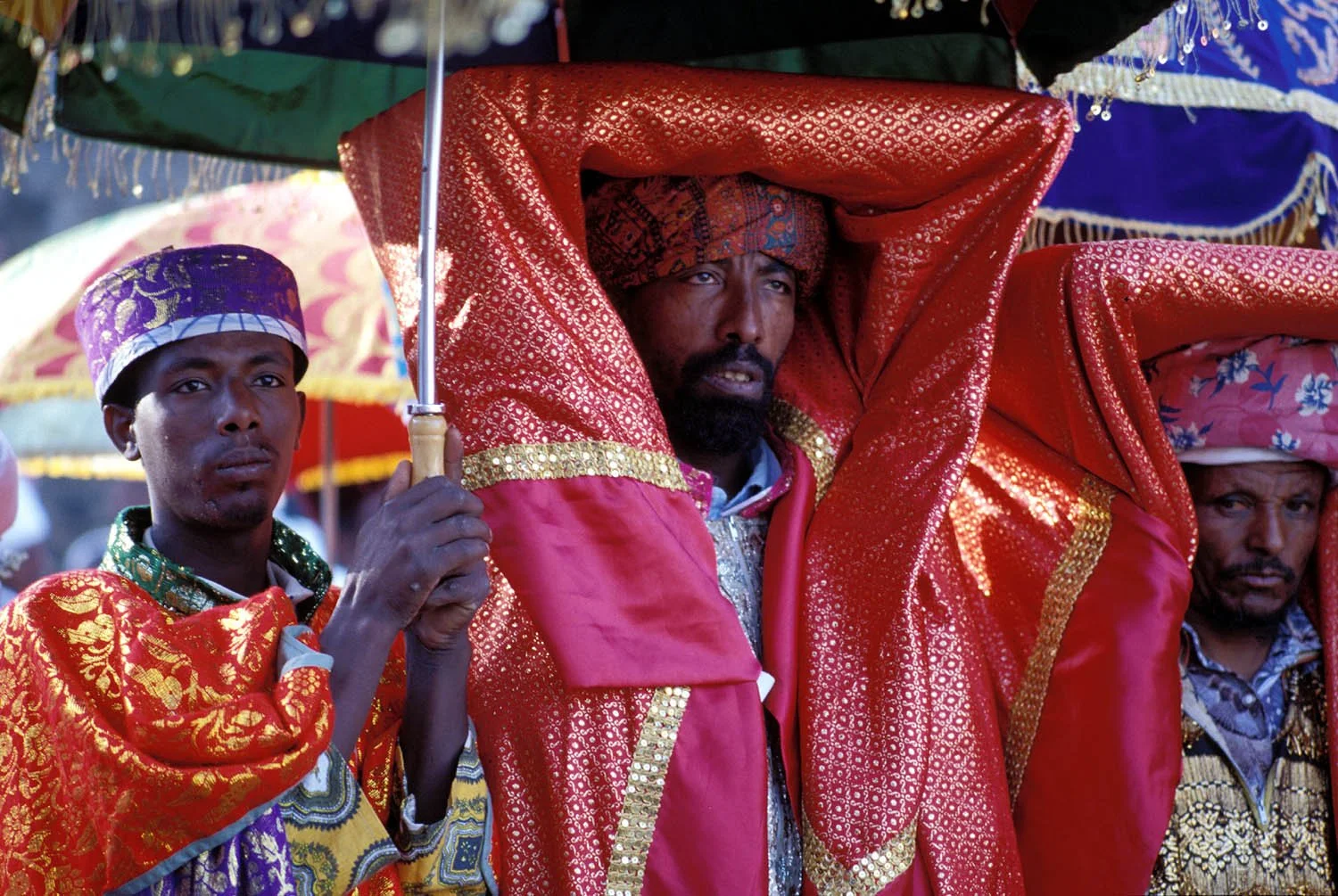
Photo: 'Timket or Epiphany in Ethiopia' by Addisunknown. Ethiopian Orthodox Christians at a holy water site during traditional healing and spiritual practices. Reproduced under fair use policy of Wikimedia Commons.
This is Part I in a series of articles on cross-cultural and cross-cultural comparisons of men’s mental health issues.
Over the past two decades, lingering disparities in men’s mental health have inspired more serious academic inquiries into the causes and nature of these disparities, as well as what can be done to address them. For some time, discussions about men’s mental health drew predominantly from sociological and psychological paradigms that blamed men and notions of masculinity as the root causes of these disparities. However, recent work has challenged such ideas and aims to achieve a more balanced approach to understanding men’s mental health.
There arguably has been no time when interest in men’s mental health has been greater than now. This interest has been driven by large sex differences in the male suicide rate, the depression paradox (men’s low diagnoses of depression despite this high suicide rate), and men’s disproportionate substance abuse rates and overdose deaths, among other disparities. More recent attention has also been given to men’s disproportionate behavioral addiction rates, men’s decreasing educational achievement, and men’s intensifying struggles in a changing labor market. Other scholars have become interested in the factors driving men to the “manosphere,” a broad term used to describe an assortment of men’s lifestyles and communities - including men’s rights activists (MRAs), men going their own way (MGTOWs), and involuntary celibates (“incels”) - that critics deem problematic and misogynistic.
While interest in men’s mental health is expanding and diversifying, there remains much to be learned. Among these issues is the need for more cross-cultural comparisons, since most existing research has been conducted in Western societies. Cross-cultural studies are rare to nonexistent, which raises questions about the universal applicability of their findings. While some major topics like suicide have received considerable global attention, studies into novel behavioral addictions (e.g. gaming, gambling, pornography), men’s underutilization and perception of mental health services, and the prevalence of the depression paradox cross-culturally remain understudied.
“understanding the ways mental health outcomes manifest in men globally can deepen how we conceptualize manhood, masculinity, and men’s mental health in the twenty-first century.”
There is much to be gained from exploring men’s mental health across cultures. Just as thirty-five years ago David D. Gilmore wrote about universals, differences, and anomalies in the ways manhood is understood and embodied around the world, understanding the ways mental health outcomes manifest in men globally can deepen how we conceptualize manhood, masculinity, and men’s mental health in the twenty-first century. These understandings can aide discussions on how these issues can be addressed clinically, culturally, and at the level of public and health policy.
Identifying Relevant Issues
There are many challenges to conducting research on men’s mental health cross-culturally. First, while many studies explore specific issues, such as male depression or substance abuse, few studies have examined issues comprehensively. For example, men experience health-related disparities in all of the following areas:
- Suicide
- Substance use, abuse, and addictions
- Behavioral addictions
- Lower rates of depression diagnoses despite apparent mental health challenges
- Low rates of help-seeking behaviors and lack of retention in help-seeking services
- Worsening educational achievement
- Worsening employment rates
- More severe mental health challenges coping with unemployment
- Heightened vulnerability to suicide, substance use, and severe depression following relationship distress or loss of contact with children
- Lack of resources for men who are victims of domestic violence
- Reduced likelihood of courts and legal institutions to take men’s claims seriously
- Social stigmas against mental health service use (by both other men and women)
- Higher risk of homelessness
- Higher school dropout rates
- Lower life expectancy
Inquiries into each of these issues warrant academic books in themselves.
Second, masculinity is a prominent theme in men’s mental health research, and there are divergent perspectives on the role of masculinity and its impact on mental health. Since the 1980s, the dominant paradigm in the social sciences was to view masculinity critically and attribute men’s adverse health outcomes to manifestations of contemporary masculinity. This line of work approaches masculinity from a “deficit model” perspective, which views masculinity as inherently problematic and blames men for their mental health problems — in other words, masculine ideals and men’s embodiment of these are the culprits in men’s worsening mental health. The solutions espoused by this approach thus lie in changing men’s behavior. However, more recently, works have challenged these ideas and called into question the extent to which these ideas victim blame men. Such works challenge these “toxic” conceptions of masculinity and call attention to admirable masculine qualities, such as self-reliance, self-sacrifice for a larger collective, and remaining stoic and composed in the face of challenges.
“Many such studies also approach masculinity from a deficit model approach, which not only raises the problem of ethnocentrism, but results in criticizing or castigating men who embody these types of masculinity.”
Research into masculinity cross-culturally also remains scarce. While one can find inquiries on topics such as “Black masculinity” or “Japanese masculinity,” these studies often do not seriously consider the nuanced ways masculinity intersects with mental health. Many such studies also approach masculinity from a deficit model approach, which not only raises the problem of ethnocentrism, but results in criticizing or castigating men who embody these types of masculinity. The overwhelming majority of such studies do not empirically investigate the complex and highly nuanced connections between men’s mental wellbeing and masculinity in any serious capacity. Even in Gilmore’s excellent book, the issue of mental health was conspicuously absent.
Lastly, cross-cultural comparative studies are rare because researchers are not sufficiently engaging with each other across borders. One of the most striking things I learned from my recent study on men’s mental health in Japan was that there were little to no international collaborative efforts to approach these topics, and there were no efforts that approached men’s mental health cross-culturally from a positive masculinity perspective. There was abundant literature on clinical issues relevant to men’s mental health in Japan, but these studies were often detached from serious discussions of contemporary masculinity, manhood, and gender dynamics in the twenty-first century. Gender just happened to be a variable in these studies rather than the focal point. Some studies highlighted issues unique to men in Japan, but scant reference was made to the growing body of literature that aims to better understand these issues and their causes. And unfortunately, when attention is given to these issues, it often builds upon the aforementioned deficit model approaches, leading to biased, misleading, and incomplete interpretations of men’s experiences. Had there been more serious collaborations with researchers who adopt more diverse perspectives on masculinity, these works may have been able to do more to challenge deficit model approaches and offer more nuanced views into men’s mental health and masculinity.
The West, Japan, and Ethiopia: Men’s Health in Comparative Perspective
I have been conducting reviews aimed at comparing men’s mental health outcomes in different cultures. This series of articles will involve narrative reviews on the prevalence of issues in men’s mental health cross-culturally with respect to the issues highlighted above.
“Japanese men also experience some unique mental health challenges not commonly discussed in Western studies, such as […] death by overwork (karoshi), and suicide due to overwork (karojisatsu).”
Japan
My recent review on men’s mental health in Japan revealed that several of the most commonly discussed “critical issues” in men’s mental health in the West were also prevalent in Japan. Men in Japan commit suicide at rates higher than women, hold negative views towards help-seeking and engage with help-seeking services less than women, are diagnosed with depression less than women (despite existing mental health disparities elsewhere), and abuse substances more than women. Japanese men also experience some unique mental health challenges not commonly discussed in Western studies, such as being disproportionately affected by social withdrawal syndrome domestically (hikikomori) and internationally (sotokomori), death by overwork (karoshi), and suicide due to overwork (karojisatsu).
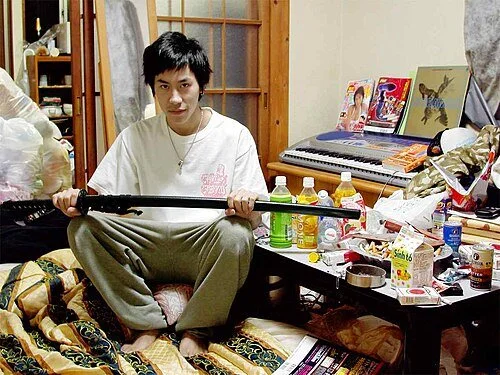
Among these, hikikomori has attracted the most attention. Hikikomori refers to people who withdraw from social interaction by isolating themselves in their houses or rooms and seldom interact with others.
Photo: Young Japanese man living as a hikikomori (from the 2004 documentary "Hikikomori"). Reproduced under the Creative Commons Attribution-Share Alike 3.0 Unported license.
People who are hikikomori often idly pass time alone, only venturing outside when it is absolutely necessary. Unsurprisingly, various mental health conditions have been associated with hikikomori. Historically, it was believed that the vast majority of hikikomori were men. Although recent data from Japan’s Children and Families Agency has suggested that the gender distribution of hikikomori is more balanced than previously believed, this may be due to an expansion of the criteria for what qualifies as hikikomori behaviors to include the time people spent interacting with others in general rather than on problematic reclusive behaviors.
Karoshi and karojisatsu are lesser-known phenomena, especially outside of Japan. Karoshi refers to death resulting from physical overwork, while karojisatsu refers to suicide precipitated by work-related pressures, both representing extreme consequences of occupational stress. Japan is renowned for its long work hours and stringent, hierarchical work culture, which can cause considerable stress for employees. Men are more likely to occupy the demanding work positions most susceptible to extreme occupational stress, so it is unsurprising that they bear a disproportionate burden of karoshi and karojisatsu.
Japanese society remains considerably more gendered than in the West. In Japan, gender norms are more rigid, workplace gender equality has not been reformed to Western standards, and institutional structures still heavily favor the traditional single-male-breadwinner model. My research on masculinity norms in Japan also showed that similar to Western studies, although there is abundant literature on Japanese masculinity, this research was largely comprised of social scientific critiques and rarely related masculinity back to mental health outcomes empirically or clinically. Again, such studies tended to reinforce a deficit model of masculinity in unnuanced ways.
“…many [Ethiopian] people seeking holy water treatment for mental illness were not receiving treatment at hospitals or clinics”.
Ethiopia
To expand these comparisons, I also conducted a review on men’s mental health in Ethiopia, a society very different from the West and Japan. In Ethiopia, the same issues observed in men in Western cultures and Japan also seem to exist. Ethiopian men commit suicide at rates higher than women, they use and abuse substances more than women, and they tend to hold more negative views of help-seeking behaviors. Many studies have called attention to the link between depression and Ethiopian men’s use of khat, a psychoactive plant with amphetamine-like properties found in East Africa and Yemen. While the exact association between khat usage and depression is not firmly established, it is clear that depressed and distressed Ethiopian men (and those with other mental health issues) frequently use khat. Data on depression has also shown similar patterns to Western studies, indicating that Ethiopian women are more likely to be diagnosed with depression than Ethiopian men.
Unlike in Japan and the United States, in Ethiopia, people often visit traditional healers and religious healers as a means of addressing illness, either as alternatives to or in addition to Western biomedical institutions. Ethiopia is home to a large Orthodox Christian population, and many people seek holy water treatments and other spiritual remedies as means of medical care, including treatment for mental illness. Religious treatments have been shown to help alleviate depressive symptoms in some, as well as being preferred over medical institutions by many Ethiopians.
One study reported that many people seeking holy water treatment for mental illness were not receiving treatment at hospitals or clinics, and that men in this group were more likely than women to remain outside the country’s psychiatric mental health system. While more evidence is needed to substantiate and explain this gender difference, this may suggest men are less inclined to pursue mainstream treatments when experiencing mental distress, which may be due to stigma, accessibility, and lack of trust in these institutions. Identifying why men eschew Western treatment can help improve paths to treatment. Moreover, if men are relying more on traditional and spiritual means of support when in distress, this could also offer an opportunity to provide more appropriate services to men by developing initiatives that help empower traditional healers to serve as a first line of treatment for men seeking help for mental health issues in more culturally sensitive ways.
“However, recent work on masculinity in Africa has challenged the notion of using Western concepts to understand local expressions of masculinity, and these challenges include critiques aimed at deficit model approaches.”
There are several unique circumstances in Ethiopia that warrant further consideration. First, mental illness in Ethiopia (and many parts of Africa) is highly stigmatized. Conservative cultural and religious norms lead to the stigmatization of mental health conditions, which affects how Ethiopians interact with mental health services. Many Ethiopians are reluctant to use such services, so family members and religious institutions may take on roles of mental health caretakers. Second, there are severe rural-urban divides in the country, which leaves rural communities particularly underserved in terms of healthcare and mental health services. Third, many studies on mental health in Ethiopia are very localized geographically and culturally. Ethiopia is a large country and is home to 132 million people from a panoply of ethnic, linguistic, and religious groups. This has led to studies being highly focused on one geography or one hospital. It is not uncommon to come across publications with titles like “Paternal Postpartum Depression and Associated Factors Among Partners of Women Who Gave Birth in Seka Town, Southwest Ethiopia,” which presented findings from very specific geographic and cultural contexts. More research is needed to determine the applicability of findings across geographic regions and cultural groups in the country — an issue that likely exists in diverse societies globally.
Ethiopian masculinity has also been discussed relative to mental health outcomes. Like contemporary masculinity elsewhere, in Ethiopia the notion of being a man is linked to being recognized as a provider for family and friends, having a respectable job, having adequate financial resources, and remaining stoic in the face of hardships. Failure to live up to these standards has been associated with depression, anxiety, substance abuse, and other adverse outcomes. Some research into masculinity and mental health has, like the Western literature above, offered solutions based on a deficit model approach that views Ethiopian men’s masculinity as problematic and in need of change. Relatedly, much of this research assumes masculinity in Ethiopia is overly problematic and thus culpable for men’s mental health issues.
“It is also unlikely that deficit models that disregard or outright disparage traits that traditional cultures value will accurately capture the ways masculinity is embodied or realistically intersects with mental wellbeing”
However, recent work on masculinity in Africa has challenged the notion of using Western concepts to understand local expressions of masculinity, and these challenges include critiques aimed at deficit model approaches. African researchers are calling for more localized and nuanced approaches to culturally diverse variations of masculinity that incorporate emic understandings and avoid imposing Western concepts and ideals onto local gendered dynamics. This underscores the need for cross-cultural inquiries into masculinity that both account for more culturally grounded gender relations, as well as nuanced and localized understandings of how masculinity intersects with men’s mental health.
Notably scarce among the literature are studies that consider how positive aspects of masculinity can be harnessed to improve men’s mental health in both Ethiopia and Japan. Rather than viewing masculinity as inherently problematic and blaming men for their mental health struggles, researchers and clinicians may be well-served to consider how aspects of masculinity — such as being the provider for one’s family or being self-reliant when confronted with adversity — can be used to improve men’s mental health.
“…despite some differences in the expression of mental health issues among men in the West, Japan, and Ethiopia, there were some important commonalities, notably higher suicide rates, lower depression rates, less help-seeking and more substance abuse.”
Instead of applying Western-derived deficit and psychotherapeutic models onto men with hopes of changing masculinity, meeting men where they are and embracing masculine aspects to empower men may yield better results all around. For example, it is highly unlikely that men in Japan (where “saving face” is a crucial cultural imperative) or Ethiopia (where expressions of emotion can be seen as a sign of weakness) will readily engage in the level of self-disclosure expected in Western talk therapy. It is also unlikely that deficit models that disregard or outright disparage traits that traditional cultures value will accurately capture the ways masculinity is embodied or realistically intersects with mental wellbeing. By reframing help-seeking in ways that draw on the positive elements of masculine norms, researchers and practitioners may be able to yield better results and reach men in more culturally informed ways.
Conclusion
It is interesting that despite some differences in the expression of mental health issues among men in the West, Japan, and Ethiopia, there were some important commonalities, notably higher suicide rates, lower depression rates, less help-seeking and more substance abuse. These facts call for greater attention to the universality of these issues, the drivers behind them, and the best ways to address them clinically, socially, and at the level of policy. These similarities should compel researchers to understand why they exist across very different geographic and cultural boundaries. Are these disparities shaped by sociocultural forces linked to the global spread of Western gender norms? Or do they stem from deeper, long-standing traditions that predate modern culture but produce similar outcomes? To what extent might biological or evolutionary factors play a role? And, perhaps most urgently, how can mental health issues be addressed within vastly different cultural contexts? These are the questions that men’s mental health researchers can begin to broach and theorize once the universality of these issues has been established.
In parallel with this universal perspective, there is a need for more emic approaches to masculinity that transcend Western paradigms and offer more localized understandings from a balanced perspective. Much social scientific work on masculinity outside of the West adopts deficit approaches that view masculinity as inherently problematic and in need of change. This is true of both outsiders working in these cultures, as well as local researchers who look to this model to explain adverse mental health outcomes in men. To truly understand and contextualize the mental health struggles men face, a much more balanced approach is needed. This is even more important when considering the contextual dynamics of cultures outside of the West, whose gender norms and expectations have developed in their own milieus.
You can find out more about the cross-cultural approach to masculinity in module 2 of the Centre for Male Psychology’s online course.
Scroll down to the comments section to join the conversation.
Disclaimer: This article is for information purposes only and is not a substitute for therapy, legal advice, or other professional opinion. Never disregard such advice because of this article or anything else you have read from the Centre for Male Psychology. The views expressed here do not necessarily reflect those of, or are endorsed by, The Centre for Male Psychology, and we cannot be held responsible for these views. Read our full disclaimer here.
Like our articles?
Click here to subscribe to our FREE newsletter and be first
to hear about news, events, and publications.




















Have you got something to say?
Check out our submissions page to find out how to write for us.














.