

Gamma Bias: The Hidden Cognitive Distortion Hurting Men and Boys
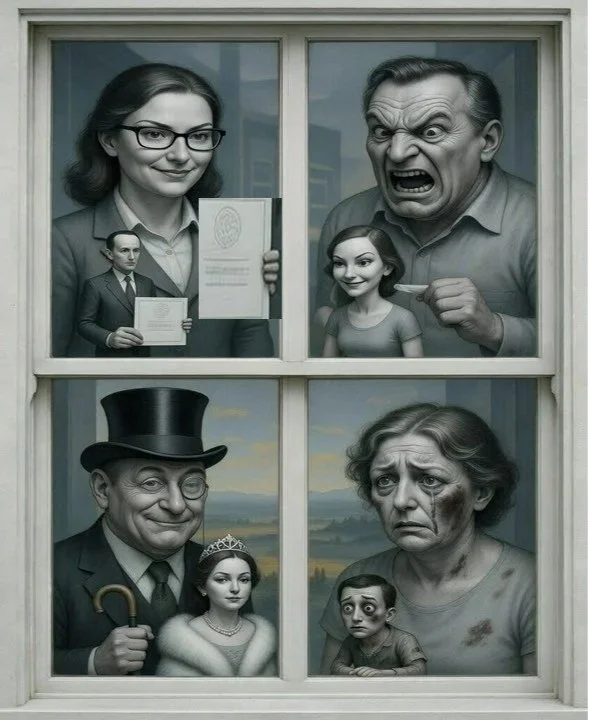
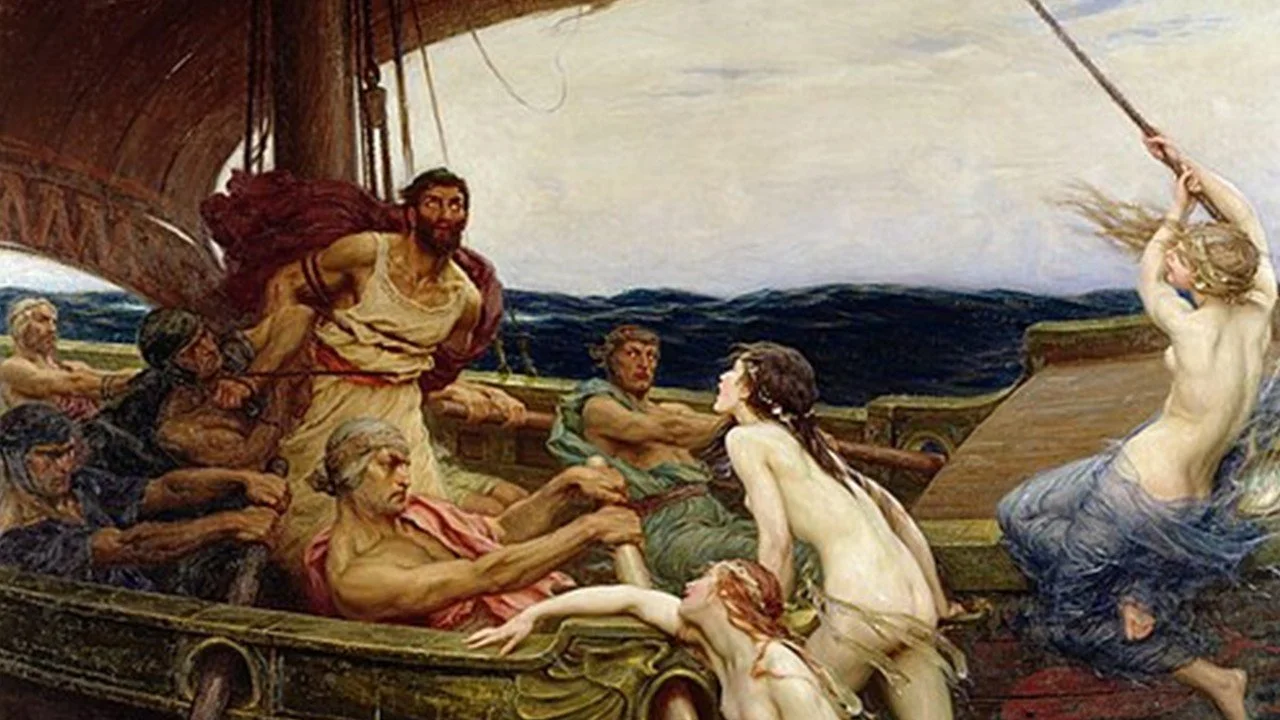
Image: ‘Seeing the world through the window of gamma bias’. Original concept by John Barry, created using AI image generation (Grok).
Gamma bias may be the most important—and least understood—force shaping how modern societies think about men and women. First described by psychologists Martin Seager and John Barry, it refers to the systematic tendency to magnify female suffering and female virtue, while downplaying male suffering and male virtue. In practice, it creates a predictable asymmetry: women are interpreted generously, men harshly.
Gamma bias is not fringe. It permeates our media, our institutions, our social norms, and increasingly our laws. And as new research shows, its effects are far from subtle.
A Bias Stronger Than Race or Class
In 2023, a landmark study published in the Journal of Personality and Social Psychology examined implicit bias across more than 5,000 participants. The finding stunned even the researchers: the strongest and most consistent automatic bias was pro-women / anti-men bias—stronger than biases related to race, age, or class.
This is a foundational point for male psychology: our culture is not gender-neutral. Men are viewed through a more negative moral lens long before any behaviour is evaluated. Women, conversely, receive empathy, positive attribution, and the presumption of innocence.
Gamma bias is the mechanism that turns this cultural tilt into everyday judgment.
What Gamma Bias Looks Like
My book The Relentless War on Masculinity describes it precisely:
A man who asserts himself is “aggressive”; a woman doing the same is “strong” or “confident”.
A mother working long hours is admired for ambition; a father doing so is criticised for neglecting his family.
Boys struggling in school are blamed for “laziness”, while girls struggling in STEM receive multimillion-dollar targeted programs to “help them catch up”.
One recent example is the A$100 million STEM initiative for girls in Australia—framed as correcting systemic injustice, despite girls outperforming boys academically overall. When boys fall behind in literacy, the problem is boys. When girls fall behind, the problem is society.
This is gamma bias in action: female shortcomings explained away, male shortcomings pathologised.
Double Standards in Harm and Blame
Gamma bias becomes especially clear in how we interpret harmful behaviours.
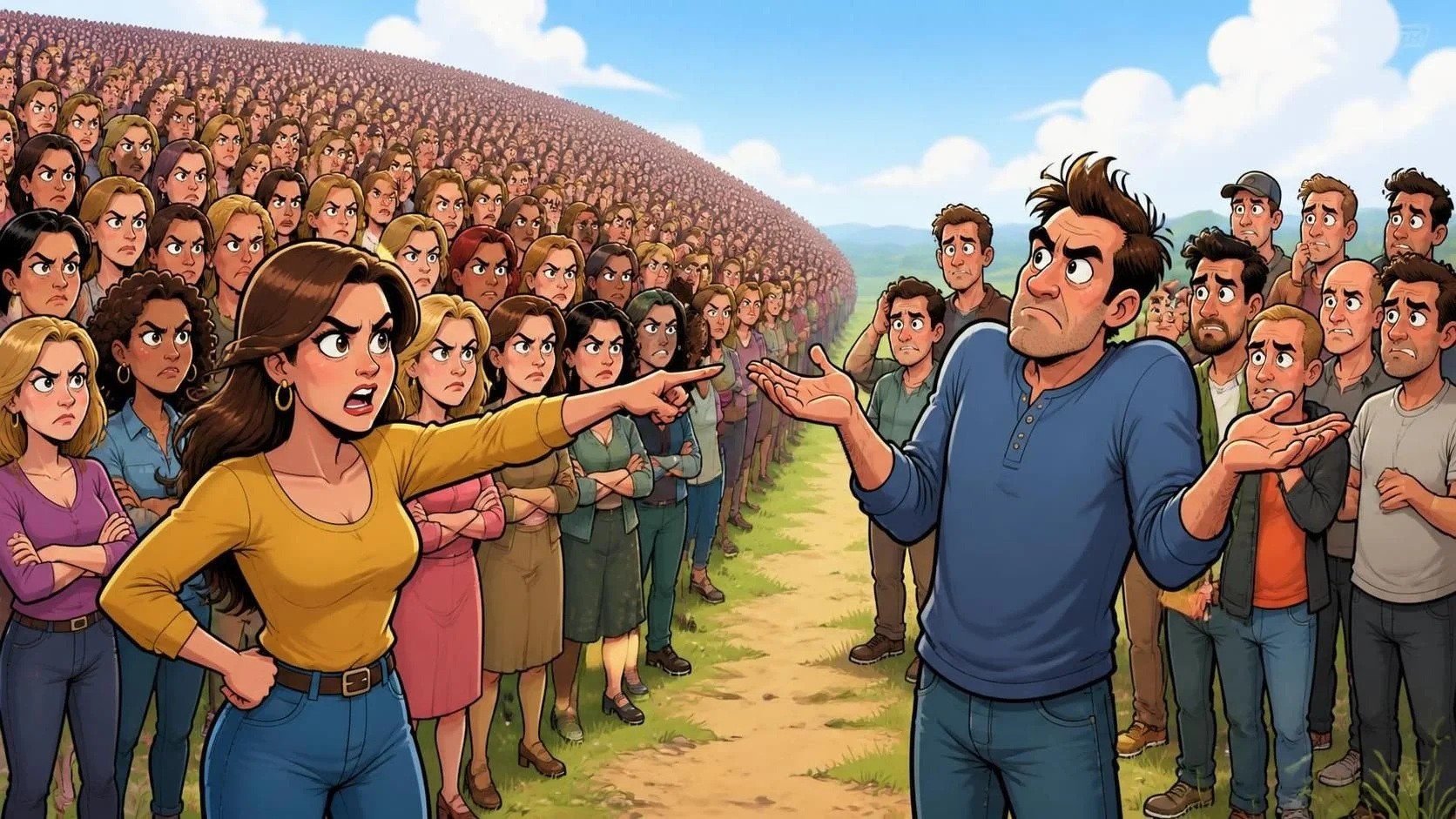
One common social media meme captures an uncomfortable truth. A woman brags, “I hit him and I’m a strong woman,” while the man who hits back “is abusive and goes to jail.” The humour works because the asymmetry is real. Women’s aggression is minimised or reframed; men's is maximised and condemned.
Research shows that female-perpetrated domestic violence is routinely downplayed in media coverage, academic framing, and policymaking. Support services overwhelmingly target women—even though men make up a substantial proportion of victims, and in some studies a majority.
The cognitive distortion means that male harm is universalised; female harm is individualised.
When a man behaves badly, he represents “all men”.
When a woman behaves badly, she represents only herself—often with excuses provided.
This cognitive distortion isn’t benign. It shapes public empathy, funding, criminal justice responses, and even moral judgment.
Gamma Bias in the Headlines: Sympathy for Women, Silence for Men
A striking example of gamma bias appears in The Sydney Morning Herald article about early female mortality risks. It is headlined The women who face a higher risk of early death but don’t know it.
The reporting is sympathetic, emotionally framed, and focused on encouraging the public to protect women. This is perfectly reasonable.
But the contrast with how early male death is discussed is stark. Men—who die five years younger on average—are rarely treated with compassion in media narratives. Instead, early male death is often framed as the man’s fault: poor lifestyle choices, lack of help-seeking, recklessness, or failure to manage stress.
When a woman dies young, society asks: “How did the system fail her?”
When a man dies young, it asks: “What was wrong with him?”
The suffering of men is normalised, moralised, or ignored. The suffering of women is centred, empathised with, and often publicly mourned.
This is gamma bias writ large.
At the Extreme: Excusing Female Violence
Gamma bias reaches its most troubling expression in cases of maternal violence, including filicide. Coverage of the Cairns child killings—where eight children were murdered by a mother during 2014, in 2017 she was deemed unfit to stand trial by reason of insanity, following a diagnosis of schizophrenia—demonstrates how rapidly public discourse shifts into sympathy, contextualisation, and appeals to mental illness.
Yet when fathers kill, society treats it as archetypal male depravity.
No male psychology scholar disputes that mental illness can drive such tragedies. But the asymmetry in public interpretation reveals the depth of gamma bias: when mothers kill, they are victims of circumstance; when fathers kill, they are monsters.
The behaviour is identical. The narrative is not.
Gamma Bias in Policy and Power
A study in 2025 found that female lobbyists were 35% more likely to secure meetings with EU policymakers. Gender itself acted as a political advantage—an example of a phenomenon rarely acknowledged in public: female privilege in relational influence.
At the same time, there are no EU-wide programs dedicated to male victims of violence, despite decades of evidence that men constitute a large proportion of victims of assault, homicide, and domestic abuse.
Gamma bias ensures that “gender issues” are synonymous only with women’s issues, regardless of where actual disadvantage lies.
Media Bias: “Perception Becomes Reality”
Dan Romand’s 2025 address (“Former Lobbyist EXPOSES Hidden Bias Against Men”) warns that media portrayals of men have shifted from flawed-but-human to foolish, dangerous, or disposable. Sitcom fathers are idiots; male teachers are treated with suspicion; male leaders are framed as incompetent unless proven otherwise.
This cumulative imagery primes the public to interpret men more negatively—a perfect environment for gamma bias to flourish. As Romand says: “Perception is reality. And it’s time we rewrite both.”
Spreading Misandry: The Teaching of Contempt for Men in Popular Culture was written by Paul Nathanson and Katherine Young in 2001. This book asserted that misandry was increasingly prevalent a quarter of a century ago—culturally accepted in Western societies, particularly through popular media and entertainment. The authors demonstrate how men were routinely depicted during the 1990s in films, television and advertising as violent, emotionally stunted, irresponsible or obsolete.
What Society Tells Men: Findings From 350 Men
Rachael Sloan’s video, “I Was Shocked By What Society Actually Tells Men”, documents interviews with more than 350 men. The message she hears repeatedly is:
Men are expected to endure pain silently
Men are blamed for systemic problems
Men’s emotional needs are dismissed
Men are told they are inherently problematic
Men are punished socially for vulnerability
Sloan openly links these cultural pressures—including double standards—to the tragically high male suicide rate.
Gamma bias isn’t just a theoretical concept. It primarily harms real people, being men and boys, but the secondary harms and ripple effects are enormous.
“No Dickheads” Policies: The Last Acceptable Sexism
Workplaces and other spaces proudly proclaim “no dickheads” policies, believing them to be witty or progressive. Imagine substituting a female body part. It would rightly be condemned as hateful and sexist.
Yet discrimination framed around male anatomy is socially accepted—again reflecting gamma bias: negative generalisations about men are permissible; negative generalisations about women are taboo.
This casual hostility toward male identity contributes to the psychological burden many men carry but cannot safely voice.
Why Gamma Bias Matters for Male Psychology
Gamma bias harms men in five ways:
It erodes public empathy, making male suffering invisible.
It distorts policy, directing resources away from areas where men are clearly disadvantaged.
It undermines fatherhood, by moralising male behaviour and idealising female behaviour.
It distorts research, producing female-centric interventions even when male-centric ones are needed.
It contributes to internalised shame, especially among boys growing up in environments where their natural traits are treated as flaws.
Martin Seager and John Barry emphasise that these distortions stem not from malice but from unconscious cultural narratives. The danger is precisely that they go unexamined.
To correct them, we must name them. The burden and obligation is on all people of goodwill to stand and speak up against gamma bias.
A Way Forward
Challenging gamma bias does not mean diminishing women. It means recognising that men’s lives matter too, and that double standards—however socially fashionable—cause real harm.
A psychologically healthy society applies one rule of empathy to all human beings, not two sets based on gender.
Men are not brutes by default. Women are not saints by default.
Human behaviour is human behaviour.
Recognising this is not only fair—it is essential for restoring balance, compassion, and honesty in how we understand gender.
Disclaimer: This article is for information purposes only and is not a substitute for therapy, legal advice, or other professional opinion. Never disregard such advice because of this article or anything else you have read from the Centre for Male Psychology. The views expressed here do not necessarily reflect those of, or are endorsed by, The Centre for Male Psychology, and we cannot be held responsible for these views. Read our full disclaimer here.
Like our articles?
Click here to subscribe to our FREE newsletter and be first
to hear about news, events, and publications.




















Have you got something to say?
Check out our submissions page to find out how to write for us.


















.