
Preventing child sexual abuse

There were 64,667 police recorded sexual offences against children and young people from April 2016 to March 2017. The Children’s Commissioner, in a report Protecting children from harm: A critical assessment of child sexual abuse in the family network in England and priorities for action, states “This enquiry estimates that [only] 1 in 8 victims of child sexual abuse come to the attention of statutory authorities.” Multiplying 64,667 by 8 gives us an estimate that over 500,000 children are sexually abused each year. It costs £65,000 to imprison one sexual offender for a year if you include police time and court costs. Yet for a fraction of the cost of this, some people can be successfully deterred from offending.
StopSO stands for the Specialist Treatment Organisation for Perpetrators and Survivors of Sexual Offences. It is the only UK wide organisation to offer a therapeutic service to those who fear they are going to commit a sexual offence, before they do so. StopSO also offers therapy to people who have already offended.
StopSO has over 200 fully qualified and experienced ‘general’ therapists who have either already been given specialist training to work with this client group, or are in training. Before they see clients StopSO provides therapists with a basic forensic Foundation Training (3 days). StopSO also offers a Professional Certificate in Therapeutic Practice with Sex Offenders, which is a further 10 days. Both these courses are Accredited by the College of Sex and Relationship Therapy.
StopSO fulfils three primary roles:
It trains therapists in working with potential and actual sex offenders.
It refers clients to therapists.
It subsidises the cost of client therapy where clients are unable to pay, (when it has sufficient funds).
Thirty-eight per cent of StopSO’s clients are unknown to the authorities. This creates a huge opportunity to reduce the harm of sexual abuse to victims, their families and the families of the perpetrators. There is evidence that some sexually abused children themselves become sexual abusers, so perpetuating an horrific cycle of abuse that continues into future generations, (Jesperson et al, 2009). We need to act now, as other governments are doing in countries such as the Dunkelfeld Project in Germany, to stop sexual abuse through preventative therapy.
StopSO is the only UK wide organisation to work with sex offenders of all types, from those looking at illegal online images, voyeurs and exhibitionists, people who commit contact offences with children and adults.
StopSO has been asked for help by over 1500 people since 2012, 50% of which were during 2017. Most StopSO clients pay for their own therapy. However 20% cannot afford the cost of counselling. Often, when StopSO lacks funds, we have to turn away these clients, who are asking StopSO for help not to commit an offence. So far StopSO has relied on personal donations and small grants from charitable trusts. StopSO has received no money at all from the government. StopSO needs to expand, and take on more staff to meet the current and future demands.
Good quality academic research on the counselling of sexual offenders is only available for those who have already been convicted of an offence. The most recent meta study of this group by Schmucker et al, 2017, shows that counselling leads to an average 26.3% reduction in re-incarceration rates. If this success rate is used for StopSO’s client group, then it is plausible that in 2018, StopSO’s work could stop 231 men from offending. The cost of imprisoning these men for a year would be over £15 million.
Sometimes StopSO clients allow me to report their stories, provided I change their names. Let’s call one Chris. He was concerned about his sexual thoughts towards children. He was not sure where to go for help. Now in his twenties, he had been living with these thoughts for some ten years, since he was a teenager. He had never looked at illegal images of children. But he was starting to think about this more and more and wanted help to ensure that he didn’t act out. He went to see his GP. His GP was open with Chris that he had a duty to report him.
The GP did not know where to get help for Chris, but he Googled ‘sex offender help UK,’ and he found StopSO. Chris was referred for therapy, but he could not afford to pay for himself. Luckily, StopSO had been given a small grant to subsidise therapy for those who couldn’t afford to pay for themselves.
Meanwhile, the GP completed a safeguarding referral to the local authority. The local authority held a strategy meeting which was attended by the GP, social services, local safeguarding children’s board and the police. The strategy meeting took the decision that there were insufficient grounds for any further investigation or action to be carried out. This was because Chris didn’t have any contact with children and there was no evidence that any offence had been committed.
Chris told me, “I know of an individual, much younger than me, who sought help for his worrying thoughts about children. He also went to his GP, but it was a different local authority, and he ended up being formally investigated by the police because of it. He had an horrific experience. In the end they found that he was completely innocent. He had no illegal images on his computer or phone. He had no children in his immediate family or living near to him. The authorities eventually decided that he was telling the truth, and their investigations confirmed that there was no evidence that a crime had been committed, nor did it seem likely that a crime would be committed.”
Chris told me, “If I had known his story beforehand I would never have gone to see my GP at all. And, if I had known there was somewhere to get help, where I would have been treated confidentially, I would have sought support much, much sooner. I waited until I was suicidal to ask the GP for help. Finding StopSO was, for me, what made the difference at the end of the day. I got access to a therapist who knew what they were talking about, and it has enabled me to remain law-abiding. I never want to harm a child, despite my desires. I have strategies now to manage myself, and talking about it has made all the difference.”
Chris does no longer feels at risk of acting out inappropriately any more. He also knows he can come back to StopSO if he ever needs to.
This article was first published on the Male Psychology Network website in 2018
Scroll down to join the discussion
Disclaimer: This article is for information purposes only and is not a substitute for therapy, legal advice, or other professional opinion. Never disregard such advice because of this article or anything else you have read from the Centre for Male Psychology. The views expressed here do not necessarily reflect those of, or are endorsed by, The Centre for Male Psychology, and we cannot be held responsible for these views. Read our full disclaimer here.
Like our articles?
Click here to subscribe to our FREE newsletter and be first
to hear about news, events, and publications.






When a male is in a power imbalance, at least two masculine instincts are disempowered…

…people – men and women alike – respond less positively to male-favouring sex differences than they do to female-favouring sex differences.
hyper-masculine gender norms are typically embedded within military institutions, and while adherence to these norms can contribute to combat and military success, they conversely make clinical work challenging
Men might benefit greatly from a government strategy aimed at improving their health. Here are suggestions from the Centre for Male Psychology on how that might be done. This article ends with some comments on potential pitfalls in the process of putting this strategy in place.



…people – men and women alike – respond less positively to male-favouring sex differences than they do to female-favouring sex differences.


… many papers do not even bother to identify or justify the nationality of their samples…
hyper-masculine gender norms are typically embedded within military institutions, and while adherence to these norms can contribute to combat and military success, they conversely make clinical work challenging

Have you got something to say?
Check out our submissions page to find out how to write for us.

hyper-masculine gender norms are typically embedded within military institutions, and while adherence to these norms can contribute to combat and military success, they conversely make clinical work challenging
hyper-masculine gender norms are typically embedded within military institutions, and while adherence to these norms can contribute to combat and military success, they conversely make clinical work challenging
hyper-masculine gender norms are typically embedded within military institutions, and while adherence to these norms can contribute to combat and military success, they conversely make clinical work challenging

hyper-masculine gender norms are typically embedded within military institutions, and while adherence to these norms can contribute to combat and military success, they conversely make clinical work challenging

hyper-masculine gender norms are typically embedded within military institutions, and while adherence to these norms can contribute to combat and military success, they conversely make clinical work challenging

Much of our attitudes, theorizing and public debate around men and masculinity is influenced by high profile feminist and Gender Studies scholars in academia. But what is the scientific quality of publications from these scholars?

Some people blame drill music – a form of rap - for the rising murder rate in London. Drill is known for aggressive lyrics about gang violence, but rather than seeing this as a valuable way for young men to express their feelings, some people want to ban it.

To survive… cultures have to use men and women effectively and … in fact, most cultures have used men and women in different ways… what our culture does is [grant] greater status to men and greater protection to women

hyper-masculine gender norms are typically embedded within military institutions, and while adherence to these norms can contribute to combat and military success, they conversely make clinical work challenging

There are around 300,000 veterans living with hearing loss in the UK, according to The Royal British Legion. In addition to being at a greater risk of PTSD, depression, and anxiety, many vets are also battling psychological distress from hearing problems.
The book begins with a description of her therapeutic approach, and an illustration of how to understand and work with the rage often seen in male CSA clients.
I felt in my dealings with some police officers, as though I were treated firstly as a man (assumed to be a perpetrator), but they’d overlooked risks associated with my impairment. Example: How can you dodge a missile you don’t see coming?

The Panorama programme on domestic violence failed to adequately highlight two important issues: male victims and female perpetrators.

your photograph, name and address, might appear in the local and national press and on TV, insinuating what an evil monster you are

…an attack upon masculinity is an attack upon one’s sense of self, of identity. …What, then, is the right psychological defence against such an attack?

The male has been designed to “look”, not only at the female, but to “look out” for prey, for danger, and for ways to protect his family unit.

If his child is allowed to live, this man must be available, for the rest of his life, to love and provide for his child… If, on the other hand, it is decided that his child is to be destroyed, he should be able to go about his life as if nothing has happened
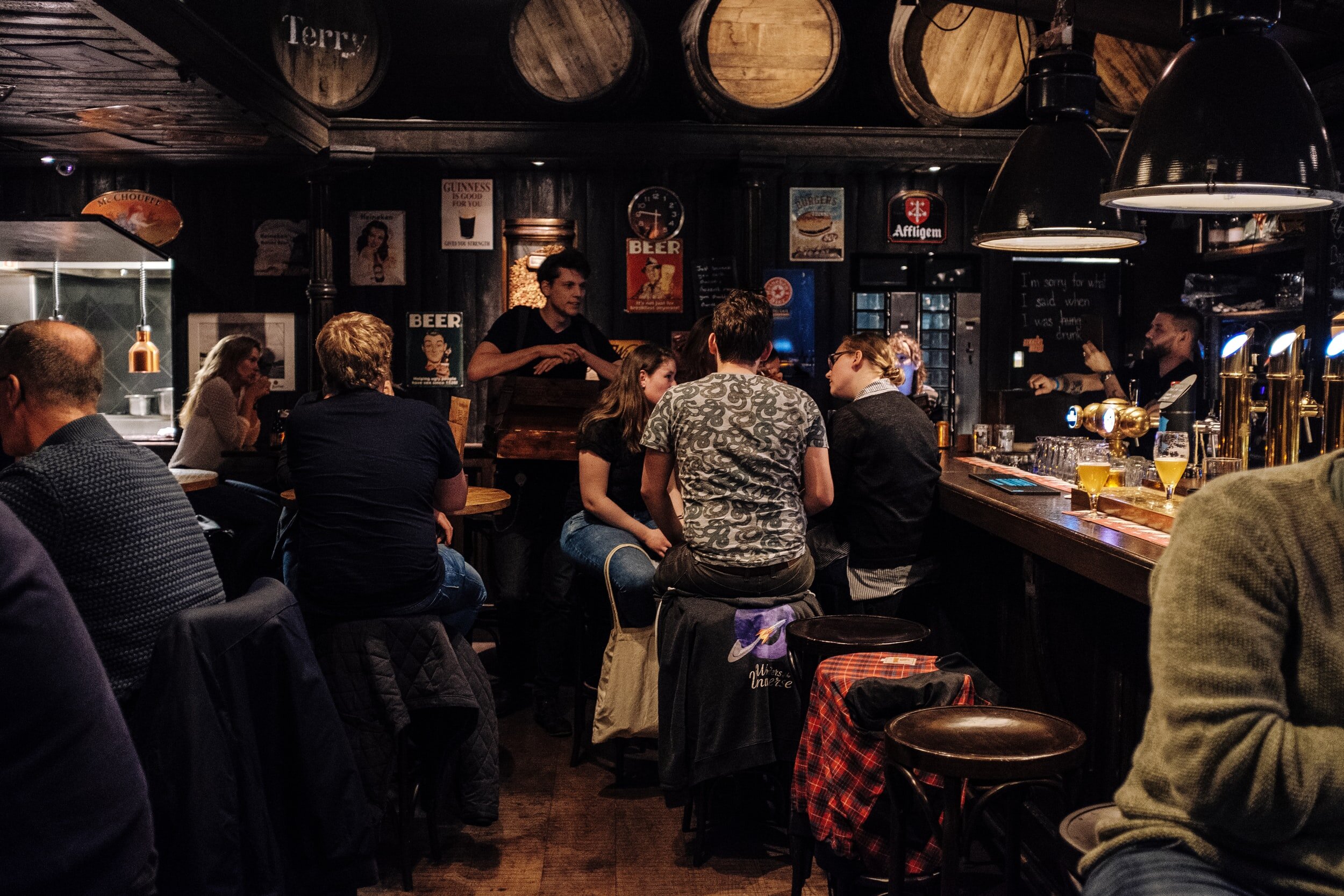
Socialising is a basic human need. The opposite – social isolation – is one of the worst forms of torture. Some people look down on the local pub as a place for undesirable riff raff, but that narrow viewpoint misses entirely the community value of the pub

Male psychology is a recent development in academia. Unlike gender studies, feminism, and men’s studies, male psychology takes the view that we can gain more by recognising and harnessing the positive aspects of masculinity than we can by taking a relentlessly negative approach to men.

.
Juliet Grayson is the Chair of StopSO: The Specialist Treatment Organisation for the Perpetrators and Survivors of Sexual Offences