

What was missing from the BBC Panorama exploration of domestic violence

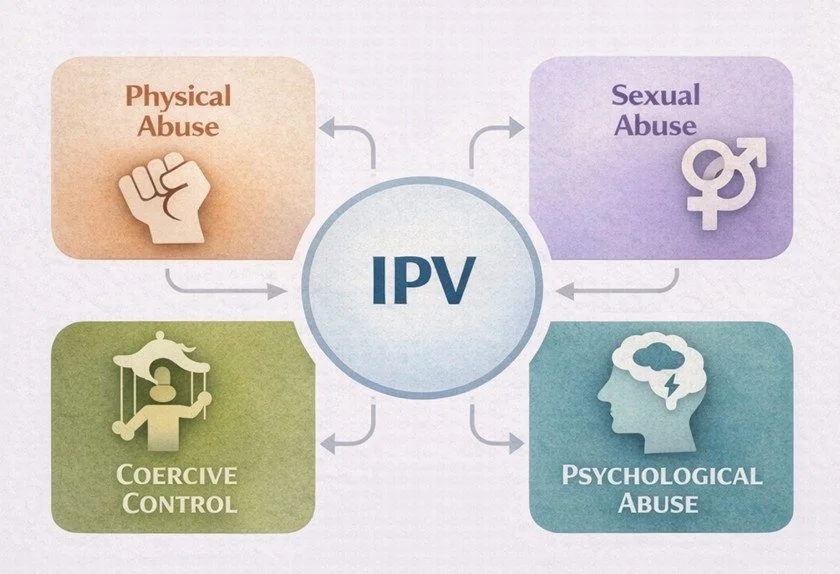
Any mainstream and popular TV programme that highlights the issue of domestic violence is welcome. Domestic violence is a significant social issue that has significant physical and mental health impacts for the men, women and children involved. That being said, when programmes highlight the issue but continue to perpetuate stereotypes and myths about the gendered nature of domestic violence, then it is likely to have some adverse effects.
BBC’s Panorama on Monday night raised the question about whether violent men can change, and explored the use and effectiveness of perpetrator programmes in changing behaviour. It was thought provoking and interesting, but to me, there were some significant omissions of information that would have contributed to the discussion.
As highlighted in the programme, there are issues with our understanding of how effective perpetrator programmes can be in changing behaviour. These issues include a lack of long-term follow ups, a lack of independent evaluations and a lack of evidence informed practice (see Bates, Graham-Kevan, Bolam & Thornton, 2017 for a full discussion). Within the Panorama programme one non-gendered perpetrator programme was presented, but there was a noticeable lack of discussion on the current theoretical models that underpin the majority of other perpetrator programmes that are accredited and funded within the UK.
The Duluth model was established in the United States in 1981 as an intervention with a curriculum developed by activists within the battered women’s movement and five battered women (Pence & Paymar, 1993). They believed that domestic violence was caused by men’s patriarchal ideology and beliefs about male privilege, as well as women’s lack of power and equality. Research has been consistent in demonstrating the widespread use of this model whilst also indicating a lack of effectiveness of this programme. It is still influential in policy and practice within the UK, US and Canada, despite a wealth of literature that demonstrates its lack of success in changing behaviour, and its ignorance to other factors that are predictive of domestic violence perpetration (e.g., adverse childhood experiences), as well as the prevalence of bidirectional/mutual abuse.
“The lack of evidence-based practice in the area of domestic violence is almost unique. The Duluth model has a noticeable “immunity” from needing to answer to any external empirical evaluation”
The lack of evidence-based practice in the area of domestic violence is almost unique. The Duluth model has a noticeable “immunity” from needing to answer to any external empirical evaluation (Corvo, Dutton & Chen, 2008; p.112). Over ten years ago, Dutton (2006) reviewed both the model’s lack of efficacy and the wealth of evidence contradicting its feminist foundations, concluding that its continued use is impeding effective treatment and judicial responses. Despite the weight of evidence, the Duluth model continues to be influential now.
“Whilst in the opening scenes of the Panorama programme the narrator is heard talking about the number of women and men who experience domestic violence, this is the only real mention of the issue of male victims, and there is indeed no discussion of violence by women at all.”
Whilst in the opening scenes of the Panorama programme the narrator is heard talking about the number of women and men who experience domestic violence, this is the only real mention of the issue of male victims, and there is indeed no discussion of violence by women at all. The impact of not including female perpetrators and male victims in this narrative is two-fold; it impacts firstly on men who are experiencing abuse, and creates more barriers to their help-seeking. Men often do not disclose their own victimisation, and in part this could be seen to be impacted by more general issues men have help-seeking related to the construction of the male gender role. However beyond that, other issues that impact help-seeking include the fact that men often assume they simply cannot be victims of domestic violence, because they don’t have a concept of men as being victims of violence from women. In awareness raising campaigns, in the media, and in general societal narratives, domestic violence is discussed as overwhelmingly an issue of men’s violence towards women, creating the image that only women are victims. Services and support organisations often are perceived to be either not appropriate for men or commonly not available. Furthermore, where men have disclosed their victimisation they have often experienced humiliation through being laughed at, blamed and accused of causing the violence, accused of being the perpetrator, or told to “man up” and handle it. Perceptions of the general public are important and impactful; the stigma associated with being a male victim of domestic violence can be really damaging. ManKind made a video to highlight just how different people’s perceptions are, by comparing the reactions to a male and female victim – see the video here.
“BBC’s Panorama failed to highlight that there are abusive women who do not currently have access to intervention that could help their behaviour change.”
A second issue with not including female perpetrators in this narrative is that it negatively impacts on women who are violent and are left with few options for getting help and support in changing their behaviour. The academic literature demonstrates there are significant similarities in the factors that predict men’s and women’s violence, and these can include trauma and adverse childhood experiences, attachment issues, personality traits and disorders and many other issues. BBC’s Panorama failed to highlight that there are abusive women who do not currently have access to intervention that could help their behaviour change. In part this could be attributed to the fact these women do not come into contact with the criminal justice system because men often don’t report women’s violence, women’s violence is not always taken seriously, or the rigid dichotomy of having to assign perpetrator and victim labels in situations where there is bidirectional violence.
“The Panorama programme last night reflects a lost opportunity to make a positive step forward in addressing our outdated stereotypes about domestic violence.”
Moving away from a one-size-fits-all, gendered approach would not only allow intervention to be matched to risk and need, but it would create opportunities to develop evidence-based programmes that can be used with all perpetrators including men and women in opposite-sex relationships and members of the LGBTQ+ population. With the increased evidence base detailing both women’s perpetration and the prevalence of bidirectional IPV, there is a need to work with perpetrator and victim groups across the gender and sexuality spectrums to ensure we are developing interventions that are inclusive and effective. This must then be reflected in the narrative we construct in the media, in order to start the process of change in how we recognise and support those impacted by domestic violence. The Panorama programme last night reflects a lost opportunity to make a positive step forward in addressing our outdated stereotypes about domestic violence.
This article was first published on the Male Psychology Network website in 2018
Scroll down to view comments
Disclaimer: This article is for information purposes only and is not a substitute for therapy, legal advice, or other professional opinion. Never disregard such advice because of this article or anything else you have read from the Centre for Male Psychology. The views expressed here do not necessarily reflect those of, or are endorsed by, The Centre for Male Psychology, and we cannot be held responsible for these views. Read our full disclaimer here.
Like our articles?
Click here to subscribe to our FREE newsletter and be first
to hear about news, events, and publications.























Have you got something to say?
Check out our submissions page to find out how to write for us.














.