

Nancy Spungen: 20 turbulent years of a life that nearly ended before it started.
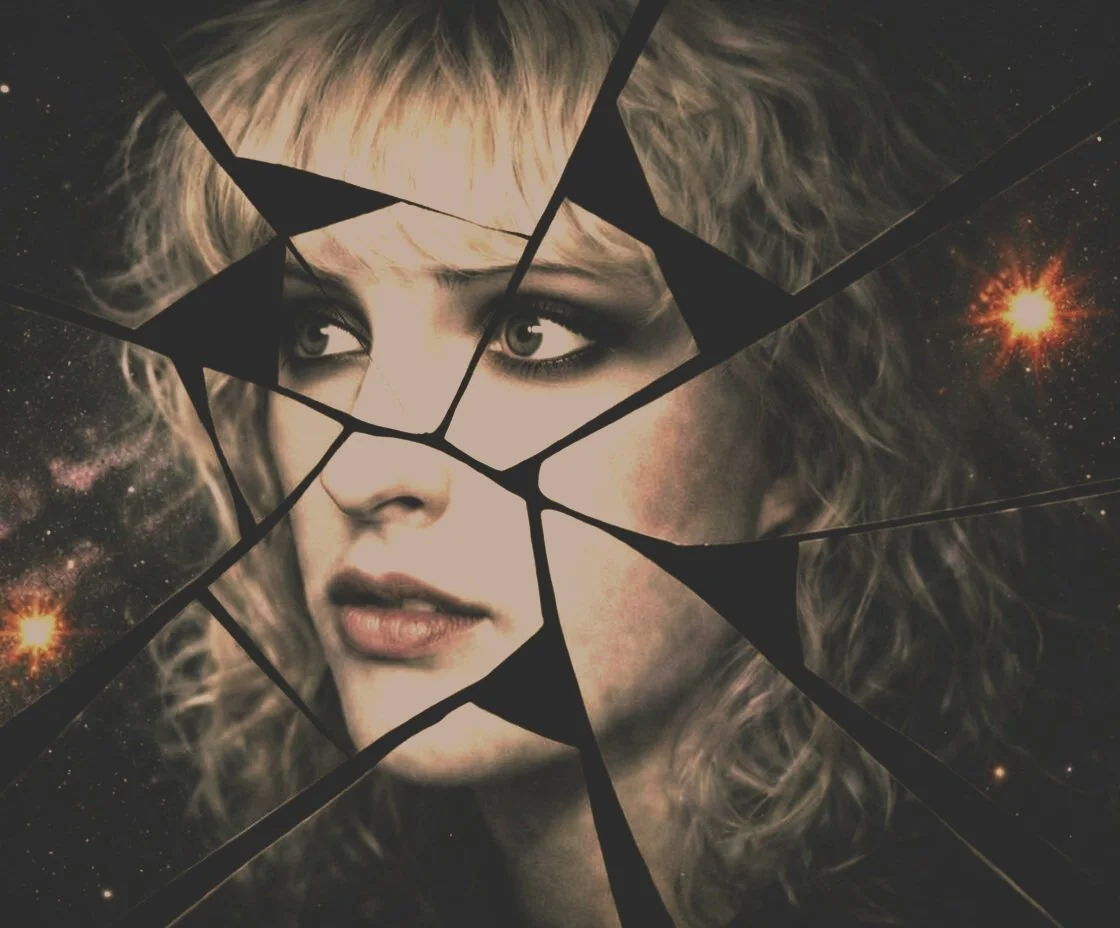
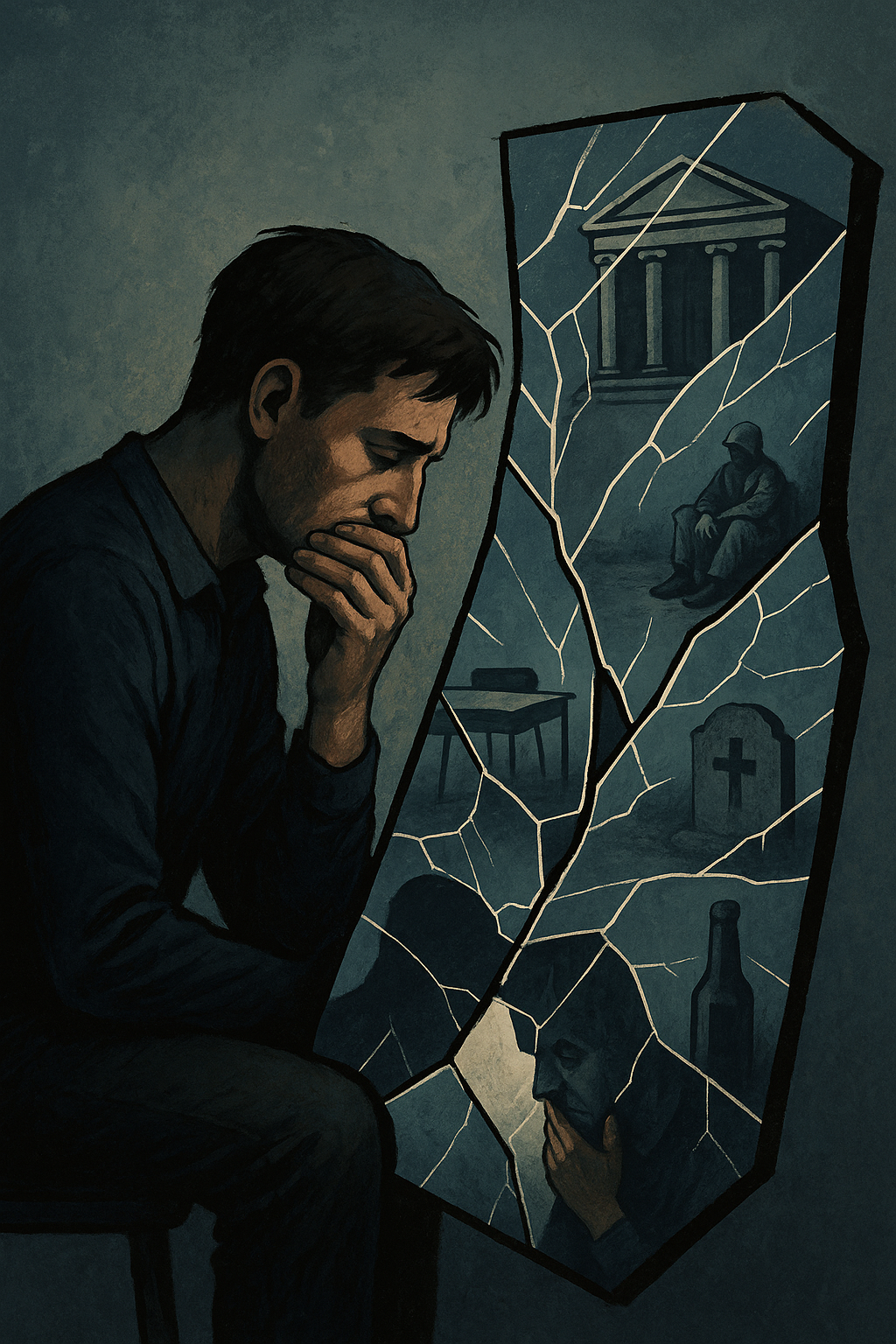
Image: ‘Doomed from the start: Nancy Spungen’. Original concept by John Barry, created using AI image generation (Grok and ChatGPT).
Many people have noted that men with mental health problems often get worse treatment than women with the same problems. For example, when men are depressed many of them express this in aggression, substance abuse and withdrawal rather than looking sad, crying and wanting to talk to others. The same is true with other behaviours: men who act violently are more likely to be diagnosed as psychopathic whereas a women showing the same behaviour is more likely to be diagnosed with borderline personality disorder (BPD). So in general we could say that women with mental health problems get more sympathy than men do… but that’s not always the case, as demonstrated by the life story of Nancy Spungen.
If you recognise her name, I’d like you to please for the next few minutes forget everything you have heard or read about Nancy Spungen. This article is not about her life after she became famous as the other half of Sid Vicious. This article is not about how she died. It’s not about the music or lifestyle. This article is about her early life, and an attempt to understand the catastrophic forces that shaped her personality and her life’s painful trajectory.
The bulk of this article is based on an account of her life most people will be unfamiliar with. Nancy Spungen’s mother, Deborah, wrote a book about her in 1983 called ‘And I don’t want to live this life’. Around that time she gave some interviews, including this one in the same year, which I quote from in this article.
The beginning of the end
Nancy came from a stable and loving middle-class family in Phildelphia, USA. During her birth on February 27 1958, she almost died due to strangulation by her umbilical cord, which was twisted around her neck. This caused oxygen deprivation, which her mother suggests was the cause of the devastating behavioural and psychological issues that lasted throughout the rest of her life.
After undergoing treatment for several days during which she was strapped to a small hospital bed, she went home after eight days, but the damage was already clear. Her mother said Nancy slept for no more than two hours at a time, and “she didn't just cry she screamed… a cry of pain or of anguish, and nothing seemed to quiet her”. She resisted being hugged and was impossible to control. She would throw tantrums, and self-harm if she didn’t get her way.
“There was a sense from the hospital records that even as a child nothing could be done, and Nancy would either end up “in a mental institution, in jail, or dead”.
There was no proper help or advice from mental health professionals. At the age of three and a half the psychiatric clinic neither gave a diagnosis nor prognosis, and only said she would outgrow it. When her parents later had her committed to a hospital they were told to take her home because she was “much too sick”. Only after her death, when Nancy’s records were released, did her parents find out that several doctors suspected she had childhood schizophrenia, or even possibility of a brain tumor. Her mother suspects the parents were not told these things because there was a sense from the hospital records that even as a child nothing could be done, and Nancy would either end up “in a mental institution, in jail, or dead”.
Love of music
From her early years, Nancy loved music. She listened to her father play guitar (he was a salesman for a paper manufacturer), and she loved Broadway shows such as Hair. She became interested in rock around age 10, and a big fan of The Beatles. Despite her precocity in some respects - she was said by her family to be able to predict trends in music - she quickly gave up trying to learn the guitar, due to her very poor motor visual deficiency and hand-eye coordination. In her teems she attended a school for disturbed children, and had a boyfriend who played in a band. In her mid teens she started going to gigs and hanging out with musicians.
Perhaps susprisingly given her behavioural problems, Nancy completed her secondary school education, and signed up to study marketing and journalism at the University of Colorado. She soon dropped out however, and a bit later moved to New York where she lived for about 18 months where she hung out with musicians on the New York punk scene. From New York she moved to London where she thought the “real” music was, where she met Sid Vicious (born John Simon Ritchie) of the Sex Pistols. Of this time her mother commented: “The fact that there seemed to be at least an aura of violence around punk rock - particularly in England - that did not frighten her, nor was she uncomfortable with it”.
Meeting Sid
Nancy’s mother describes meeting Sid Vicious in August 1978 for the first time when he and Nancy arrived at a packed Philadelphia train station, filled will commuters coming back from New York. She hadn’t seen Nancy for 18 months, and she noted “they just stood out from everybody on the platform”. Nancy's hair and skin were pure white, “that white color that you see in perhaps people that are about to die. That kind of translucent pallor… Sid was kind of hiding, almost lurking shyly behind her, and he looked very similar except his hair was darker. … He was very placid, very quiet almost. He communicated very little and he was polite, although much of his language was punctuated by cursing, but that seemed to be just part of the way he spoke. … He certainly was a lot easier to handle than Nancy was. […] So I guess as far as we were concerned the name was a misnomer. She used to cut his meat for him at the dinner table”.
Rather than the usual love between a couple there was “almost a symbiotic relationship; she took care of him. She was in a way his mother …. but sometimes she needed to be taken care of, and it appears that in those areas he took care of her”. Although, according to her mother, Nancy had “a great inability to maintain a relationship with anybody”, she remained with Vicious until her death two months later.
“Nancy had said for a number of years: “I'm going to die soon. I told you I will never live to my 21st birthday””.
Final conversation with Nancy
Her mother describes a “chilling” phone call from Nancy “on the Sunday before she died… It was the first conversation I think that we had in three, maybe four years, in which there was actual communication - she heard me, she listened, she responded”. Nancy said she wanted her and Sid to book into a particular drug rehab center in Philidelphia. Their phone conversation ended and just as her mother was hanging up, she heard Nancy yell “I love you Mommy”, the last words she ever heard from her. “I think that Nancy knew that she was doomed, as we did”. It was reminiscent of something Nancy had said for a number of years: “I'm going to die soon. I told you I will never live to my 21st birthday”.
Her mother said “I think that it was indeed her intention to die. She had tried suicide twice. She certainly had tried suicide in the form of drug abuse and somehow she couldn't do it, or it didn't seem to work, and I think that although she was violent - more inner directed than any other way - Sid was more outwardly violent, and I think she really made him a victim. And Nancy certainly at her bad moments could make you angry enough that you'd want to hit her, or you know, do something just to stop her. And I think that perhaps she egged him on, in a way it was a form of suicide, or that she certainly engineered her own death. She bought him the knife and - this is just my theory - and uh knowing Nancy though I really think that - especially based on the last conversation - that she just somehow felt it was over”.
Nonetheless, when her mother is asked by the interviewer a minute or so later about the trial that would have taken place if Vicious had not died of a heroin overdose, she says she had no doubt “it would have been Nancy that was on trial. …much as the rape victim has been accused in the past […] the feeling comes across by the defense attorneys [that] this person has somehow done something to cause their own death”.
Giving Nancy a voice
Her mother found writing the book therapeutic, and writing it helped her to move on. Her family seem to have experienced some post-traumatic growth, with Nancy’s brothers and sisters becoming much more mature, sensitive and compassionate as a result of having to cope with Nancy’s behaviour. Her mother channelled her feelings of anger and sorrow into founding a support group for families of murdered children. In her mother’s opinion, “Nancy was mentally ill since birth […] She was really no different at 15, 18, or 20 - at the time of her murder - than she was as a little girl”. She also commented: “I think Nancy also had something to say. She just didn't know how to say it correctly, or to get the message across, and so I've done that for her, and by doing so I've said goodbye to her”.
Final thoughts
Clearly, Nancy Spungen was extremely difficult to be around, and perhaps impossible to help. We all think we know her because we have seen her in the film Sid and Nancy, read stories in the media, seen interviews with people in the music business who knew her. She had a reputation as being impossible to get along with, throwing tantrums and insisting she got her own way. She was referred to by some as Nauseating Nancy, but unlike the wry or even approving way names like Sid Vicious, Rat Scabies or Richard Hell were applied, her’s was a nickname that was loaded with weary contempt.
This article isn’t trying to say Nancy was a nice person, and it isn’t trying to shame any of the musicians who had a low opinion of her. After all, almost all of them - especially on the UK punk scene - were young, self-absorbed and in many cases had their own mental health or substance abuse issues to deal with. When you are 19 or 20 you think you know a lot, but it’s only when you get a bit older that you look back and realise how little you knew before. In general, full brain development is only reached in men around the mid twenties, and mature masculinity comes perhaps 10 years after that. Young people are not the final version of themselves, nor in most cases the wisest versions of themselves.
“if your brain had been traumatically starved of oxygen while you were being born, which left you with periodic bouts of overwhelming rage over which you have no self-control, perhaps you might not have turned out much differently to Nancy Spungen”.
I would however criticise any of the ‘adults in the room’, like the Sex Pistols manager Malcolm McLaren, who was sued in 1979 by Johnny Rotten (born John Lydon) for mismanagement of the band’s finances. The music business is not famous for being a caring environment, but McLaren saw the anarchic behaviour of the Sex Pistols as “a fabulous disaster” yielding him “cash from chaos”, and he had little inclination to prevent the destruction surrounding the band, material or personal.
To me, the story of Nancy Spungen is a reminder that we almost never know the backstory to a person’s behaviour. Understanding the reasons for a person’s behaviour is not the same as endorsing that behaviour, but when we do understand, it helps us move from a knee-jerk judgemental reaction, to a more informed judgement. People with serious mental health problems are often frightening and difficult to handle. You might need to avoid them, but it’s worth reflecting on the obvious truth that being self-destructive isn’t a life path that a happy or rational person chooses.
If you think about the conditions that create a disturbed person’s behaviour, think also about whether you would have turned out differently had you experienced those same conditions yourself. Specifically, if your brain had been starved of oxygen while you were being born, leaving you with periodic bouts of overwhelming rage over which you have no self-control, perhaps you might not have turned out much differently to Nancy Spungen, or indeed maybe much worse.
Nancy Spungen (Febraury 27 1958 - October 12, 1978), RIP.
If you or someone you know is experiencing mental health issues, in the UK or Ireland contact Samaritans: Phone lines are open 24/7 (365 days) Tel 116 123 (UK & Ireland). For international helplines, see the bottom of the page here.
Scroll down to join the discussion
Disclaimer: This article is for information purposes only and is not a substitute for therapy, legal advice, or other professional opinion. Never disregard such advice because of this article or anything else you have read from the Centre for Male Psychology. The views expressed here do not necessarily reflect those of, or are endorsed by, The Centre for Male Psychology, and we cannot be held responsible for these views. Read our full disclaimer here.
Like our articles?
Click here to subscribe to our FREE newsletter and be first
to hear about news, events, and publications.

















Have you got something to say?
Check our our submissions page to find out how to write for us.











.