

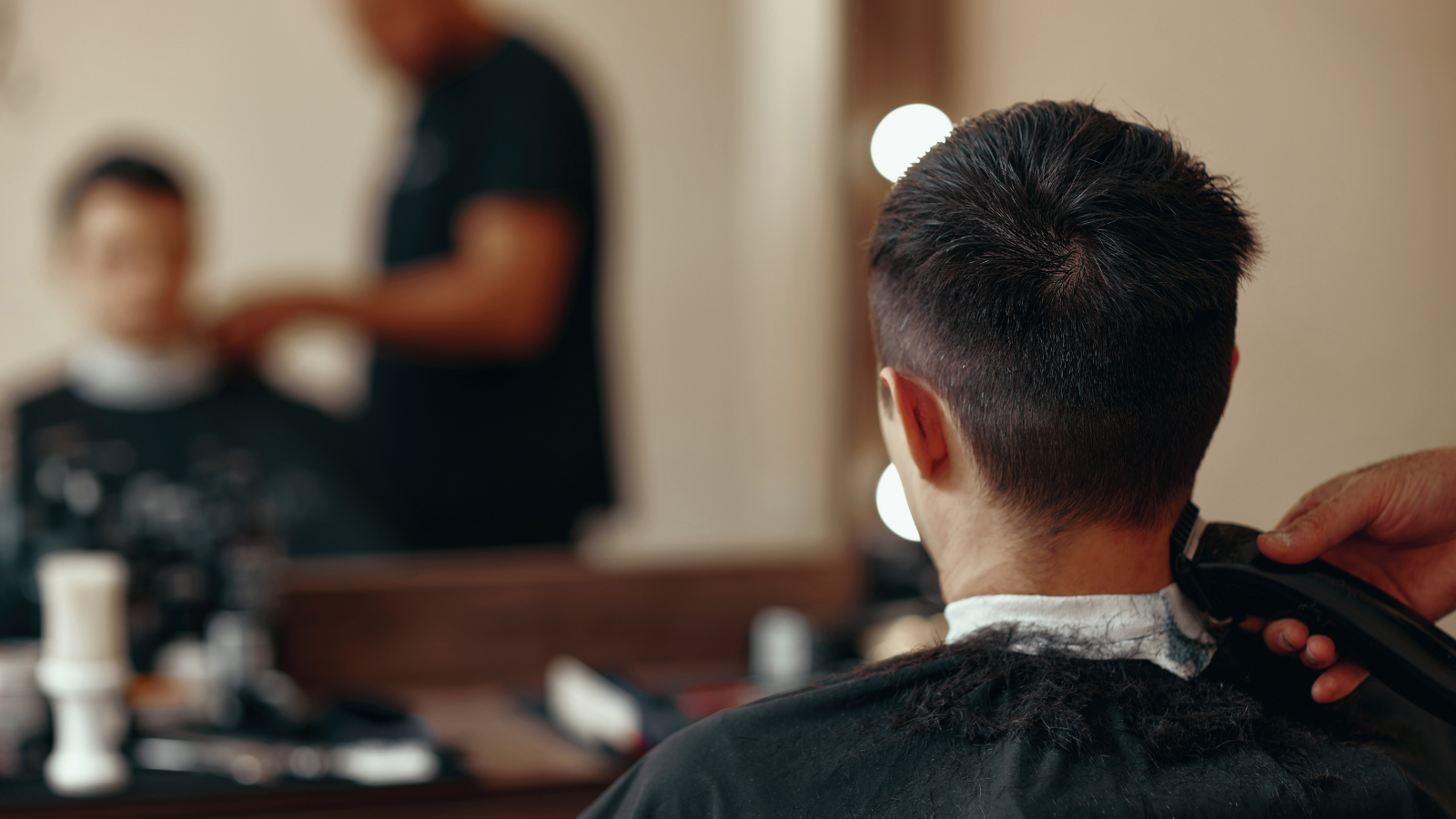
There has been a lot of interest in the past decade in the barbershop as a source of support for physical and mental health issues. I was asked to comment for a barber trade magazine called Salonfocus on how barbers can help young men with their mental health. Here are the questions I was asked, and my responses. As is usual in articles that interview multiple people, only about 10% of what I said made the final version of of the article.
What role can places like barbershops play in supporting mental wellbeing in the lives of adolescents and young men?
There has been a lot of interest in the barbershop as a source of support for physical and mental health issues. This started in the US in the 1980s, where there is a tradition in the African-American community of the barber being a relaxed community-orientated place. Although there are cultural differences, between the US and UK, interest has grown in the past few years in applying the US model to the UK. Men in the UK visit the barber on average around once per month or more, so is potentially a good regular contact point where they can build up friendship and trust.
I think it’s great that barbers are doing this, and I encouraged this movement when it started in the UK around 10 years ago. In 2016 we published one of the few research studies that have looked at the social and wellbeing aspects of visiting the barbershop. I’ve also done surveys for Harry’s in several countries, including some valuable work on masculinity and mental health. Although the barbershop as mental health support is a popular idea and one with potential, it’s important that some good quality research is conducted to demonstrate how much barbershop interventions lead to better mental health in clients. The barbershop may be play a pivotal role in the mental wellbeing of young men in the UK, but that remains to be demonstrated empirically.
How far is it really beneficial for boys and young men to open up to another man in the setting of a barbershop?
In general, men and women highly value talking with friends as a way of dealing with stress. The barbershop has been identified as a place where men can talk about problems, an idea derived from Afro-Carribean culture in the US. As quoted in the Salonfocus article: “The key issue is [not that men talk in a barbershop, but] “that they are talking in context where some basic conditions are met: they feel respected, not judged, not forced to talk, and there is some sense of confidentiality.” Although the barbershop is generally a one-to-one experience, a shop is not a private space like a therapy clinic, but as long as those basic conditions can be met, the setting could be pretty much anywhere.
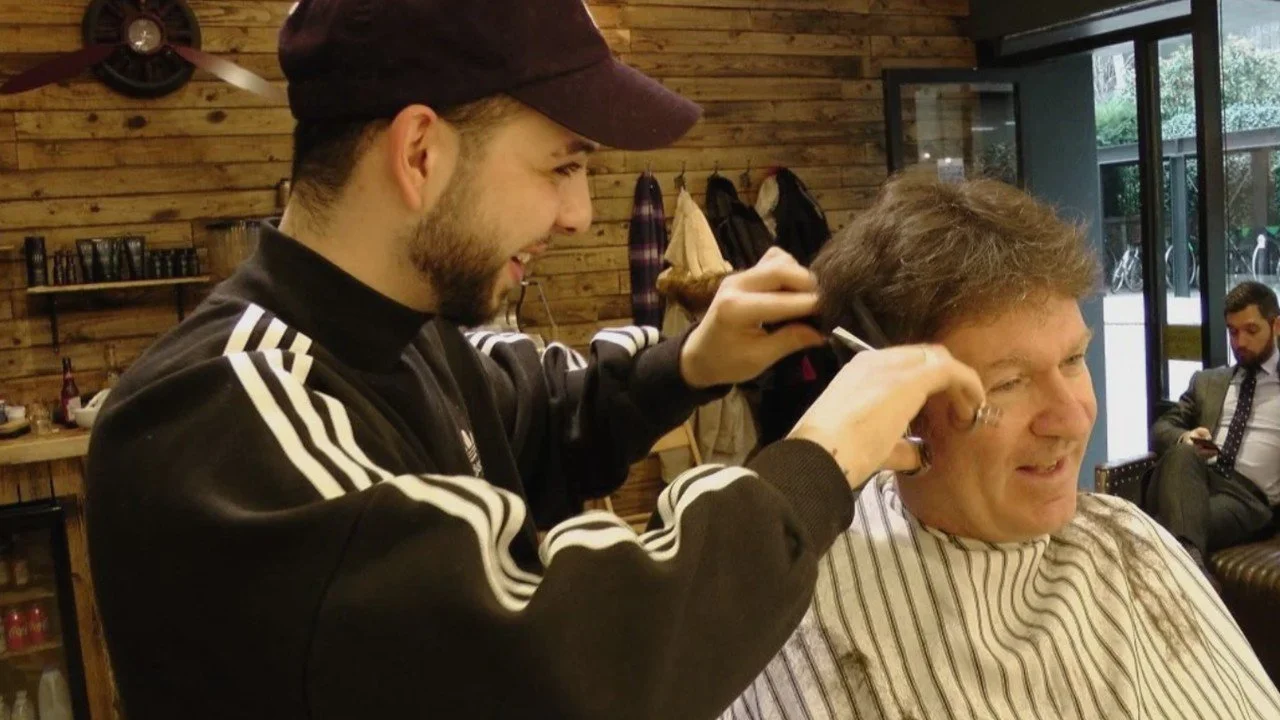
It used to be that men would talk to about their problems with their barman or priest.
Photo: Swagger barbers in London, where Alex is cutting John Barry’s hair.
However, how much boys and young men should open up is a different issue. If they talk about things that are very personal to them, but they find they are misunderstood, this can be a painful experience, and one that might prevent them from opening up in the future. For some issues, it is better to open up to a professional therapist, and indeed barber mental health trainings I know of are clear that the barbers role is not to be a therapist, but to listen, recognise needs, and signpost where needed.
It’s often the case that men are less keen on talking about their feelings as a way of dealing with problems. As one psychologist said at a conference on male psychology: “Don’t just try to get men to open up – they are not a can of beans”. Research shows that rather than talk about their feelings, some men are more inclined to want to fix the problem that is causing them distress, or to use sports or the gym as a way of dealing with their stress, or even just socialising with other men in a relatively informal context e.g. Men’s Sheds.
There is a further issue that doesn’t get discussed much, which is that although signposting makes the most sense, it’s not always ideal for young men. This is partly because most therapists (around 80%) are female, and usually not trained in male psychology, so might not easily empathise with a young man who, for example, says his girlfriend is abusive to him.
What advice would you give a barber on how to deal with toxic narratives, like incel culture?
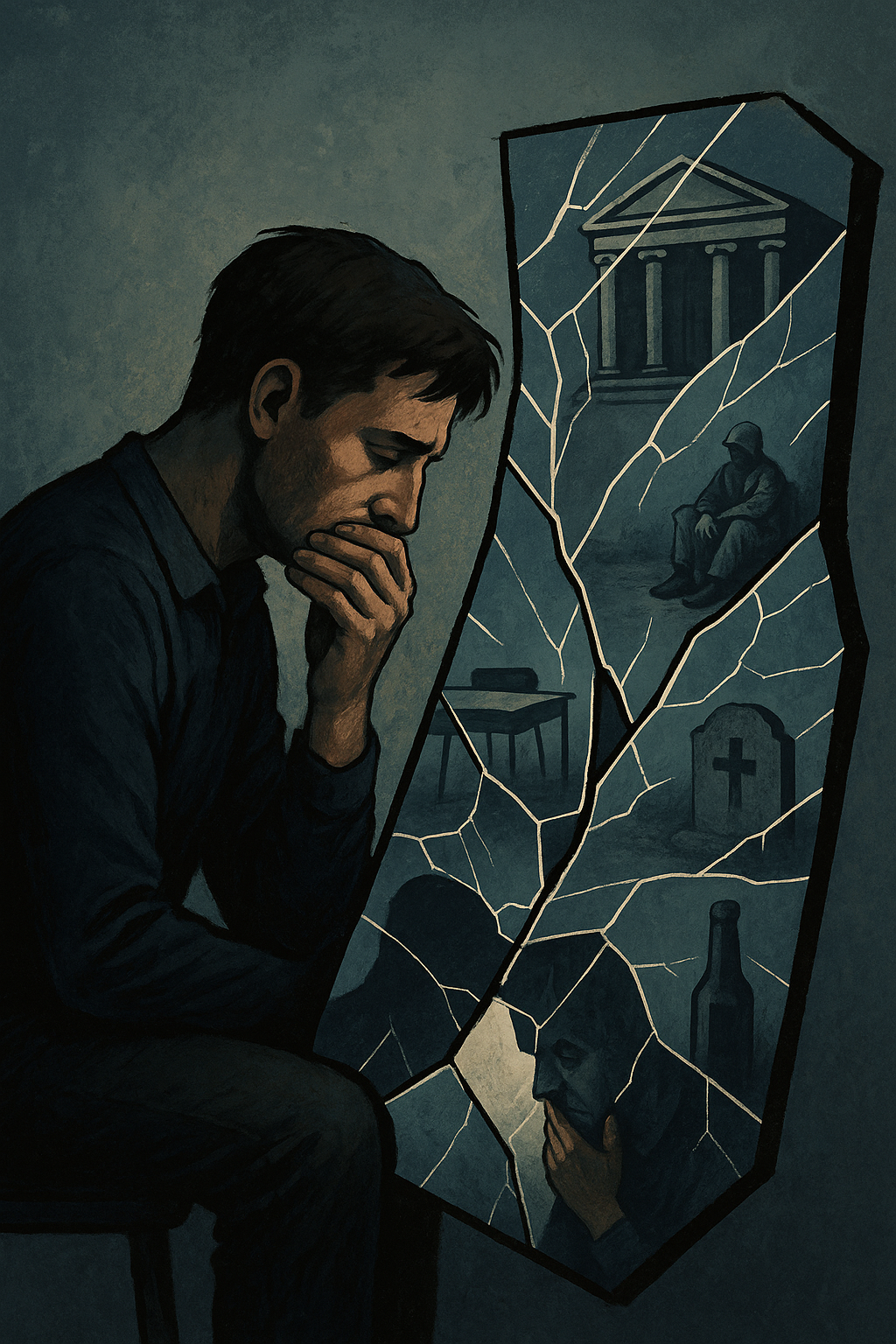
As a psychologist specialising in men’s mental health, here are three useful things for barbers to know. As quoted in the Salonfocus article: “(1) two symptoms of depression in men that are often overlooked or misunderstood are aggression and substance abuse; (2) many of the men and boys who identify as incels are at increased risk of depression; (3) social isolation is common in incels, and social isolation is a common risk factor in men’s mental health problems.” Anyone with mental health issues deserves some sympathy, even if they are saying things we don’t agree with, or act in a way we don’t approve of. If the barber’s client is to be helped, it’s important they don’t feel their opinions are being judged as toxic.
Another important point relates to male-typical communication. As quoted in the Salonfocus article: “Men and women tend to communicate in slightly different ways. For men especially, banter – which is often found in male spaces like barbershops - can be a way of talking about issues and feelings without being too intimate or vulnerable.” So although banter may appear to some people as ‘trash talk’ that has no merit, it can actually be an important way of communicating. If barbers are interested in the mental health of their clients, they should bear in mind that banter could be the only way of opening up a client has, even if it seems politically incorrect or offensive.
What advice would you give a barber on helping a customer with poor mental health?
First, take a course such as BarberTalk, which is based on the Safe Talk suicide prevention training. It was developed for barbers by The Lions Barber Collective, and helps barbers to recognise when a customer needs help, how to ask direct questions, listen with empathy and know how to signpost to relevant resources.
There is some good advice on recognising men’s mental health issues and what to do next, from the Centre for Male Psychology, based on the advice from the British Psychological Society on how to do therapy with men. It is aimed especially at people working with men’s mental health (e.g. helpline workers) but is also suitable for everyday situations, for example, someone concerned that their brother or father might be having mental health problems.
What’s important for barbers to consider when talking to impressionable young boys and men?
Remember they are young, have got ideas of the world that are based on limited experience, but, as quoted in the Salonfocus article: “this is not the final version of this person, because they can learn and grow.” Even if today they are repeating the latest thing they have heard in the schoolyard or from an influencer, it probably won’t be long before life experience had made them much wiser. Give them some space to grow and learn from mistakes, and hope they are not life-wrecking mistakes. Remember too that some of what they say may be real, they may be things they have genuinely experiences, but are hard to believe because they are not anything like your own experiences. Don’t judge them too harshly and whatever you do don’t preach to them about the potential harms of masculinity, because although this might seem to make sense (and is a common idea these days), it may well make the worst-behaved boys even worse, and some of the boys who were fine before will take on a burden of shame, which can harm their mental health in various ways.
The quotes are from the article originally published in Salonfocus magazine, authored by Anna Scott, in Sept 2025.
Disclaimer: This article is for information purposes only and is not a substitute for therapy, legal advice, or other professional opinion. Never disregard such advice because of this article or anything else you have read from the Centre for Male Psychology. The views expressed here do not necessarily reflect those of, or are endorsed by, The Centre for Male Psychology, and we cannot be held responsible for these views. Read our full disclaimer here.
Like our articles?
Click here to subscribe to our FREE newsletter and be first
to hear about news, events, and publications.





















Have you got something to say?
Check out our submissions page to find out how to write for us.














.