
Boys, Blind Spots and Backward Policy: Why Schools Are Failing Thousands of Children with Colour Blindness

Picture 1a: Question: Do you think the teams should be Pink vs Green, or Blue vs Yellow?
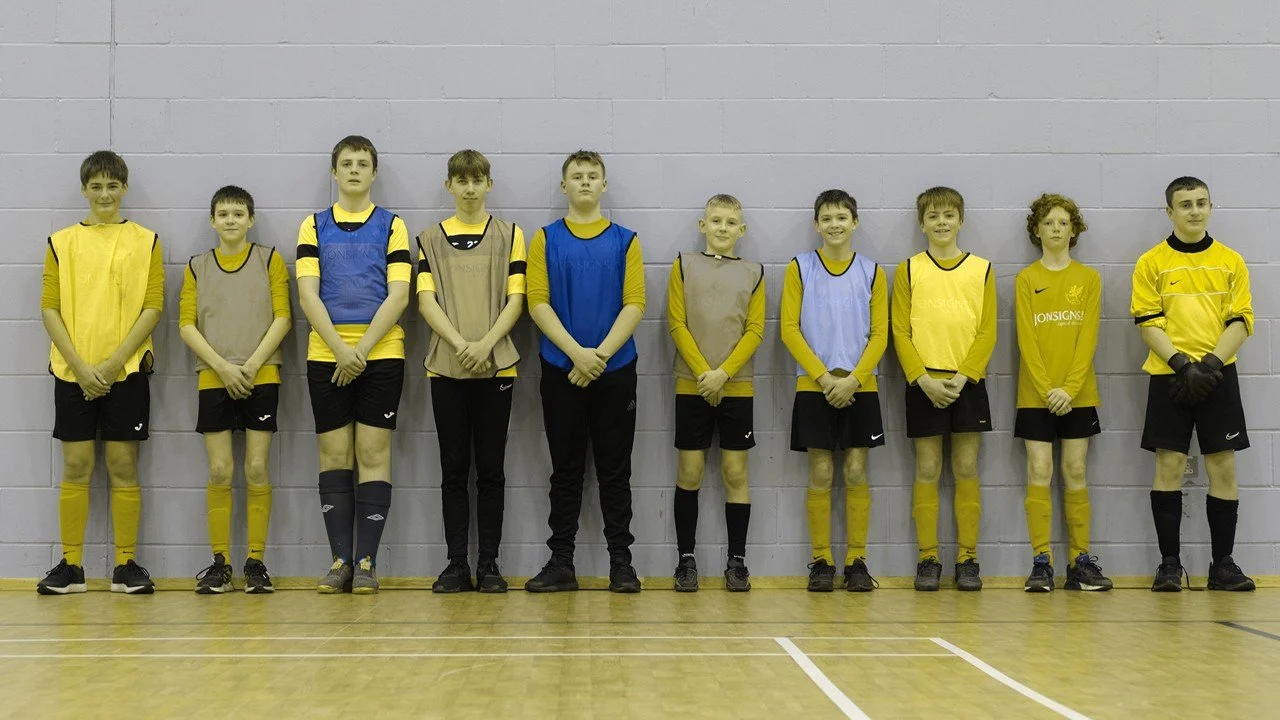
Picture 1b. How the colours in Picture 1a look to most colour blind children. (Both pictures are from the book Supporting Colour Blindness in Education and Beyond (Difolco, 2025).
Every September, fresh uniforms, new pencil cases and eager faces fill classrooms across the country. Statistically, in every average co-ed class of 30 though one child (more likely a boy), will be starting a new academic year already at a disadvantage. This is because they have colour blindness.
A Common but Ignored Condition
Colour Blindness, or Colour Vision Deficiency (CVD) as it is sometimes known, is one of the most common inherited conditions in the world. It affects 1 in 12 boys and 1 in 200 girls, which means boys are 16 times more likely to live with the condition. In the UK alone an estimated 450,000 school aged children are colour blind, yet most schools cannot identify them. This isn’t a criticism of teachers. It's the result of systemic failure.
A Hidden Disability with Visible Consequences
Colour blindness is a non-visible, physical disability, not a learning difficulty or behavioural issue, though it is often mistaken for both. A child with CVD might appear inattentive if they can’t follow colour coded instructions. They might be labelled careless or slow in activities involving sorting, matching, or visual problem solving. In reality they’re just navigating a world built on assumptions about how colour is seen.
“In secondary school, misreading colour coded data on graphs or failing to spot other colour coded information can have real consequences.”
In early years, children with colour blindness might paint skies purple, give Santa Claus green boots and RAG (red-amber-green) systems might confuse rather than clarify. In secondary school, misreading colour coded data on graphs or failing to spot other colour coded information can have real consequences. Food technology lessons, map work, science experiments, team sports. They all rely on colour to communicate key messages.
And it’s not just about learning. Colour can signal danger (e.g. blood, heat, chemical warnings) or guide safe navigation (e.g. high-vis jackets, emergency signage). These are not optional details, they are vital to wellbeing, safety and inclusion.
Screening Removed. Damage Done.
You might assume children are routinely screened for colour blindness at school. They used to be until around 2009, when colour vision testing was quietly removed from the Healthy Child Screening Programme. The decision was based on a review that relied on flawed, outdated evidence from a 1958 cohort study that wrongly concluded CVD had no significant impact on education. There was no consultation, optometrists were not asked to step in and many teachers at the time weren’t happy that screening was removed.
“Colour blindness affects 16 times more boys than girls, and the unintentional consequence of overlooking this is a form of indirect sex discrimination with a lifelong impact on quality of life.”
Today, 80% of children arrive at secondary school without ever having been screened for colour blindness, despite 75% of them having had an NHS eye test and some of them even wearing glasses. Many parents and teachers still believe screening is part of a standard eye test, but it isn’t.
We now have an entire generation who’ve passed through the system without ever having been supported properly, even if they were lucky enough to be identified. Colour blindness affects 16 times more boys than girls, and the unintentional consequence of overlooking this is a form of indirect sex discrimination with a lifelong impact on quality of life.
Why Is Colour Blindness Still Overlooked?
There are several reasons. First, it’s not obvious, partly because many children develop coping strategies that mask the problem, like memorising colours or copying others, so that they don’t get labelled as unintelligent. Also, persistent myths don’t help. People still believe it’s just an issue with red and green, that it’s rare or that special glasses can fix it (they can’t). It doesn’t help that in England opticians don’t often test unless asked, and most teacher training courses don’t even mention it.
“Perhaps most damaging of all is the guidance to the Equality Act 2010 which incorrectly suggests that a “simple inability to distinguish between red and green” does not have a “substantial adverse effect” on daily life.”
Perhaps most damaging of all is the guidance to the Equality Act 2010 which incorrectly suggests that a “simple inability to distinguish between red and green” does not have a “substantial adverse effect” on daily life. The legal error of fact deters families from seeking help, discourages schools from making adjustments and prevents the condition being recognised for what it truly is: a disability.
Real Children. Real Impact.
My own son is colour blind. He’d passed multiple eye tests, but his early struggles were misinterpreted. It was a simple question: “Mum, is this orange”, while holding up a lime green felt tip pen, that changed everything. His story is not unusual.
Colour blindness often co-exists with other special educational needs (SENDs), but it’s rarely considered in screenings or interventions. When unrecognised, it can exacerbate anxiety, self-doubt, frustration and compound any co-existing learning difficulties. It’s a barrier, but like many barriers it can be worked around.
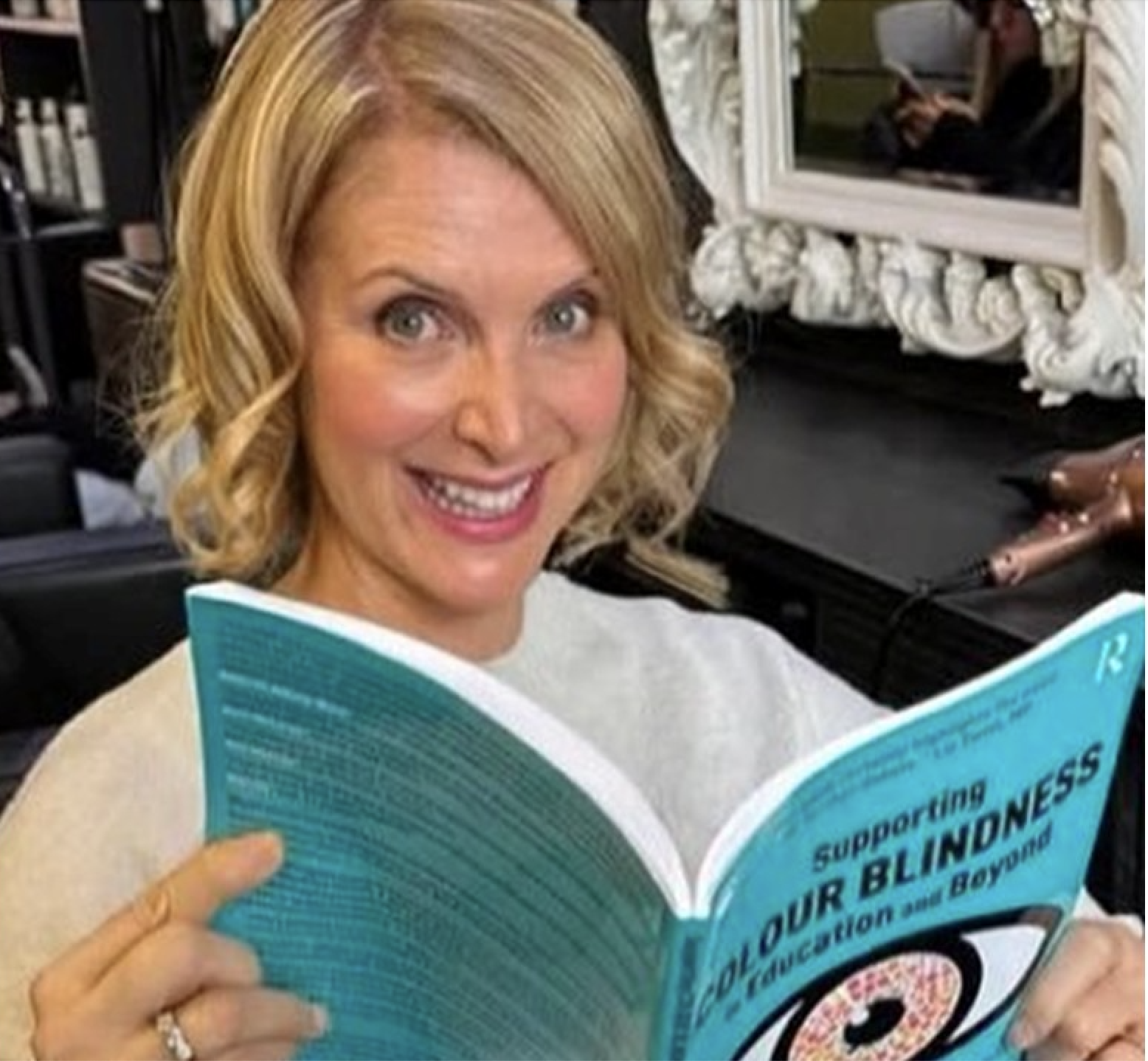
After my sons diagnosis I became a volunteer with the Colour Blind Awareness organisation and began working with researchers at Newcastle University. My not-for-profit book: Supporting Colour Blindness in Education and Beyond came about because I couldn't find the resources I needed to help him navigate his journey. It’s filled with simple, low-cost interventions that can transform a colour blind child’s experience of school. Most require only awareness: clear labelling, avoiding colour-only instructions, choosing accessible colour combinations. These interventions are not burdensome. They just aren’t being taught.
We mustn’t forget thousands of teachers are colour blind too, yet few receive any workplace adjustments. Every school should take a whole-setting approach to accessible colour not just for pupils, but for staff, parents and visitors as well.
It’s Not One-Size-Fits-All, But the Solutions Still Fit
There are different types and severities of colour blindness, but here’s the good news: the interventions are the same. Teachers don’t need to understand the details of a diagnosis to make a difference. What they must avoid though is relying on a colleague with colour blindness to validate materials because no two people with colour blindness see colours in the exact same way.
What matters is making materials accessible from the start: use symbols, patterns, text labels and never rely on colour alone. Make use of simulator apps to see how your classroom looks through colour blind eyes and think about the emotional impact too. We reference colour constantly, but for a colour blind child those daily reminders can feel isolating or even shaming.
“The solutions exist; we just need to implement them.”
We cannot expect children to self-advocate for something they’ve never seen, and we can’t expect teachers to support a need they haven’t been trained to recognise.
The Way Forward
The solutions exist; we just need to implement them. It’s time to stop treating colour blindness as a curiosity, an unimportant nuisance, or an afterthought and start treating it as the significant accessibility issue it is.
To do that, we must:
Reintroduce screening for colour blindness in schools
Include colour blindness in teacher training and PGCE programmes
Amend the Equality Act guidance
Recognise colour blindness as a disability that requires reasonable adjustments to be in place.
Scroll down to join the discussion
Disclaimer: This article is for information purposes only and is not a substitute for therapy, legal advice, or other professional opinion. Never disregard such advice because of this article or anything else you have read from the Centre for Male Psychology. The views expressed here do not necessarily reflect those of, or are endorsed by, The Centre for Male Psychology, and we cannot be held responsible for these views. Read our full disclaimer here.
Like our articles?
Click here to subscribe to our FREE newsletter and be first
to hear about news, events, and publications.























Have you got something to say?
Check out our submissions page to find out how to write for us.
















.