
Building a healthier future for men’s mental health: The case for male-centred therapy

Since I started working in the field of male psychology nearly 15 years ago, there has been a huge surge in the number of people and organisations wanting to help men. This is fantastic… or is it?
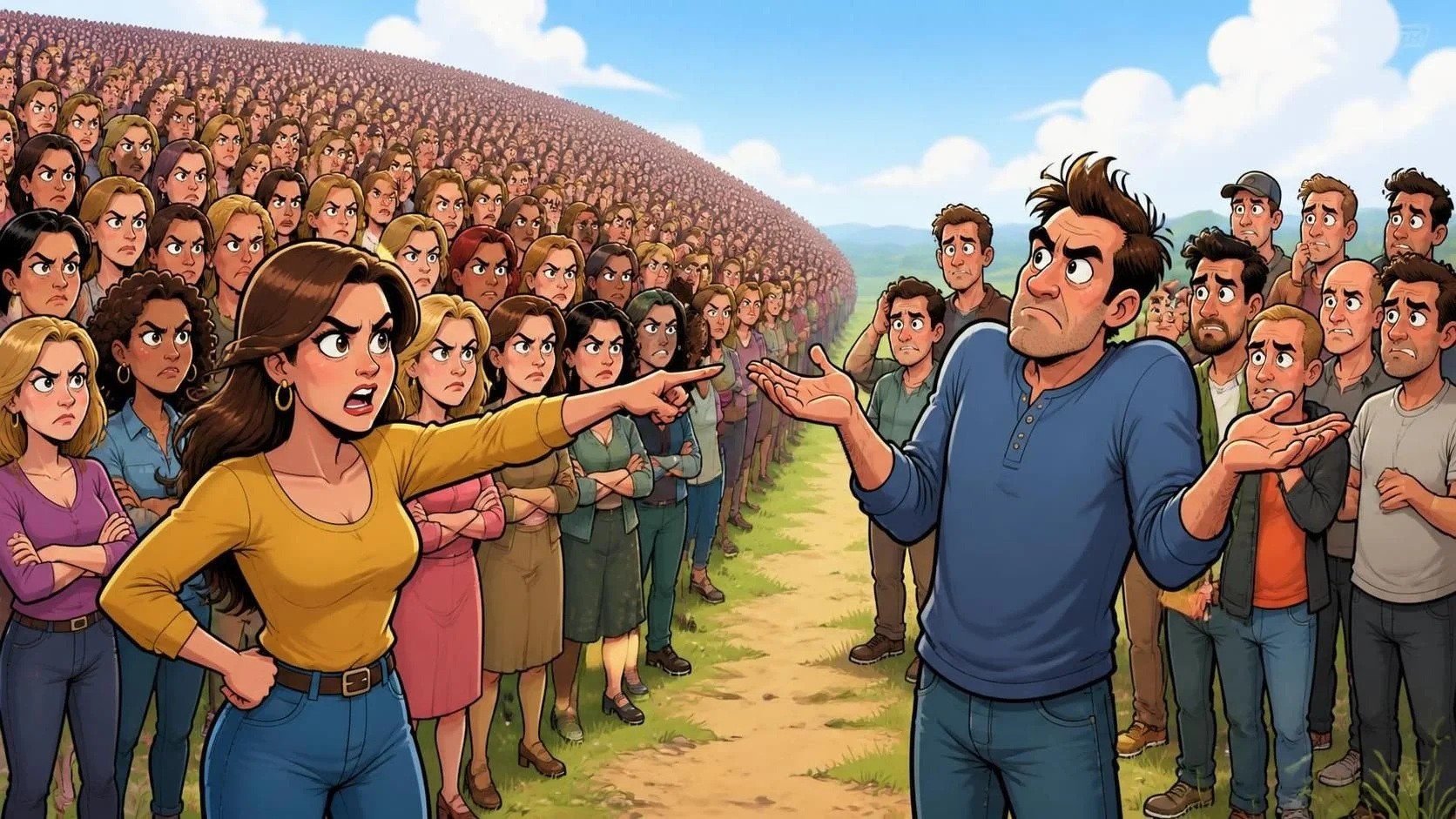
For example, in a recent discussion with Bill Clinton, California Governor Gavin Newsom expressed his desire to help men, but then cited some dubious sources of inspiration for this work, such as his wife’s documentary which presented masculinity somewhat negatively. Indeed the field of men’s mental health is so overwhelmingly infected with what is called the ‘deficit model’ of masculinity (e.g. the much criticised APA guidelines), that despite apparently sincere offers to help men, we should be concerned that if such efforts are based on the deficit model, they might at best come to nothing, or even completely backfire.
Given my experiences in this field, including an initially relatively naïve faith on building upon the existing literature, I think it’s important that people understand four key points about men’s mental health.
1/ Masculinity is not a key cause of men’s mental health problems
It has become a cliché that masculinity is bad for men’s mental health, for example, by preventing men from talking about their problems. One of the most commonly cited papers on this topic is called Masculinity and Suicidal Thinking. Contrary to this title, the analysis in this paper reveals that masculinity is not the strongest predictor of suicidal thinking; suicidality was more strongly predicted by: depression, life events, not being in relationship, and substance use. Despite this, the title is not ‘Depression and Suicidal Thinking’, or ‘Life Events and Suicidal Thinking’ etc. Furthermore, of the 11 subscales of masculinity assessed in this study, only one subscale (refusal to seek help, aka ‘self-reliance’), was found to be statistically significantly related to suicidality, and then only barely so. Nonetheless this study is widely cited as evidence that masculinity may place men at risk of suicidal thinking. The widespread influence of this paper means people interested in helping men are focusing on masculinity rather than more significant issues such as life events and relationship issues that are related to suicidality.
“The idea that science proceeds on the shoulders of giants is a good one, but this only works properly when we are referring to a giant accumulation of good science.”
2/ Men’s mental health research is firmly focused in the wrong direction
In the 1980s research into men’s mental health began to focus on masculinity, and has suffered ever since from ‘paradigm fixation’. In other words, it has been fixated on conducting the same type of research over and over, without learning from important errors along the way. Studies like the one described in the previous section are the norm and are produced in abundance, but the errors go beyond elevating relatively minor issues to the headline. Here are the three key recurring problems:
The definition of masculinity used in research is unrealistically negative (called the ‘deficit model’) often including negative stereotypes about men e.g. being homophobic, and wanting power over women.
Findings based on young men’s opinions are taken as representative of all men, ignoring that fact that most men develop more mature views as they grow older.
Studies based on correlation are too often discussed as if they prove causation, although it’s a truism that ‘correlation does not prove causation’.
The idea that science proceeds on the shoulders of giants is a good one, but this only works properly when we are referring to a giant accumulation of good science. If it’s a giant pile of defective papers, then even a meta-analysis of these – which would usually produce high-level information – will merely raise the defective work to a position of credibility it doesn’t deserve. To make things worse, artificial intelligence (AI) can’t tell the difference between good and bad research, and when you ask Grok or ChatGPT about masculinity and mental health, AI will happily regurgitate common falsehoods, mainly because they are so common.
“This may surprise some people, but there is evidence that traditional masculinity is linked to better mental health”.
3/ Masculinity can benefit men’s mental health
This may surprise some people, but there is evidence that traditional masculinity is linked to better mental health e.g. one study found that higher self-esteem and mental positivity were predicted by more acceptance of traditional masculinity. What should surprise you even more is that even when benefits of masculinity are found, instead of being further researched to discover useful new therapeutic approaches, the findings are ignored or dismissed. For example, one systematic review found that in studies of men in their 40s, masculinity was used in various ways (e.g. chopping wood, motor biking) to help men cope with depression. However the paper dismissed these approaches saying – remarkably – that these approaches might put “pressure on men to meet hegemonic ideals [and] reproduce traditional gender relations and power imbalances”. Because of the prevailing paradigm fixation, few people do research investigating the benefits of masculinity, and when benefits happen to be found, they are often ignored or downplayed.
“Lots of people are starting to agree that ‘masculinity is not toxic’, but in some cases they still use terms that are just as bad as ‘toxic masculinity’ (e.g. ‘hegemonic masculinity’), or continue to blame ‘masculine norms’ or ‘traditional masculinity’ or ‘traditional masculinity ideology’ or ‘patriarchy’ for men’s problems.”
We should have a more realistic and positive view of masculinity, but the term ‘positive masculinity’ is often used to imply ‘less masculinity’, without the recognition that traditional masculinity is in itself positive. Lots of people are starting to agree that ‘masculinity is not toxic’, but in some cases they still use terms that are just as bad as ‘toxic masculinity’ (e.g. ‘hegemonic masculinity’), or continue to blame ‘masculine norms’ or ‘traditional masculinity’ or ‘traditional masculinity ideology’ or ‘patriarchy’ for men’s problems.
It seems unlikely that a therapist can do genuinely male-friendly therapy while stereotyping masculinity and making it the focus of men’s problems. My own research found that one of the strongest predictors of men having lower mental wellbeing was how much they blame masculinity for their negative behaviours, such as not talking about how they feel about their problems, or making them feel inclined to be violent towards women. This finding implies that making men think masculinity is their problem – as ideas such as hegemonic masculinity inevitably do - is not a credible way to help men’s mental health.
“[A male client] might think you are crazy if you said his problems were caused by patriarchy and masculinity norms. However if that’s how the therapist sees men, they should make this clear at the outset so that men who are potential clients can decide in advance if they are happy for their therapy to be conducted based on those assumptions.”
4/ A truly male-centred approach is needed
Empathy is, arguably, the key factor in the success of therapy, and might be the key factor missing for male clients. Interventions based on a negative view of men and masculinity tend to perform relatively poorly. Interestingly, Men’s Sheds - an intervention that doesn’t have any theoretical basis other than letting men be themselves – can improve wellbeing and health outcomes. Building from these facts, it seems the best next step would be to ensure that we use therapies that are unambiguously male-centred. I am using the term ‘male-centred’ rather than ‘male-friendly’ because although the latter has been used in relation to some of the structural aspects of therapy (the language used, the location etc), the opinions and theoretical viewpoint of the therapist have largely been left out and presumed to be benign. I think it’s important to apply Carl Rogers’ idea of person-centred therapy to men, so that in relation to male clients the therapist should show:
Unconditional positive regard: therapists should be accepting and non-judgemental even if they are male-typical things you don’t really like or understand e.g. banter, competitiveness etc.
Congruence: therapists should be open with the client about their view of men and masculinity.
Empathy: therapists should see the world from the man’s perspective e.g. if your client doesn’t think patriarchy caused his marriage breakdown, work with him on that basis.
These three concepts are more nuanced than presented here, but I am emphasising the distinction between ‘male-centred’ and ‘male-friendly’ especially because sometimes ‘male-friendly therapy’ (e.g. male-typical communication in a setting men feel comfortable in), is done in parallel with the assumption that men’s problems are caused, at least in part, by patriarchy or ‘gender norms’. Signs that an approach is not male-centred is citing certain types of material (such as the APA guidelines (2018), or the Masculinity and Suicidal Thinking paper outlined above), or using certain terms uncritically (such as ‘hegemonic masculinity’, ‘masculinity norms’ or patriarchy) as an explanation for men’s problems. The incongruity of combining ‘male-friendly’ with ‘masculinity-ambivalent’ approaches is obvious when you think about common sources of depression for men. For example, if a man is suicidal because of his divorce, is now homeless, and only allowed to see his children for a few hours per month, he might think you are crazy if you say his problems are caused by patriarchy and gender norms. However if that’s how the therapist sees men, it’s important that make this clear before therapy begins so that men who are potential clients can decide in advance if they are happy for their therapy to be conducted based on those assumptions. Some men will agree their problems are caused by patriarchy and gender norms, but this might be less due to this being true, and more due to the influence of the prevailing narrative about men, which no doubt has distorted so many people’s views.
Concluding comments
Some people will immediately see the sense in the four points above, while others will struggle with some or all of them. Most people reading this article have been raised from childhood in a culture which promotes the idea that many of life’s problems are due to patriarchy and masculinity. These are emotive ideas that stick, influencing everyone, including psychologists and researchers. To extract your mind from these ideas is not easy. You might read this article and genuinely see the validity of the four points made, but in the next moment read another article, or have another conversation, or read an op-ed, or see a sitcom, that lulls you back into the prevailing cultural fixation on the evils of patriarchy etc.
However, our culture is showing the first small signs of change. Not only are increasing numbers of people are becoming interested in men’s mental health, they are realising that the dominant theories of masculinity don’t fit. This has inspired many grass roots organisations and individuals to go their own way, and in some cases grow bigger than established therapy organisations. Furthermore, some of the larger organisations have started challenging the deficit model of masculinity, including the British Psychological Society (BPS), and even the global giant in psychology, the APA, is showing signs of moving away from their notorious guidelines and towards a more rounded view of men and masculinity. However whether these changes will continue to develop is an open question, because there is no shortage of people who are ready and willing to steer this movement back into the decades-old fixation on patriarchy and masculinity norms as the default explanation for men’s problems.
This article is a revised version of ‘Four points…’ published on 19th Nov 2024.
You can find out more about the themes discussed above in our magazine, our textbook (Perspectives in Male Psychology), and our online courses.
Further reading
Seager, M., Barry, J.A. (2019). Positive Masculinity: Including Masculinity as a Valued Aspect of Humanity. In: Barry, J.A., Kingerlee, R., Seager, M., Sullivan, L. (eds) The Palgrave Handbook of Male Psychology and Mental Health. Palgrave Macmillan, Cham. https://doi.org/10.1007/978-3-030-04384-1_6
Barry, John; Walker, Rob; Liddon, Louise; & Seager, Martin. (2020). Reactions to contemporary narratives about masculinity: A pilot study. Psychreg Journal of Psychology, 4(2), 8–21. https://doi.org/10.5281/zenodo.3871217
Barry J. (2023). The belief that masculinity has a negative influence on one's behavior is related to reduced mental well-being. Int J Health Sci (Qassim). PMID: 37416841
Disclaimer: This article is for information purposes only and is not a substitute for therapy, legal advice, or other professional opinion. Never disregard such advice because of this article or anything else you have read from the Centre for Male Psychology. The views expressed here do not necessarily reflect those of, or are endorsed by, The Centre for Male Psychology, and we cannot be held responsible for these views. Read our full disclaimer here.
Like our articles?
Click here to subscribe to our FREE newsletter and be first
to hear about news, events, and publications.




















Have you got something to say?
Check out our submissions page to find out how to write for us.















.