
Is masculinity the product of biology or culture? The case of the exceptionally passive Semai men of Southeast Asia.

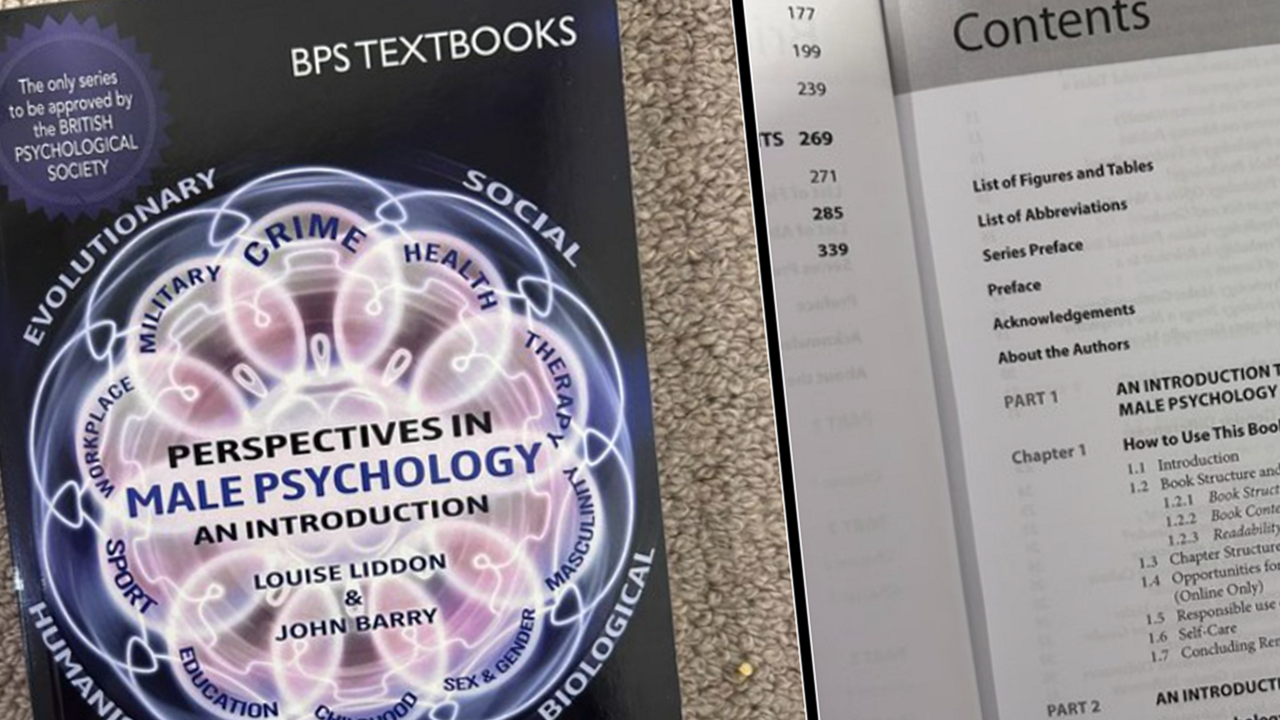
Editor’s foreword: The Centre for Male Psychology has recently released an online course exploring masculinity from a variety of perspectives, including the biological view and the cross-cultural view. Questions like ‘is masculinity the product of biology or culture’ are understandable but redundant, like asking ‘is a car a form of transport or a form of status symbol’.
However we live in times when many people seem determined to prove that masculinity is purely a product of culture, and a common way they do this is by pointing to the variety of expressions of masculinity throughout the world, especially focusing on communities where men appear to lack any evidence of masculinity. A classic example is the Semai people of Southeast Asia.
In 2023 Brett McKay, founder of the Art of Manliness, wrote a series of clear and concise posts about the Semai. We have both been inspired by David Gilmore’s book ‘Manhood in the Making’, and I realised Brett’s posts would be very interesting to readers of Male Psychology magazine. Brett has very kindly given the CMP permission to reproduce his posts as the following article:
Masculinity and the Semai, by Brett McKay
In my readings of books about “reimagining masculinity”, I’ve come across authors using the Semai people of the Malay Peninsula as an example of a culture that doesn’t have your typical culture of manhood with an emphasis on aggression, competition, and status.
And indeed, the Semai are the people who most meet the criteria of being exceptionally androgynous and egalitarian. There’s no code of manhood at all, or even a rite of passage for boys.
The Semai live at the center of the Malay Peninsula in Southeast Asia. Though they exist at a subsistence level, land for much of their history was plentiful and sufficient for their needs. Men and women both take care of the children and gather food.
Though it isn’t strenuous or dangerous, hunting is an almost exclusively manly task. But the divvying up of labor is still very flexible:
“Few traits are distinctively ‘masculine’ or ‘feminine.’ The sexual division of labor is preferential, not prescriptive or proscriptive. That is, there are no rigid rules, and a man or woman may choose to do whatever he or she feels suited for without incurring criticism.
However, the expectation is that someone skilled at an activity normally preferred by the opposite sex will be particularly good at it. For example, male midwives are especially talented, and female headmen are unusually powerful.”
The capacity to give freely of all that one has is highly prized. “There is not even the remotest notion of ‘protecting your own,’ as the concept ‘your own’ has no meaning to them.”
The most marked characteristic of the Semai is their thorough and unyielding commitment to nonviolence. They are likely the least violent people on earth. Aggression of any kind is strictly forbidden.
“Learned helplessness is a psychological term for what happens when humans are repeatedly subjected to stress and abuse that they cannot control or do anything to mitigate.”
There is no conception of male honor. Children are taught to be afraid of, and to flee from strangers. They are raised to be soft and timid and told that “there are more reasons to fear a dispute than a tiger” and that it is “safer to be cautious than to be brave.”
If a Semai – child or adult — senses a threat, he or she will run away and hide.
Even competitive sports are verboten, since they foster aggression and the losers will be made to feel bad and inferior to the winners. Children “play” badminton without the net or keeping score – intentionally hitting the shuttlecock so that the other players can hit it back.
There is no government, police, or formal leaders. Because they are so conflict-adverse, all disputes are settled through communal mediation. No one recognizes the authority of anyone else, and no one can be coerced to do something they don’t want to do.
If continually entreated to perform an undesirable task, they’ll simply turn away and say, “I’m not listening.” Even the children are free to do as they wish; if a parent asks their child to do something they’d rather not, the child can simply say, “I bood” (basically, “I don’t want to do it”), and the matter is closed for discussion. There is no word for “adult” in their language.
Because the Malays were so much more numerous and powerful, the Semai felt that attempting to fight back would mean the wholesale destruction of their people. Thus they chose to respond to the raids by trying to run away and settle elsewhere.
If they were still caught, they readily surrendered. The men accepted the blows that fell upon them as they watched their wives assaulted and impregnated by strangers and their little children carried off to a life of sexual slavery.
Anthropologist Robert Knox Dentan, who studied the Semai for four decades, traces the people’s adoption of nonaggression to a kind of cultural “learned helplessness.”
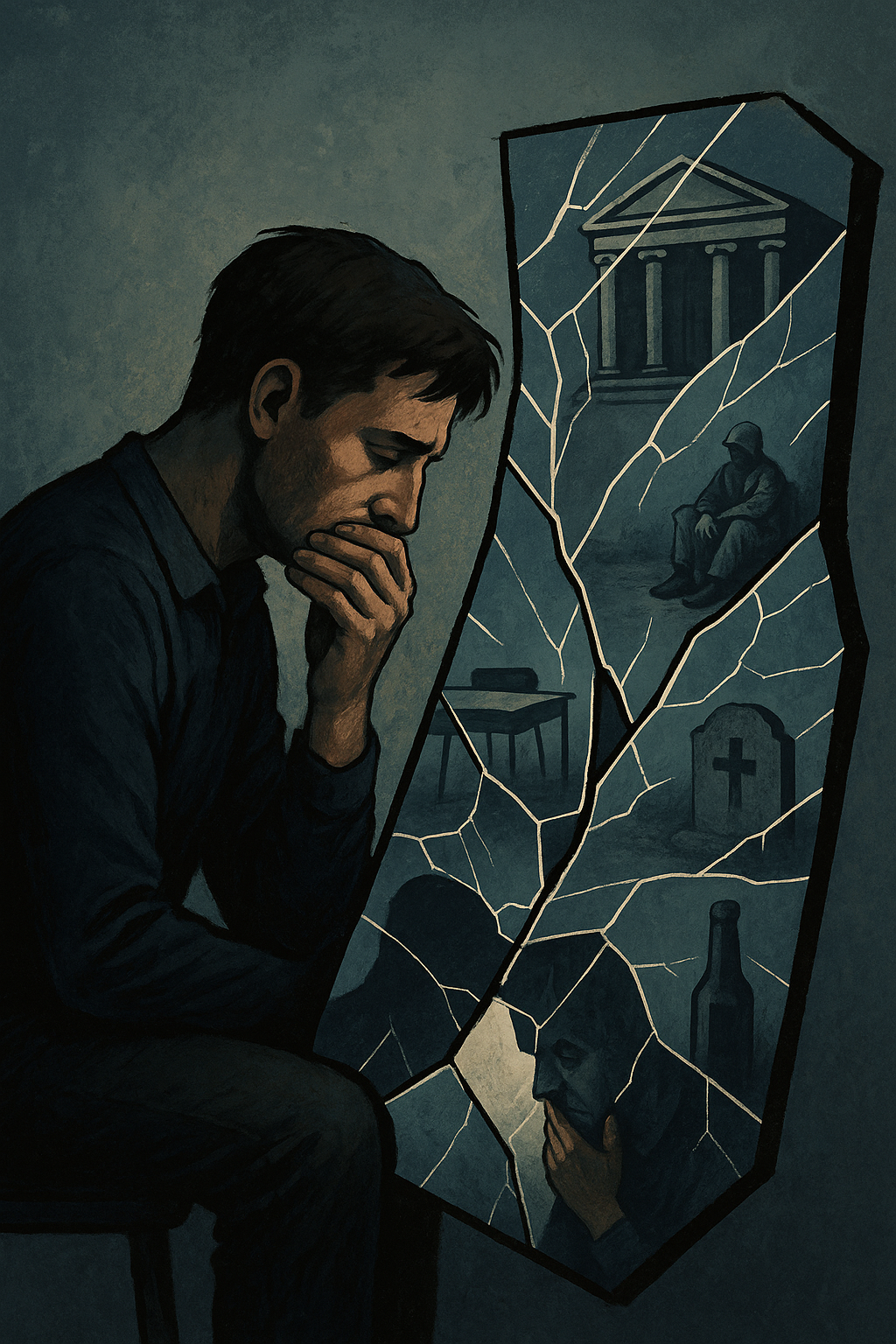
Learned helplessness is a psychological term for what happens when humans are repeatedly subjected to stress and abuse that they cannot control or do anything to mitigate.
Eventually they simply lose hope, give up, and no longer even try to stop the pain, even if it is potentially avoidable. Learned helplessness is linked with clinical depression, and there is some evidence that the Semai are particularly susceptible to dolefulness and despondency.
In modern times, though the slave raids have officially ended, the Semai are dependent on a very fickle government for protection and aid. Malaysian authorities have continually taken the Semai’s land and shuttled them into various “regroupment” camps.
Through all this displacement, dispossession, and dislocation, the Semai have passively accepted their fate. Dentan argues that instead of the typical responses to threat – fight, flight, or tend and befriend, the Semai have chosen another path: surrender.
While Dentan attempts to tease out the possible moral strengths and evolutionary upside of complete surrender to threat and abuse, the Semai themselves are not proud of their reputation for nonviolence, and know the Malays see them as cowards.
“the men were at first completely bewildered as to what was expected of them. But they quickly transformed into the fiercest fighters in the unit.”
It’s not that the Semai aren’t capable of violence or don’t think about it. Young Semai men fantasize about fighting back, and dominating the Malay. They have simply learned to push this desire down. Yet it remains latent in their masculine make-up.
In the 1950s, when the British military recruited Semai to fight Communist insurgents, the men were at first completely bewildered as to what was expected of them. But they quickly transformed into the fiercest fighters in the unit.
According to Dentan: “A typical veteran’s story runs like this. ‘We killed, killed, killed…We thought only of killing. Truly we were drunk with blood.’”
Even after living for years among the most peaceful people on the planet, Dentan muses that young men the world over are “prone to bellicosity,” and that it’s hard not to imagine that all men “have chromosomal, hormonal, or neurological predispositions if not to physical violence
The takeaway: Humans are interesting. The Semai are certainly an exception of a culture that doesn’t emphasis “traditional ideas of masculinity.” But the reason behind that is pretty dang sad.
Further reading
Centre for Male Psychology (2025). New Insights into Masculinity: Theory and Practice. 4-hour online course, suitable for the purposes of Continuing Professional Development (CPD).
Gilmore, D (1991). Manhood in the making. New Haven: Yale University Press.
Disclaimer: This article is for information purposes only and is not a substitute for therapy, legal advice, or other professional opinion. Never disregard such advice because of this article or anything else you have read from the Centre for Male Psychology. The views expressed here do not necessarily reflect those of, or are endorsed by, The Centre for Male Psychology, and we cannot be held responsible for these views. Read our full disclaimer here.
Like our articles?
Click here to subscribe to our FREE newsletter and be first
to hear about news, events, and publications.













Have you got something to say?
Check out our submissions page to find out how to write for us.











.
