
Men’s mental health awareness: are we saying too much or too little?

Since it was founded in 1823, The Lancet medical journal has “strived to make science widely available so that medicine can serve and transform society, and positively impact the lives of people." Last week it published a thoughtful and well-researched article by Foulkes and colleagues about the dangers of mental health campaigns which might cause more harm than good. On the other hand, two weeks ago it published a lengthy review of depression, but the article completely overlooked the phenomenon of male depression. What can we learn from these two Lancet articles about raising awareness of men’s mental health? I argue here that too many campaigns aimed at raising men’s mental health awareness either say too much that isn’t accurate, or miss out important information.
Saying too much about men’s mental health problems
In regards men’s mental health, the problem with saying too much is not about overloading people with too many facts, but telling them things that are not accurate. The main type of inaccuracy is in blaming masculinity for things that are only tangentally related to masculinity. For example, one widely-cited study called Masculinity and Suicidal Thinking supposedly found a significant link between suicidality and poor help-seeking. However, closer inspection revealed the link not only barely significant statistically, but also based on two questions about help-seeking, which is clearly too narrow to be reperesentative of masculinity. Furthermore, other variables, such as life events and not being in a relationship, were much more strongly related to suicidality than was help-seeking.
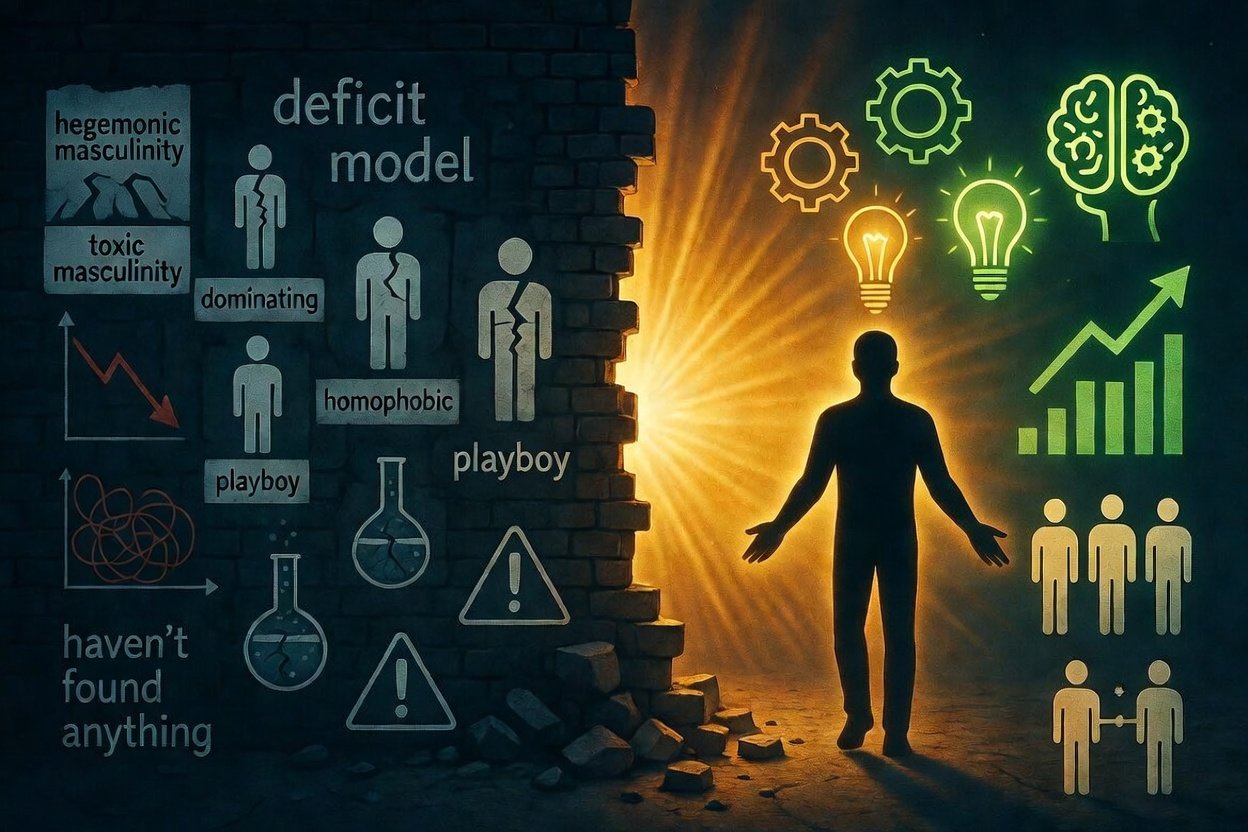
Another type of inaccuracy is related to concept creep. Foulkes et al say: “there is experimental evidence that concept creep (the societal semantic expansion of harm-related concepts such as trauma and bullying) leads individuals to perceive those terms less seriously”. There has been a lot of concept creep regarding the definition of masculinity since the 1980s. Before then, masculinity was usually defined in recognisable terms (competitive, independent, active etc.), but ideologically-driven researchers in the US made the term increasingly problematic, so that two decades later we found ourselves being told that masculinity includes far more negative traits (being controlling of women, violent, homophobic etc.).
Concept creep means changes taking place relatively slowly, sometimes hidden behind acronyms (e.g. for questionnaires) that conceal their nature. More overt and clumsy nomenclature, such as the term ‘toxic masculinty’, is much more easily detected and rejected by the general public. Indeed this rejection has forced academics and gender pundits to stop using the term ‘toxic masculinity’. It seems to be generally true that when mental health awareness campaigns incorporate negative concepts of masculinity, the reaction is predictable. A famous example is the reaction to Gillette ‘boys will be boys’ campaign, which is said to have lost Gillette 8 billion dollars.
“Although mental health awareness efforts are not in themselves a treatment, they might still induce a nocebo effect by negatively shaping people’s expectations about their psychological state”.
However, more stealthy versions of this negative attitude to masculinity go undetected, in particular the term ‘hegemonic masculinity’, which – in brief – is about “the dominance of men and the subordination of women”. This idea is extraordinarily popular in the social sciences, inspiring efforts to make men less dominant and women less subordinated, but is entirely unfamilar to the average person. This is no doubt in part because the word ‘hegemonic’ is unfamiliar and difficult to pronounce, and it’s combination with the word ‘masculinty’ doesn’t make the meaning any clearer. In contrast, terms with a similar meaning, such as ‘patriarchy theory’, are more easily recognised – and thus rejected – by the average person. However, to date the wide influence of the ‘hegemonic masculinity’ concept remains a highly successful Trojan horse, smuggling negative ideas about men into all levels of life, from student essays to government policies, without most people realising it.
Another problem with using toxic definitions of masculinity is that they might cause men to think they are toxic because, being men, they somewhat inevitably embody masculinity to some degree or other. My own survey of 4,000 adult men found that men who think masculinity makes them do bad things (such as feel violent towards women, and bottle up their feelings) experienced worse mental wellbeing. Foulkes et al say this influence might especially impact adolescents, who are at a sensitive stage of the development of their self-concept: “When adolescents view online content about mental health problems, they are likely to take on this language to describe themselves, and it might be meaningfully absorbed into their developing identity”. Foulkes says this is the nocebo effect at work (like the placebo effect, but inducing harmful side effects): “Although mental health awareness efforts are not in themselves a treatment, they might still induce a nocebo effect by negatively shaping people’s expectations about their psychological state”.
Inaccurate concepts based on ideology, such as patriarchy theory, should not be considered part of mental health awareness, except to highlight their shortcomings, which are similar to the shortcomings of the term ‘toxic masculinity’. This point was made in the Centre for Male Psychology’s campaign in 2023, which was aimed at the people around men who were showing signs of distress or possible mental health problems. This campaign suggests “See the man, not the myth. Blaming his behaviour on masculinity or patriarchy might misunderstand his situation, and he might end up feeling worse.”
Saying too little about men’s mental health problems
Related to the previous point about accuracy, some campaigns are not accurate in identifying the common causes of men’s mental health problems. For example, the demographic most at risk of suicide in the UK is middle-aged men who are recently divorced. This supports the finding that being single is a stronger predictor of suicidality than a lack of help-seeking, and indeed supports a great deal of other findings implicating relationship breakdown with male suicide.
“When awareness is not linked to services that are timely, relevant, and responsive, it becomes more than ineffective—it becomes misleading and even harmful.”
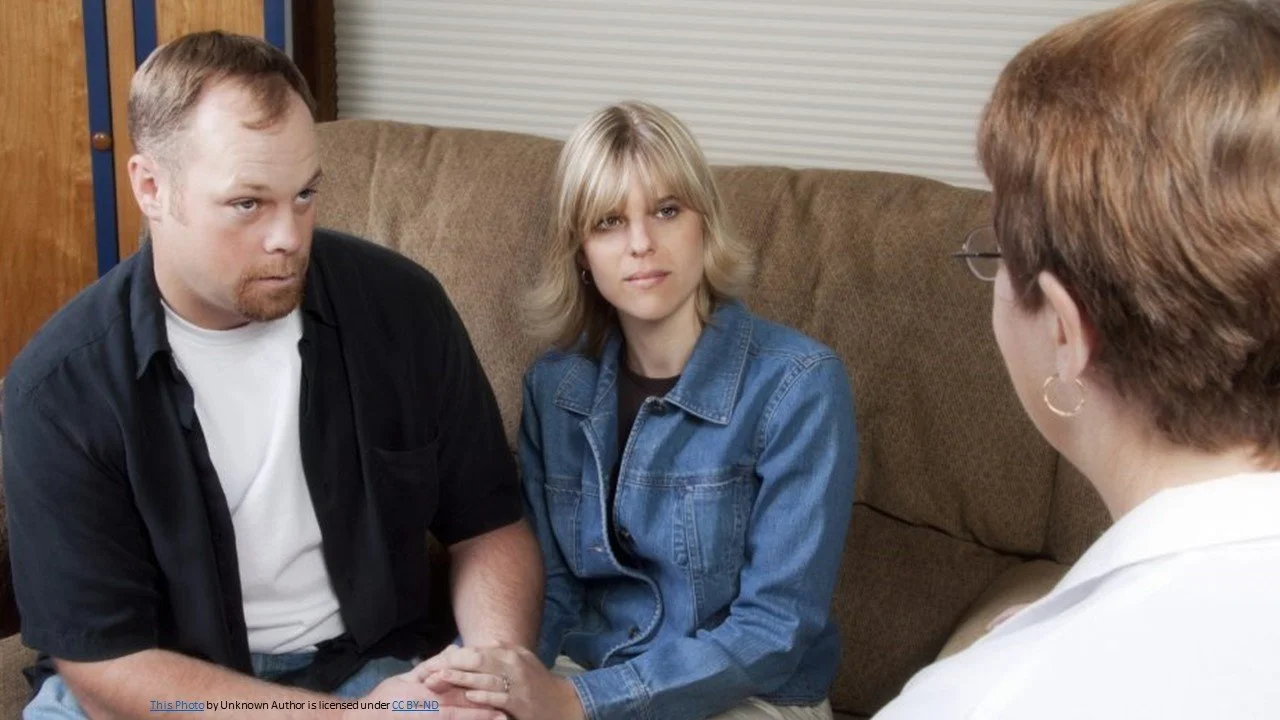
A related issue is that if men seek help less for mental health issues than women do, why should we presume this is caused by masculinity? Perhaps there are other reasons, for example, if a man is depressed due to his recent divorce, perhaps he is concerned that a therapist will focus on ‘masculinity norms’ rather than his loss. This raises a further issue about mental health campaigns that urge men to talk about their feelings, without telling them specifically who they can talk to. This issue is summed up very well in another Lancet article by Hunt et al (2025): “Campaigns urging men to speak up have become culturally familiar. Although well meaning […] we must move beyond awareness as a goal and treat it as an entry point into responsive and person-centred systems. Awareness campaigns have become the default in suicide prevention. Often, they focus on emotional disclosure: encouraging men to talk, open up, or reach out. These messages implicitly frame suicide as a failure of expression rather than a failure of systems to hear and respond. National evaluations show that only awareness campaigns that are directly linked to prevention strategies had any sign of effectiveness. When awareness is not linked to services that are timely, relevant, and responsive, it becomes more than ineffective—it becomes misleading and even harmful.”
If men need therapy for work stress or relationship problems, the vast majority don’t want therapy to focus on their masculinity. Indeed the perception of anti-male bias has reduced trust in psychology as a solution for men’s problems. Male-centred therapy offers a solution to this problem, but is a rarity, and is something prospective clients currently need to identify for themselves. (A list of sources of support, and training courses, can be found at the end of this article).
Saying too little about male depression
The Lancet article on male depression is a good example of saying too little about men’s mental health. I wrote to the editor about this omission:
Dear Editor,
I read with interest the recent Seminar on depression (Malhi et al., May 2, 2026). The authors correctly note the consistent 2:1 female-to-male ratio in diagnosed depression. However, the article gives limited attention to well-documented sex and gender differences in how men and women tend to experience and express the condition.
Emerging evidence indicates that men more commonly externalise depressive symptoms through irritability, anger, aggression, risk-taking, and substance use, rather than classic internalising features such as sadness or withdrawal.1 Men are also generally less likely to seek traditional talking therapies, often preferring action-oriented strategies to address stressors. Conventional psychotherapies focused on emotional expression may therefore be less appealing or accessible to many men. In contrast, community-based, activity-focused interventions such as Men’s Sheds show promise in providing purpose, social connection, and reductions in depressive symptoms.2
Greater recognition of these patterns could improve identification, diagnosis, and the development of tailored treatment options for men. A more comprehensive discussion of sex and gender differences in depression presentation and management would strengthen future reviews in this area. 3
Yours sincerely,
John Barry, PhD
If this Lancet article recognised male-typical depression, this would be very useful in raising awareness of this important issue among the medical and psychological community, as well as the general public, including women who might experience symptoms of male depression. Although it is a relatively new concept, there is plenty of room to hone our ability to better identify male depression (e.g. develop improved measures) and treat it more effectively.
Conclusion
None of the above suggests we can create a mental health awareness campaign that will help everyone without upsetting anyone. Good intentions alone will not protect people from the risk of unintended consequences such as nocebo effects. But we shouldn’t accept unintended consequences as inevitable, and we should conduct appropriate risk assessments to reduce these risks, and use other measures such as follow-ups to mitigate the risks. In relation to campaigns related to men’s mental health, it is important to note risks such as framing masculinity in negative terms, or urging men to talk without signposting them to someone to talk to. The important thing is, as Foulkes et al say: “To some degree, all public health efforts run the risk of some unintended harms; the question is whether there are sufficient benefits to tolerate the amount of risk”.
Many services on this list of sources of support are male-centred, and a list of male-centred courses and webinars can be found here.
Scroll down to the comments section to join the discussion
Disclaimer: This article is for information purposes only and is not a substitute for therapy, legal advice, or other professional opinion. Never disregard such advice because of this article or anything else you have read from the Centre for Male Psychology. The views expressed here do not necessarily reflect those of, or are endorsed by, The Centre for Male Psychology, and we cannot be held responsible for these views. Read our full disclaimer here.
Like our articles?
Click here to subscribe to our FREE newsletter and be first
to hear about news, events, and publications.















Have you got something to say?
Check out our submissions page to find out how to write for us.














.