
Light at the end of a long dark tunnel for male victims of domestic violence?

Many of us will have found that when we try to discuss men’s mental health issues we are met with disinterest or even derision. It has even been suggested that men in general are so privileged that they don’t need any male-specific help.
It could be that there is especially little sympathy for male victims of domestic violence, even amongst male victims themselves. There are lots of reasons for this. In general, neither men nor women want to see men as victims. Also, the domestic violence industry is focused almost exclusively on female victims, and any sign that funding will be diverted to male victims is not welcomed with open arms. Campaigners such as Erin Pizzey and researchers such as Prof Murray Strauss have experienced threats and abuse, and it is true to say that the decades since the 1970s have been bleak times for people sympathetic to male victims of domestic violence.
But now in 2018, perhaps we are seeing the first green shoots of fresh thinking about domestic violence:

Picture: outside the European Union (EU) Parliament in Brussels. L-R Dr John Barry, Marta Iglesias Julios, Prof Joaquim Soares, Prof Nicola Graham-Kevan, Eduardo Zugasti.
Since September 2018 we have seen Mark Brooks and the Mankind Initiative in the UK feature prominently in the mainstream media, including the Victoria Derbyshire show on BBC1 They – especially Mark himself – are to be congratulated for the determination and professionalism.
27th November 2018 saw Dr Liz Bates (University of Cumbria, UK) be honoured with an award for her research on male victims of domestic violence as one of the ‘UK’s Best Breakthroughs’ in academia this year.
4th December 2018 saw a meeting in the EU parliament in Brussels, focusing on research evidence of the extent of domestic violence against men worldwide, compiled by Professor Joaquim Soares (Mid Sweden University). In the same meeting, Professor Nicola Graham-Kevan (University of Central Lancashire, UK) discussed research into the sometimes devastating impact on children of witnessing domestic violence. Marta Iglesias Julios, a PhD candidate from Portugal, gave a very thought-provoking presentation on the potentially far-reaching harm caused by non-physical violence (e.g. spreading malicious rumours) of the type that women tend to engage in more than men do on average. The forum was organised by MEP Teresa Giménez Barbat and Euromind, and was very positively received. For me it was a very pleasant surprise that support for male victims of domestic violence is alive and healthy in Europe.
So it appears that this topic is moving from the hinterlands and breaking into mainstream consciousness. What we need to see is this progress continuing in a sustainable manner. To facilitate this process, it would be helpful if the following developments were to occur:
1/ We need for the mainstream media – especially the BBC who we pay a tax for – to tell the people of the UK the truth about domestic violence, not distortions of the truth. Failure to devote proportionate time to male victims should be condemned as a breach of the BBC code of impartiality.
2/ Greater recognition of the lack of services for male victims is needed. For example, male-specific treatment programmes – not the widely discredited Duluth model – and other types of male-friendly support are urgently needed.
3/ We need greater recognition of the huge sacrifices made by people working in the field of male victims of domestic violence. Many people are doing incredible work voluntarily, or survive on a shoestring, in their efforts to help male victims.
Although there is light at the end of the tunnel, this tunnel is filled with obstacles. Funding to help male victims is still almost unheard of. Even the excellent MankindInitiative charity recently almost had to shut down due to lack of funding. Ironically, because of the recent heightened awareness of male victims, the domestic violence industry – after years of focusing only on helping women – are apparently now keen to apply for funding so that they can extend their services to men. This isn’t a solution, mainly because the domestic violence industry has a reputation for treating men as perpetrators rather than victims, and because most women (and probably many men) will not be happy with having mixed-sex shelters and other facilities in this highly sensitive field.
So is there room for optimism when it comes to male victims of domestic violence? My answer is that we should be realistic and recognise the gains that are being made, strive to build upon them, and be prepared to have to work hard to finally reach the light.
This article was first published on the Male Psychology Network website in 2018
Scroll down to join the discussion
Disclaimer: This article is for information purposes only and is not a substitute for therapy, legal advice, or other professional opinion. Never disregard such advice because of this article or anything else you have read from the Centre for Male Psychology. The views expressed here do not necessarily reflect those of, or are endorsed by, The Centre for Male Psychology, and we cannot be held responsible for these views. Read our full disclaimer here.
Like our articles?
Click here to subscribe to our FREE newsletter and be first
to hear about news, events, and publications.





When a male is in a power imbalance, at least two masculine instincts are disempowered…

…people – men and women alike – respond less positively to male-favouring sex differences than they do to female-favouring sex differences.
hyper-masculine gender norms are typically embedded within military institutions, and while adherence to these norms can contribute to combat and military success, they conversely make clinical work challenging
Men might benefit greatly from a government strategy aimed at improving their health. Here are suggestions from the Centre for Male Psychology on how that might be done. This article ends with some comments on potential pitfalls in the process of putting this strategy in place.



…people – men and women alike – respond less positively to male-favouring sex differences than they do to female-favouring sex differences.

… many papers do not even bother to identify or justify the nationality of their samples…
hyper-masculine gender norms are typically embedded within military institutions, and while adherence to these norms can contribute to combat and military success, they conversely make clinical work challenging

Have you got something to say?
Check out our submissions page to find out how to write for us.
hyper-masculine gender norms are typically embedded within military institutions, and while adherence to these norms can contribute to combat and military success, they conversely make clinical work challenging
hyper-masculine gender norms are typically embedded within military institutions, and while adherence to these norms can contribute to combat and military success, they conversely make clinical work challenging
hyper-masculine gender norms are typically embedded within military institutions, and while adherence to these norms can contribute to combat and military success, they conversely make clinical work challenging

hyper-masculine gender norms are typically embedded within military institutions, and while adherence to these norms can contribute to combat and military success, they conversely make clinical work challenging

hyper-masculine gender norms are typically embedded within military institutions, and while adherence to these norms can contribute to combat and military success, they conversely make clinical work challenging

Much of our attitudes, theorizing and public debate around men and masculinity is influenced by high profile feminist and Gender Studies scholars in academia. But what is the scientific quality of publications from these scholars?

Some people blame drill music – a form of rap - for the rising murder rate in London. Drill is known for aggressive lyrics about gang violence, but rather than seeing this as a valuable way for young men to express their feelings, some people want to ban it.

To survive… cultures have to use men and women effectively and … in fact, most cultures have used men and women in different ways… what our culture does is [grant] greater status to men and greater protection to women

hyper-masculine gender norms are typically embedded within military institutions, and while adherence to these norms can contribute to combat and military success, they conversely make clinical work challenging

There are around 300,000 veterans living with hearing loss in the UK, according to The Royal British Legion. In addition to being at a greater risk of PTSD, depression, and anxiety, many vets are also battling psychological distress from hearing problems.
The book begins with a description of her therapeutic approach, and an illustration of how to understand and work with the rage often seen in male CSA clients.

I felt in my dealings with some police officers, as though I were treated firstly as a man (assumed to be a perpetrator), but they’d overlooked risks associated with my impairment. Example: How can you dodge a missile you don’t see coming?

The Panorama programme on domestic violence failed to adequately highlight two important issues: male victims and female perpetrators.

your photograph, name and address, might appear in the local and national press and on TV, insinuating what an evil monster you are

…an attack upon masculinity is an attack upon one’s sense of self, of identity. …What, then, is the right psychological defence against such an attack?

The male has been designed to “look”, not only at the female, but to “look out” for prey, for danger, and for ways to protect his family unit.

If his child is allowed to live, this man must be available, for the rest of his life, to love and provide for his child… If, on the other hand, it is decided that his child is to be destroyed, he should be able to go about his life as if nothing has happened
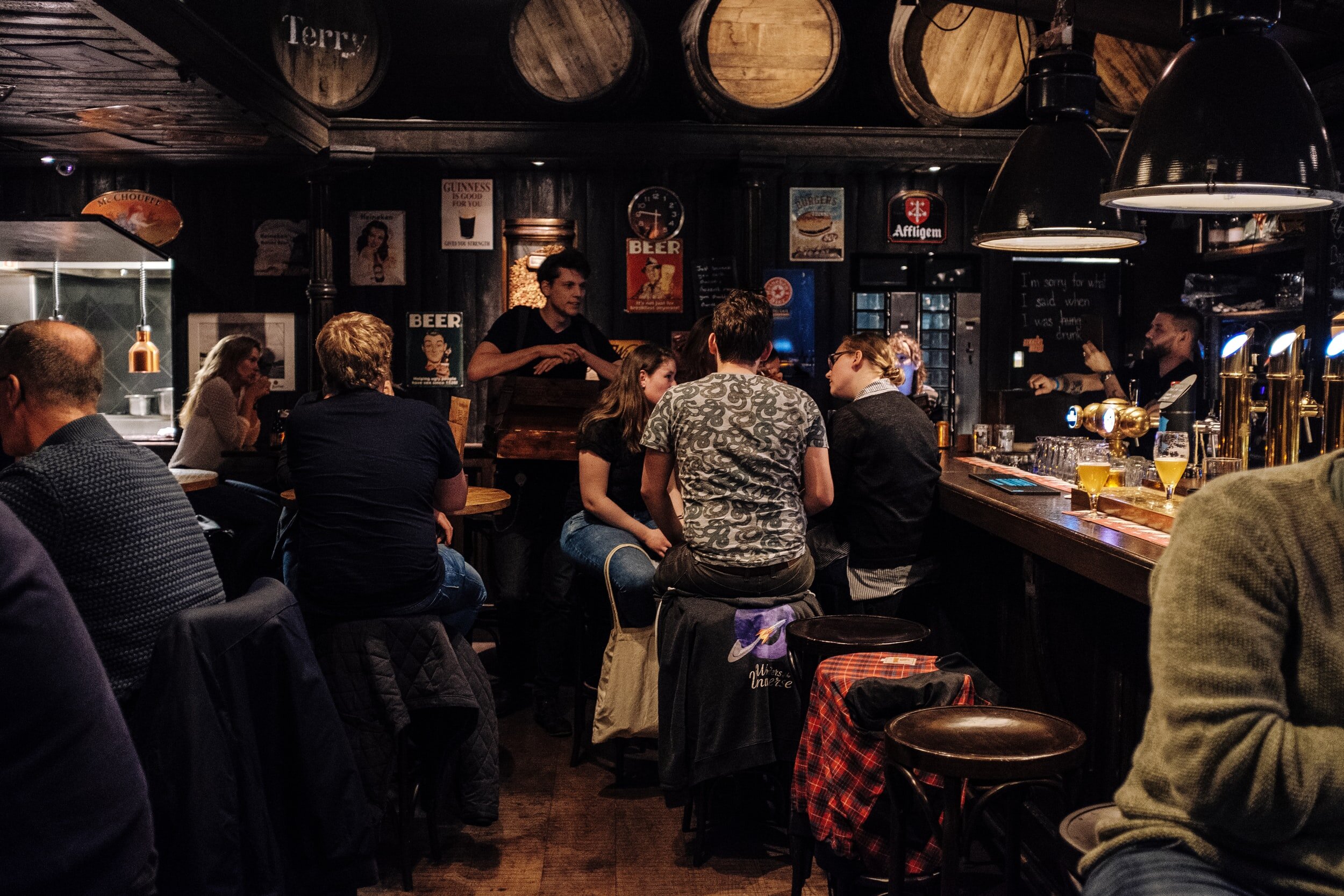
Socialising is a basic human need. The opposite – social isolation – is one of the worst forms of torture. Some people look down on the local pub as a place for undesirable riff raff, but that narrow viewpoint misses entirely the community value of the pub

Male psychology is a recent development in academia. Unlike gender studies, feminism, and men’s studies, male psychology takes the view that we can gain more by recognising and harnessing the positive aspects of masculinity than we can by taking a relentlessly negative approach to men.

.
 John Barry
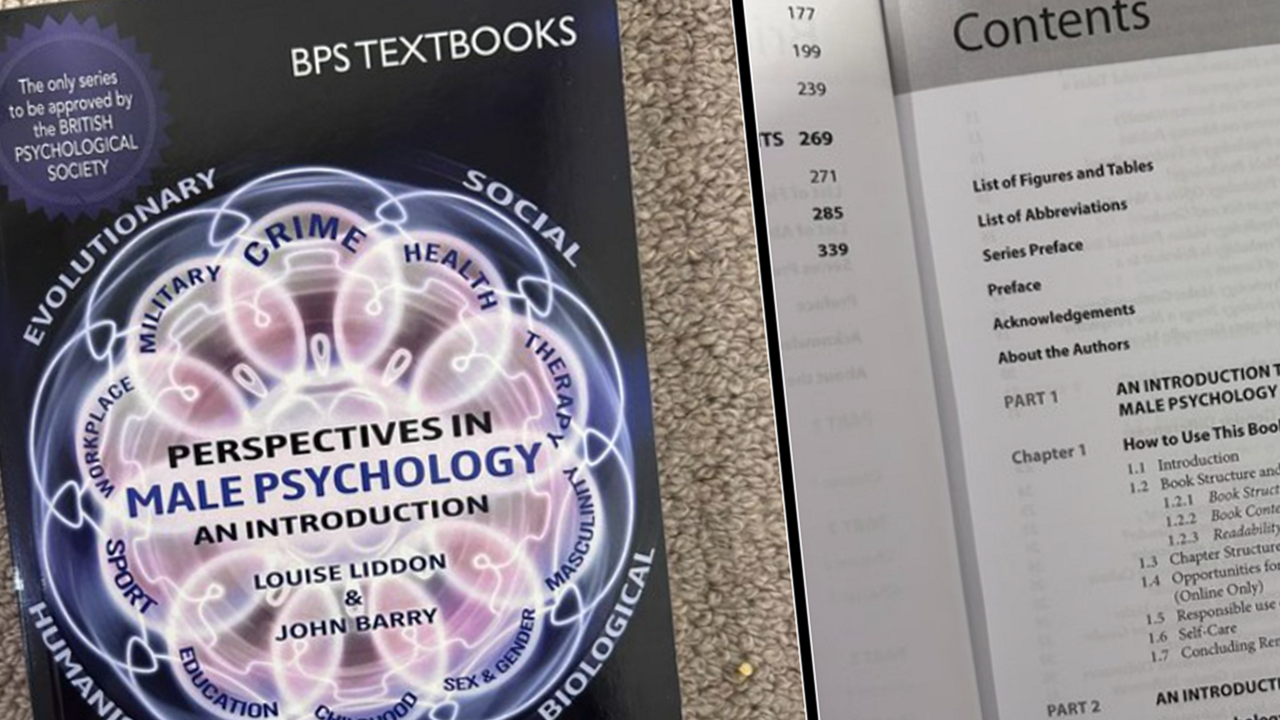
Dr John Barry is a chartered psychologist, researcher, clinical hypnotherapist and co-founder of the Male Psychology Network, BPS Male Psychology Section, and The Centre for Male Psychology (CMP). Also co-editor of the Palgrave Handbook of Male Psychology & Mental Health, co-author of the textbook Perspectives in Male Psychology: An Introduction (Wiley), and presenter on Centre for Male Psychology training courses.