

The “Toxic Male Gaze”: Should men staring at women be illegal?

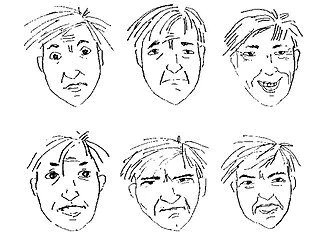
Earlier this year it was reported that “A senior police officer has urged everyone who witnesses "intense staring" on the London Underground to report it, amid concerns it could be an early sign of unhealthy sexual behaviour… Posters have now been place in tube [train] stations across the capital stating: "Intrusive staring of a sexual nature is sexual harassment and is not tolerated"”.
It should go without saying that sexual harassment of any kind should be discouraged. However, we don’t all agree on what constitutes sexual harassment. In addition, the specific issue of intense/intrusive staring is in many ways subjective, so raises a lot of questions. I guess when thinking about how we are looking, and being looked at, on public transport, we should start with the question of how do we know when intense starting is of a sexual nature? And can women be charged with ‘sexual staring’ too?
“London Transport trains are used by people of all kinds from all over the world, including ordinary people from cultures where staring is not seen as threatening e.g. Spain”
Regarding the first question, there might be reasons that a man stares intensely without sexual intent. For example, he could have autism and not really understand his behaviour might be considered as “staring”. Or he might be short sighted, or daydreaming about his holiday. Moreover, London Transport trains are used by people of all kinds from all over the world, including ordinary people from countries where staring is not seen as threatening e.g. in Spain. Indeed people in the UK are relatively comfortable with eye-contact, though those from outside London might not be aware that in the confined spaces of the London Underground ‘tube’ trains, people tend to be unusually sensitive to eye contact. Although London Transport’s idea may be well intentioned, it doesn’t seem to take these individual and cultural differences into account. Perhaps it’s main effect will be to make women excessively worried about being stared at, and make men excessively worried about being jailed for accidentally looking at a woman in the ‘wrong’ way.
But there are many layers to this issue. Speaking as a woman, I am always fascinated by the double standards exhibited by women with respect to male behaviour. We are only interested in being looked at by men if we find the said man or men to be attractive to us. This means that we can be potentially offended by the gaze of any man who falls into the following short list:
· Men we don’t know
· Men who we don’t find attractive
· Men who we feel are “punching above their weight” with regard to giving us their attention in this way
At the same time, the curious paradox is that, in spite of our assertions that we don’t need male attention (see the Toy Story 4 Bo Beep character, developed by feminist writers) and that we want to be taken seriously as we pursue our careers, we still take a lot of trouble to look attractive to men. This behaviour can start very young and persist into later adulthood. Teenage girls growing up in the 2000s are still hitching up their skirt waistbands as they come out of school on an afternoon. Teenage girls clubbing at the weekend still dress as provocatively as possible (if the ones I see on late night trains on a regular basis are anything to go by). Why dress in this way if we don’t want to be looked at?
I would suggest that the need to be seen by the male is deeply wired in the subconscious of most women. Sadly, girls as young as 9 years old are worrying about the shape of their intimate private parts. The fact is that women are having more cosmetic procedures than ever before in order to look the most attractive that they can. Men are having more cosmetic procedures too, but not to the same degree. Women who are only attracted to women seem, in my experience, to be less concerned with their physical attractiveness per se and more concerned with dressing in a way that fits in with lesbian group culture.
If we truly believe that we are liberated females, how is it that we are still so obsessed with having the perfect body/and or face? Where does this female need “to be seen” come from? On one level, what they do not realise is that they are looking for “ideal shapes” imagined at least in part, by the porn industry. On another level, if we look at evolutionary history, we see that male and female roles are rooted in survival behaviours appropriate to a hunter/gatherer society, and to the safe nurturing of children. The men were the hunters looking out for prey, and women were tied closer to the homestead because of child rearing. The more inward “yin” role for women, arising from their nurturing role and the physicality of the growth of the baby inside the woman’s body, followed by the nourishment in the early months from her body for the baby, has resulted in women being especially responsive to touch.
“The ongoing obsession of women with the alleged “inappropriate gazing” of the male, therefore seems to be rather more complex than it seems at first “glance”.”
Men on the other hand, tend to be more visually aroused, and have an inborn, primeval need to look outwards (the outward thrusting nature of “yang”) which includes looking at the female. In the same way, the need to look around the field when hunting results in looking at whatever is in their peripheral vision. It is simply not possible for a man to stop looking at women unless he goes against this instinctive behaviour and keeps his eyes to the ground. If he does this, he may then also miss other visual cues which give him important information about dangers around and in front of him.
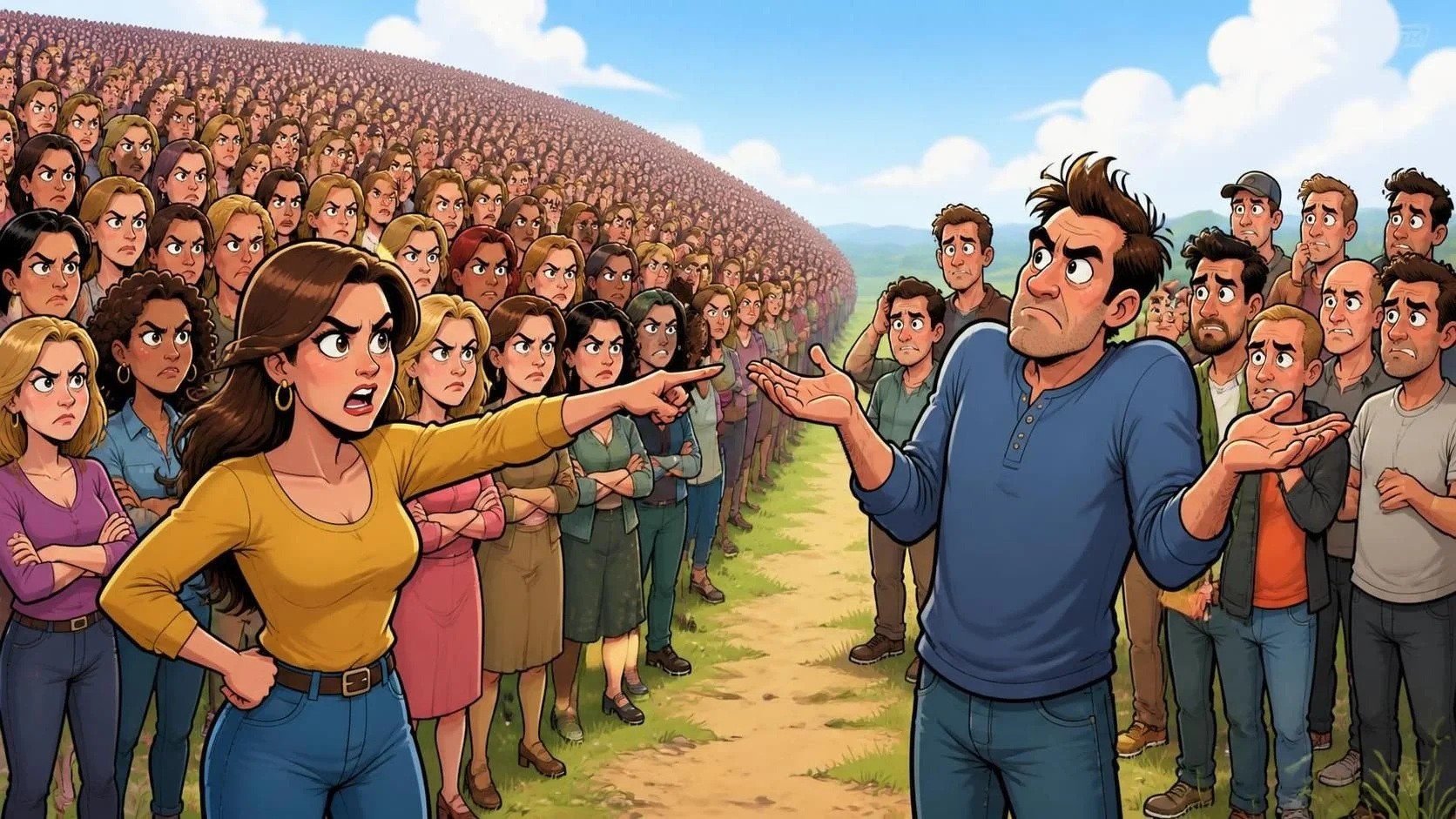
As I said at the beginning of this article, women do in fact like to be looked at and we spend ever increasing amounts on our appearance. The ongoing obsession of women with the alleged “inappropriate gazing” of the male, therefore seems to be rather more complex than it seems at first “glance”.
I wonder where this deeply rooted anxiety comes from, whether it is in fact arising out of actual physical danger from men, or if it is coming in fact (at least partly) from power struggles? Our language is replete with metaphors about “looking up to” we admire, and “looking down on” people we despise. When we look at our instinctual behaviours as human beings, we always need to remember that we are mammals. In the mammal world, it is possible to see how power plays result in the “stronger” party gaining dominance over the “weaker” by means of size and strength. You can see this at home if you introduce a second cat into a household where the first cat has been “top cat” for some time. The second cat is likely to crouch down into a submissive posture and to avert its gaze in order to pacify the first cat. Could it be that we women instinctively dislike being reminded of our smaller stature and body mass, associating these male attributes with male dominance? When men look at us, our subconscious may register alarm, unless we a) happen to be attracted to the man looking, or b) associate this gaze with someone reassuring that we already know.
Do we really want our men to be cowering and intimidated by us women, and how sexy in fact is this sort of behaviour to us? Do we want above all else fully domesticated men that take an equal part in household and child rearing chores? Why are we women so obsessed with earning equal to or more than our men? Why does this matter? And what happens to our intimate lives in these scenarios, I wonder? My belief is that it is more honest if we women simply admit to the power struggles – sometimes boosted by well-intended public safety campaigns - that give rise to this anxiety about being “looked at” by men.
Recommended reading
Cummings-Knight, J. (2019). The Gaze: The Male Need to Look vs the Female Need to Be Seen—An Evolutionary Perspective. In: Barry, J.A., Kingerlee, R., Seager, M., Sullivan, L. (eds) The Palgrave Handbook of Male Psychology and Mental Health. Palgrave Macmillan, Cham. https://doi.org/10.1007/978-3-030-04384-1_13
Barry J. (2023). The belief that masculinity has a negative influence on one's behavior is related to reduced mental well-being. Int J Health Sci (Qassim). PMID: 37416841
Scroll down to join the discussion
Disclaimer: This article is for information purposes only and is not a substitute for therapy, legal advice, or other professional opinion. Never disregard such advice because of this article or anything else you have read from the Centre for Male Psychology. The views expressed here do not necessarily reflect those of, or are endorsed by, The Centre for Male Psychology, and we cannot be held responsible for these views. Read our full disclaimer here.
Like our articles?
Click here to subscribe to our FREE newsletter and be first
to hear about news, events, and publications.



















Have you got something to say?
Check out our submissions page to find out how to write for us.


















.