

The boys are back in town… because they dropped out of university

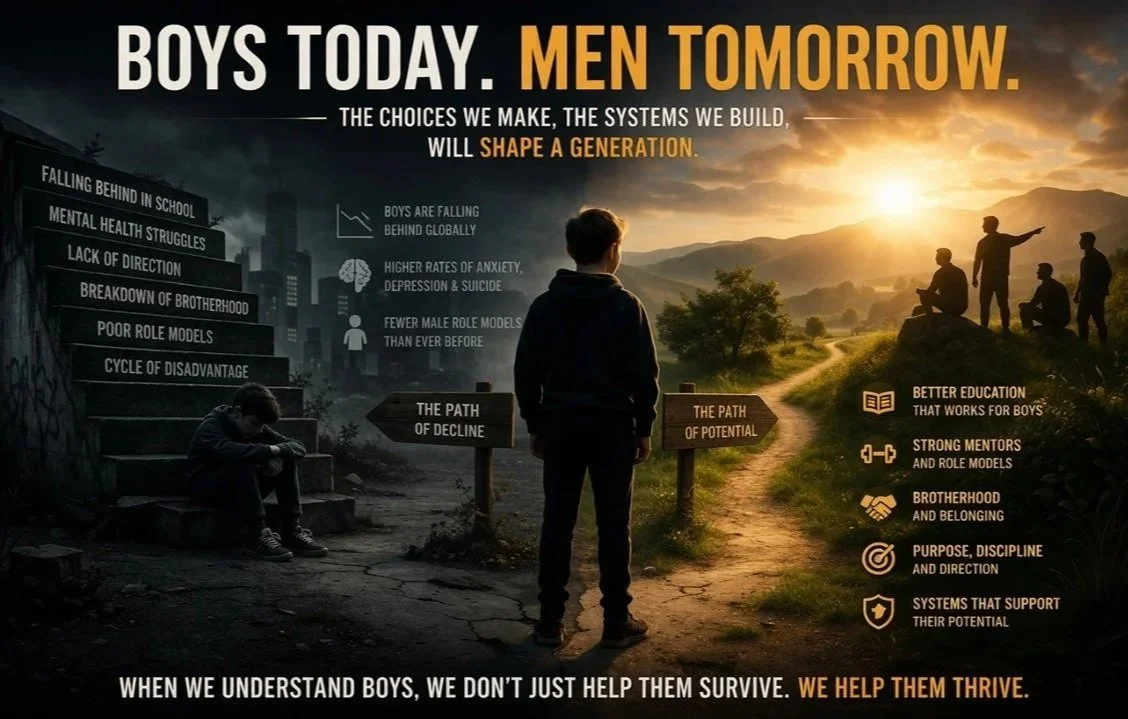
Boys do not do as well academically, in school and at university, as girls. This finding has been repeated many times in recent decades around the world. However this fact is not widely recognised in the media or elsewhere, prompting UNESCO to suggest that to achieve true gender equality, it is important that we not forget about boys. In this article we will ask what specific contributions psychologists can make to help boys succeed in education.
“educational underachievement can have personal costs to individuals and to society, especially when underachievement turns into delinquency and crime.”
Some quick facts about boys and education first
The academic underperformance of boys cuts across all social strata and geographies. It starts early and continues through all educational levels. Apart from the loss of potential economic benefits of a better educated workforce, educational underachievement can have personal costs to individuals and to society, especially when underachievement turns into delinquency and crime.
Boys are roughly twice as likely as girls to have special educational needs (SENs) such as dyslexia and four more times likely to suffer from stuttering. The DoE figures for SEN do not include colour blindness, which is about 16 times more common in boys, and may interfere with educational achievement and career choice. Furthermore, boys display difficult behaviour at school far more frequently than girls do, which can be related to boys’ underlying attentional problems, such as ADHD.
Boys’ reading and writing skills are delayed and continue to be less good than those of girls throughout education. For example, GCSE results sometimes find twice as many girls than boys achieving the highest grade (A) in English.
The educational disadvantages of boys increment over time. The result is that more boys than girls drop out of school, and far fewer boys ultimately participate in the A levels or go to university. In the UK in 2015, for every 10 boys who entered university, 13 girls did so too. On top of this discrepancy in entry figures, young men are more likely to drop out of university before finishing their degree. The earlier children drop out from school, the more serious the problems.
“A key question is: what do boys do when they drop out of education?”
A key question is: what do boys do when they drop out of education? Do they go down the route of apprenticeships, or other potentially gainful paths? Until 2016/7, boys took up fewer apprenticeships than girls did. In a rare glimmer of hope in the story of boys’ educational trajectory, this pattern changed slightly for the first time in 2016/7, when boys took up slightly more (52.5%) apprenticeships than girls did [see here]. Nonetheless, youth unemployment among 16-24 year olds is higher among boys than girls [see here].
What can psychologists do to help?
For a start, we need more research to discover the causes and cures for this issue. There are many open questions, but we do know that one of the problems is video gaming: extreme gaming is far more common among boys and interferes with study (Gentile et al., 2011). Therefore, psychologists should help parents and educators to effectively reduce the time students spend on gaming. It might help psychologists to know that boys may express distress and depression differently than girls, and males might use withdrawing to engage in online games as a way of masking depression or coping with it.
Would more male teachers help? This is another topic of much discussion. Some suggest that male teachers might be better able to relate to boys and male-typical behaviours (e.g. boys’ restless energy), and boys might be more co-operative for a male teacher. That said, direct benefits of male teachers for boys and female teachers for girls have been disputed (for a review, see Stoet & Yang, 2016), making this another area where further research is needed.
Some educators suggest that boys should not be made to learn to read as early as girls, because early failure may be damaging to self-confidence. Psychologists need to be aware that educational underachievement is not only distressing for boys, but it can lead to problems for their families and others. This is not only in terms of unemployment and crime, but there is even the problem that highly educated women may seek an equally well educated partner (Birger, 2015).
Some authors on the subject appear to believe that the issue of boys underachievement is not important because there are more men in top positions in academia. This is not a reasonable argument, as others pointed out. After all a large group of boys should not lack support because a small group of males get the top jobs.
Conclusions
We suggest making solutions problem-specific rather than gender-specific. For example, additional resources to improve writing skills should focus on all children with writing problems. There are more such boys than girls, but we should not exclude girls with poor writing skills. This way, whatever solutions we find to help boys will also help girls, because enough girls are faced with similar issues of dyslexia, online gaming addiction etc.
Regardless of who is helped, the situation is one that needs our attention. As psychologists, we have the skills and abilities to make a hugely positive difference to society. What we need more of right now is the vision and willingness to apply ourselves to the problem.
This article was first published on the Male Psychology Network website in 2018
Scroll down to join the discussion
Disclaimer: This article is for information purposes only and is not a substitute for therapy, legal advice, or other professional opinion. Never disregard such advice because of this article or anything else you have read from the Centre for Male Psychology. The views expressed here do not necessarily reflect those of, or are endorsed by, The Centre for Male Psychology, and we cannot be held responsible for these views. Read our full disclaimer here.








When a male is in a power imbalance, at least two masculine instincts are disempowered…

…people – men and women alike – respond less positively to male-favouring sex differences than they do to female-favouring sex differences.
hyper-masculine gender norms are typically embedded within military institutions, and while adherence to these norms can contribute to combat and military success, they conversely make clinical work challenging
Men might benefit greatly from a government strategy aimed at improving their health. Here are suggestions from the Centre for Male Psychology on how that might be done. This article ends with some comments on potential pitfalls in the process of putting this strategy in place.



…people – men and women alike – respond less positively to male-favouring sex differences than they do to female-favouring sex differences.



… many papers do not even bother to identify or justify the nationality of their samples…


hyper-masculine gender norms are typically embedded within military institutions, and while adherence to these norms can contribute to combat and military success, they conversely make clinical work challenging

Have you got something to say?
Check our our submissions page to find out how to write for us.
hyper-masculine gender norms are typically embedded within military institutions, and while adherence to these norms can contribute to combat and military success, they conversely make clinical work challenging

hyper-masculine gender norms are typically embedded within military institutions, and while adherence to these norms can contribute to combat and military success, they conversely make clinical work challenging
hyper-masculine gender norms are typically embedded within military institutions, and while adherence to these norms can contribute to combat and military success, they conversely make clinical work challenging

hyper-masculine gender norms are typically embedded within military institutions, and while adherence to these norms can contribute to combat and military success, they conversely make clinical work challenging

hyper-masculine gender norms are typically embedded within military institutions, and while adherence to these norms can contribute to combat and military success, they conversely make clinical work challenging

Much of our attitudes, theorizing and public debate around men and masculinity is influenced by high profile feminist and Gender Studies scholars in academia. But what is the scientific quality of publications from these scholars?

Some people blame drill music – a form of rap - for the rising murder rate in London. Drill is known for aggressive lyrics about gang violence, but rather than seeing this as a valuable way for young men to express their feelings, some people want to ban it.

To survive… cultures have to use men and women effectively and … in fact, most cultures have used men and women in different ways… what our culture does is [grant] greater status to men and greater protection to women

hyper-masculine gender norms are typically embedded within military institutions, and while adherence to these norms can contribute to combat and military success, they conversely make clinical work challenging

There are around 300,000 veterans living with hearing loss in the UK, according to The Royal British Legion. In addition to being at a greater risk of PTSD, depression, and anxiety, many vets are also battling psychological distress from hearing problems.

The book begins with a description of her therapeutic approach, and an illustration of how to understand and work with the rage often seen in male CSA clients.

I felt in my dealings with some police officers, as though I were treated firstly as a man (assumed to be a perpetrator), but they’d overlooked risks associated with my impairment. Example: How can you dodge a missile you don’t see coming?

The Panorama programme on domestic violence failed to adequately highlight two important issues: male victims and female perpetrators.

your photograph, name and address, might appear in the local and national press and on TV, insinuating what an evil monster you are

…an attack upon masculinity is an attack upon one’s sense of self, of identity. …What, then, is the right psychological defence against such an attack?

The male has been designed to “look”, not only at the female, but to “look out” for prey, for danger, and for ways to protect his family unit.

If his child is allowed to live, this man must be available, for the rest of his life, to love and provide for his child… If, on the other hand, it is decided that his child is to be destroyed, he should be able to go about his life as if nothing has happened

Socialising is a basic human need. The opposite – social isolation – is one of the worst forms of torture. Some people look down on the local pub as a place for undesirable riff raff, but that narrow viewpoint misses entirely the community value of the pub

Male psychology is a recent development in academia. Unlike gender studies, feminism, and men’s studies, male psychology takes the view that we can gain more by recognising and harnessing the positive aspects of masculinity than we can by taking a relentlessly negative approach to men.

.
 Gijsbert Stoet
Gijsbert Stoet is a Professor of psychology at the Department of Psychology, University of Essex (England). His publications cover cognitive neuroscience, cognitive psychology, the psychology of religion, and education. He maintains the website genderequality.info.