Thought experiment: Imagine 12 Hours Without #GoodMen
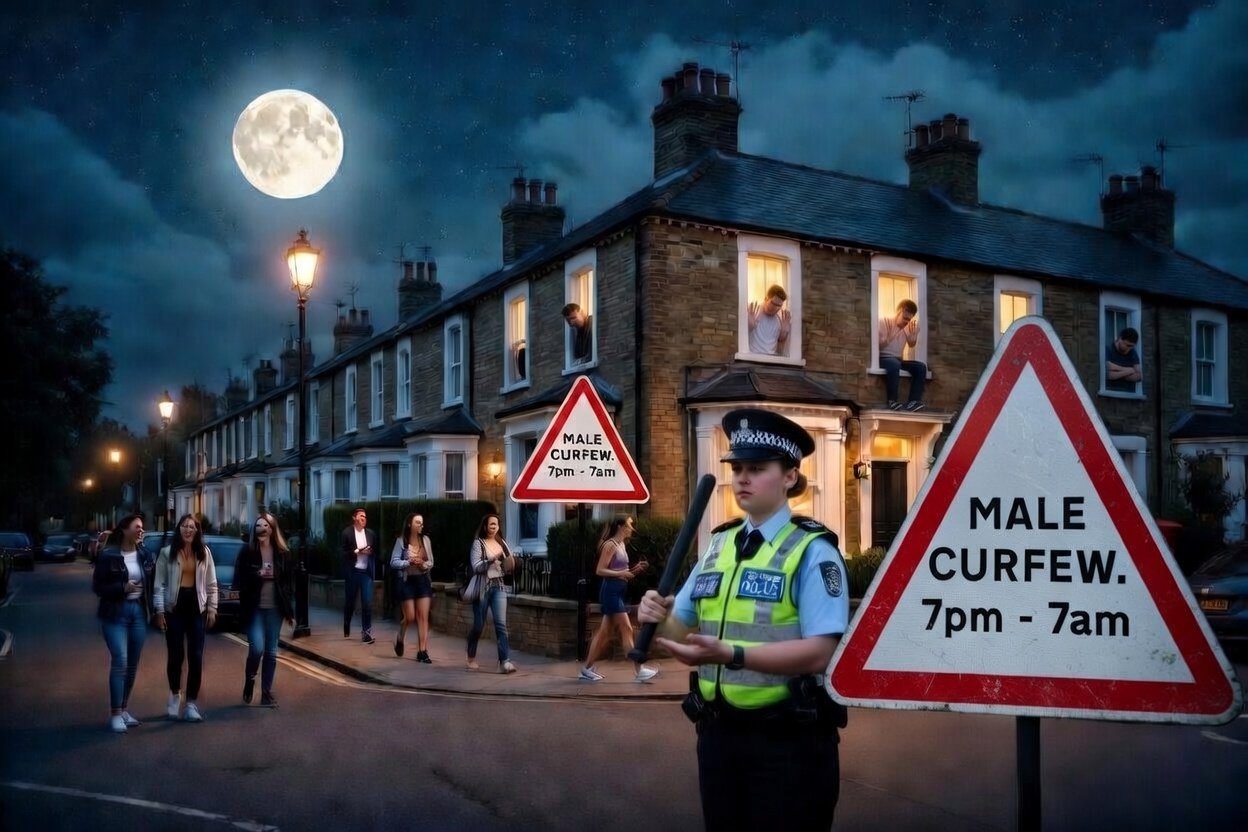
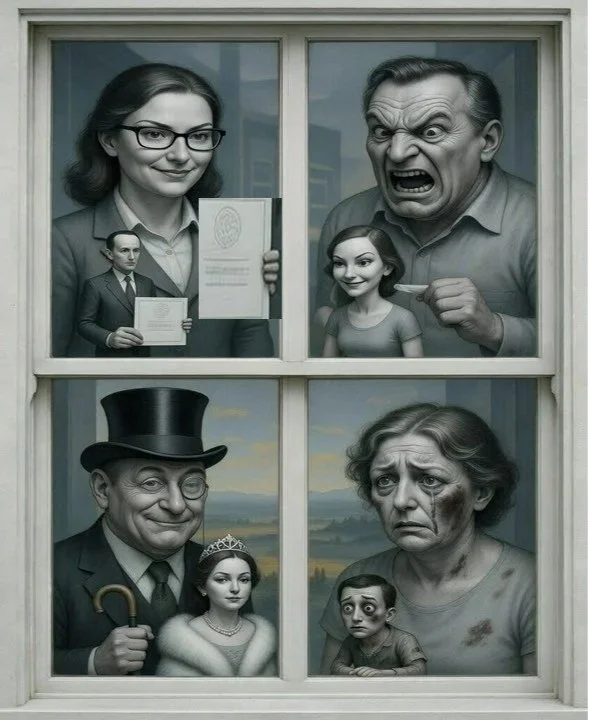
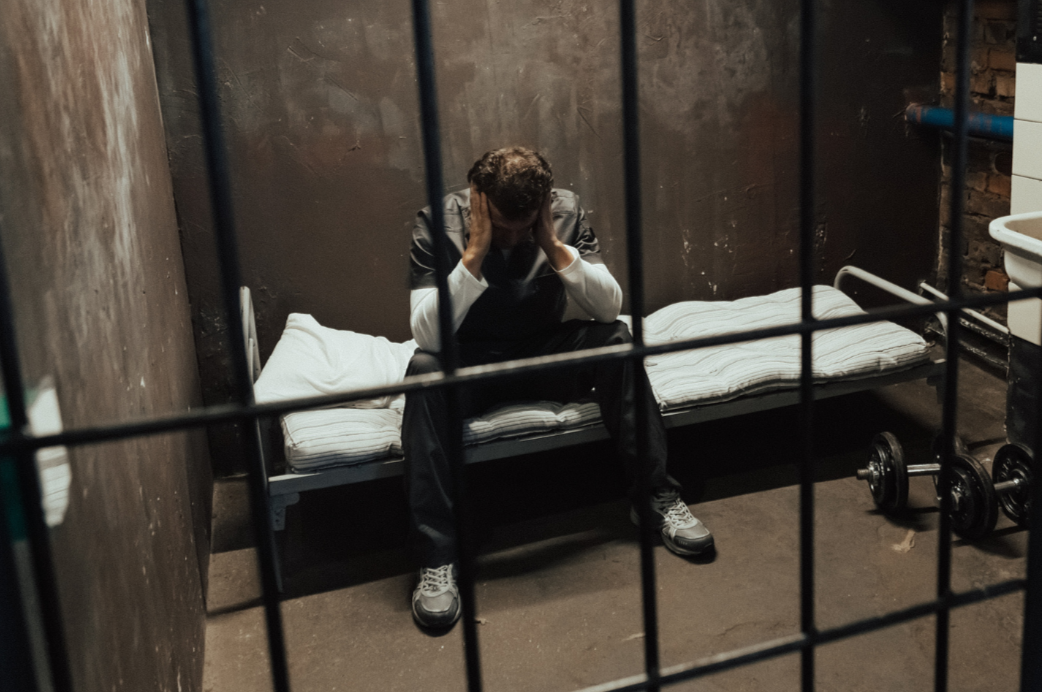
Image: ‘Male curfew in the UK’. Original concept by John Barry, created using AI image generation (Grok).
In my experience, advocates for the rights of male victims of domestic abuse can sometimes find themselves confronted with accusations of "both sides whataboutery", or worse still, the shaming suggestion that promoting an egalitarian perspective on the human rights of victims can potentially put women’s lives at risk.
Numerous studies, including recent research by Queen’s University Belfast School of Psychology have indicate that this type of pushback can contribute to societal patterns where male victims' experiences and needs are minimised or overlooked due to gender stereotypes, stigma, prejudice and gamma bias.
Such silencing tactics have always struck me as deeply troubling given the obvious parallels with criminal behaviors increasingly identified in cases of coercive control, including efforts to regulate discourse or use humiliation and intimidation to suppress someone’s voice.
Imagine my surprise then to discover that an esteemed Oxford Professor in Criminal Law, Professor Jonathan Herring, has advocated in favour of an extraordinarily extreme coercive control measure, largely on the basis of a type of whataboutery.
The ‘Not all Men’ construct invites public policy makers to consider the serious issue of men’s violence against women from the perspective of a woman encountering a man on a street at night. Such encounters frequently cause anxieties for women because it is impossible for them to know whether or not they are crossing paths with a good man until it's potentially too late.
“Professor Herring’s solution to the problem of keeping women safe on the street at night is to implement a countrywide night-time curfew, restricting and tracking the movements of all men at all times.”
Professor Herring’s proposed solution to the problem of female safety in public spaces is to implement a countrywide night-time curfew, restricting and tracking the movements of all men at all times. He argues that, under current Human Rights Law this would be a proportionate means of achieving the legitimate aim of combating the current sex discrimination experienced by women and presents the ‘Not All Men’ perspective as evidence that such a step could not be restricted to people who have already revealed themselves to be bad men.
His peer reviewed and apparently entirely sincere argument for The Right to a Male Curfew appeared in the most recent edition of the University of Northumbria’s International Journal of Gender, Sexuality and Law, an edition entirely dedicated to ‘reflections on the world envisaged in Jayne Cowie’s 2022 dystopian murder mystery After Dark’, which has also been adapted into a television drama.
Professor Herring concludes his argument by asserting that: “Many will oppose a male curfew, but those doing so must produce an alternative way of protecting women’s rights.”
Mercifully, it is entirely possible to meet this challenge whilst also avoiding accusations of "whataboutery" by restricting regard solely to the potential implications that an all male curfew may have for women and girls.
Jayne Cowie’s novel restricts any examination of societal impacts to potential positives such as reversals of gendered pay gaps, representations in Parliament, occupational segregations and household divisions of labour.
Revealingly these are celebrated as dramatic reversals as opposed to equitable equalisations, nevertheless it is possible that the extreme erosion of civil liberties required to secure such short term gains may also create outcomes adversely impacting on the well being of women.
By way of example, the introduction of a curfew could result in a dramatic fracture in social cohesion given that the primary purpose of human rights legislation would pivot from neutral protection to enforcement of a strictly segregated sectarian-based control society.
“The UK’s night-time economy (worth £66 billion annually) would collapse almost literally overnight.”
An all-male curfew would also inevitably inflict severe, multi-layered and multi generational economic damage, including an estimated immediate 10% reduction in GDP due to the fact that men comprise between 70 and 80% of night-shift workers in many impacted sectors.
The UK’s night-time economy (worth £66 billion annually) would collapse almost literally overnight. Sectors like hospitality, entertainment and retail, would experience mass layoffs, business closures, and dramatic wage inflation.
Over 90% of bus, train and taxi drivers are male so public transport would be severely restricted during curfew hours, and as this is when much essential maintenance work occurs, we would experience a significant erosion in transport infrastructure safety standards.
The "Dirty and Dangerous" (D.A.D) jobs sector, including sanitation and logistics, would suffer a total collapse in efficiency. Delivery services, long-haul trucking, and 24/7 warehouse operations would be decimated and the "just-in-time" supply chain would collapse within 48 hours.
“Water treatment is also a 24/7 operation meaning that the safety and supply of drinking water would be severely compromised.The same is true of sewage processing.”
There would be an almost immediate operational collapse of the UK's critical utilities infrastructure and a 70% to 99% reduction in the current emergency repair and frontline engineering workforce available during nighttime hours would risk the total shutdown of the national grid.
Water treatment is also a 24/7 operation meaning that the safety and supply of drinking water would be severely compromised. The same is true of sewage processing.The farming and agriculture sectors would also be fundamentally disrupted, and a digital blackout would be almost inevitable given that over 90% of telecoms engineers are male and critical internet and mobile infrastructure maintenance is mainly scheduled during curfew hours.
Women would be required to exclusively meet the demand for non-traditional hours working. As a consequence the gender pay gap may reverse superficially, but overall average household incomes would fall significantly, increasing levels of poverty—especially for low-income families unable to adapt. This would be further impacted by a severe cost-of-living crisis, caused by a rapid spike in the price of essential goods.
One in every four women of working age in the UK are economically inactive, and even if it were possible for them all to suddenly enter the workforce this would not nearly be enough workers to fill the dramatic shortages caused by nights without good men.
Although the health sector is predominantly female, male workers are particularly concentrated in areas vital for nighttime operations, including emergency response and senior clinical roles.
Female dominated professions including education, health, care and social services may struggle to retain their workforce who will be incentivised to enter previously male dominated professions. Even assuming a sudden influx of male workers to replace them, experience, training and qualification requirements mean that this occupational segregation reversal would take years.
Implementation costs of curfew tagging 30+ million men and boys (over the age of ten in Cowie’s novel) would be astronomical with running costs potentially exceeding £10-20 billion annually.
Mixed-sex friendships and dating would become logistically nightmarish, exacerbating loneliness epidemics, already especially acute among young men. Levels of substance abuse would also likely spike dramatically.
Birth rates would fall even further than they have already, accelerating demographic decline and even further straining pensions and care systems. Millions more fatherless homes would emerge from curfew breaches and separations leading to long-term developmental challenges for many women, sometimes referred to as "Fatherless Daughter Syndrome”.
The "dehumanisation" of the male population would inevitably create a mental health emergency. The internalisation of being perceived as a "perpetual suspect" from the age of ten combined with the lack of agency and social isolation during the night-time curfew would lead to enhanced levels of depression and suicide.
Long-term, innovation and entrepreneurship would suffer due to a massive brain drain. Many UK and Internationally owned businesses would relocate operations overseas. Inequality would widen by class, perpetuating cycles of poverty and crime.
Male migration numbers into the UK would fall dramatically, male emigration would rise to levels likely to cause a refugee intake crisis in Ireland and other immediate neighboring countries.
“Most violence against women is committed by men they know, so the ultimate irony about an all-male curfew is that it would create a scenario where homes become prisons for victims of domestic abuse”.
International relations may also suffer dramatically affecting trade, tourism, soft power, political, strategic and military alliances. Foreign nations may even move to invade the United Kingdom and pillage resources under the guise of regime change necessitated by such severe human rights violations.
In the event of a high-intensity war on the scale of the Russian invasion of Ukraine, military analysts suggest that the UK could face up to 1,500 casualties per day, this would likely be predominantly female casualties as many male combatants may stand down or even potentially act in support of the invader.
Indeed foreign military intervention may likely be inevitable and broadly supported by institutions such as the UN, NATO and the EU, given the catastrophic implications for both the UK’s nuclear energy industry and its nuclear deterrent. Both of which are typically 80% male in technical and operational roles, highly regulated for safety and security, and dependent on continuous shift work. Human error in control rooms or maintenance could have catastrophic Chernobyl-level possibilities.
And as the contemporary conflict in Iran has shown us, regime change can be difficult as those in power rarely go quietly into the night. Chillingly therefore, it is not beyond the realm of possibility that a UK wide male curfew could conceivably lead to the first ever land invasion of a country capable of defending itself with nuclear weapons.
If absolute power corrupts absolutely, it might also be said that absolute idiocy causes losses to everyone without any gain for itself.
I suspect (and hope) that Professor Herring’s paper was an attempt to court controversy more so than a serious public policy proposal, even so it is relevant to remember that in 2021 The First Minister of Wales had to issue a statement clarifying that he was not considering introducing a curfew for men after telling the BBC that he would not rule out taking such a dramatic step.
Incidentally, most violence against women is committed by men they know, and so the ultimate irony about an all-male curfew is that it would create a scenario where homes become prisons for victims of domestic abuse, especially those required by law not to exit the premises until 7am.
For these and many other reasons, I propose that a more effective solution to Professor Herring's dilemma would simply be to not introduce a male curfew.
You can see the video on this topic by The Glass Blindspot here.
Disclaimer: This article is for information purposes only and is not a substitute for therapy, legal advice, or other professional opinion. Never disregard such advice because of this article or anything else you have read from the Centre for Male Psychology. The views expressed here do not necessarily reflect those of, or are endorsed by, The Centre for Male Psychology, and we cannot be held responsible for these views. Read our full disclaimer here.
Like our articles?
Click here to subscribe to our FREE newsletter and be first
to hear about news, events, and publications.












Have you got something to say?
Check out our submissions page to find out how to write for us.











.