The Valentine gift of Masculinity

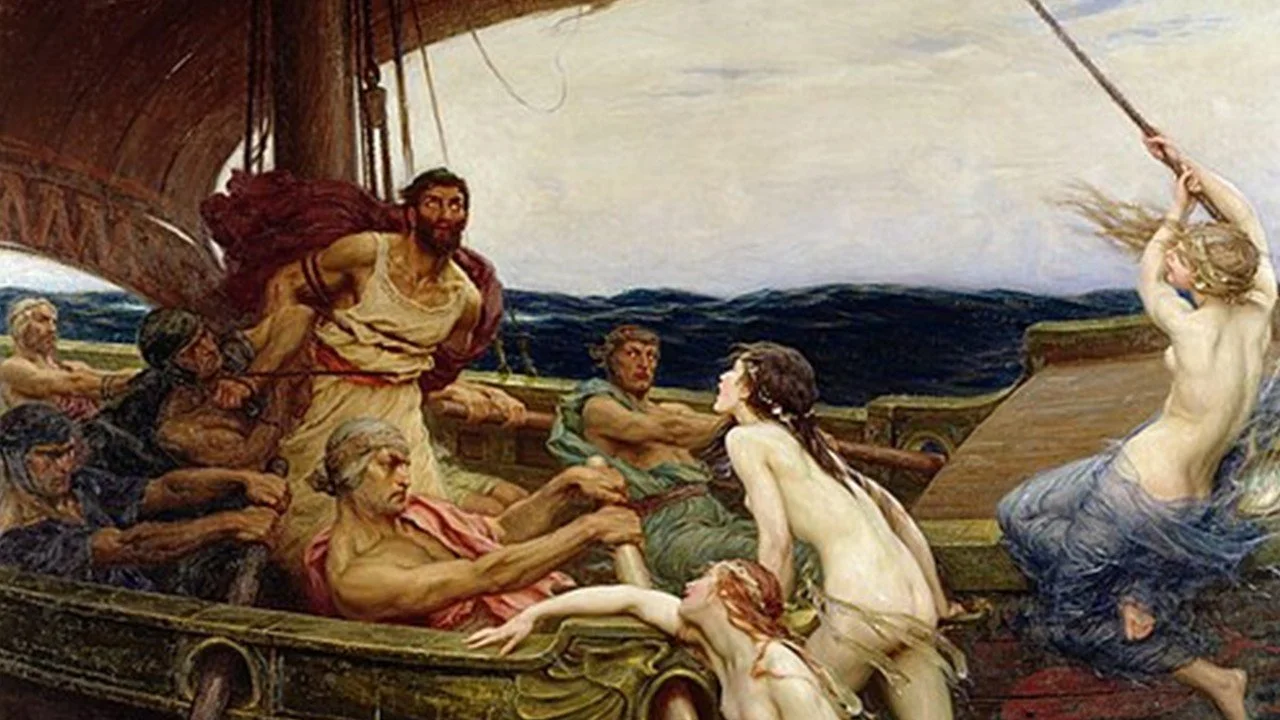
It is said that on the outskirts of Ancient Rome, young men and women were paired up for safe passage on a journey. An edict had been issued that nobody in Rome should be newly married because men needed to be free of love to be sent to war. At the end of the couple’s journey – where they risked attack by wolves - they were met by St. Valentine who would secretly marry them. Thus inseparable couples - even when faced with death - escaped it by virtue of being entrusted to the care of the other, and came to be called each other’s “Valentine.”
More than at any time in history, we need now to grant each other this gift of mutual care. That is because the love of women no longer saves men from the battles they face, and the love of men no longer saves women from wolves that prey on their peace of mind.
Jungian analyst, Jean Shinoda Bolen, offers us hints at how in her books The Goddesses in Every Woman (1989, 2014) and The Gods in Every Man (1994, 2014). She discusses the archetypes of femininity and masculinity using a Jungian lexicon hidden in the mysteries of the ancient Greek pantheon.
One of the features of Shinoda-Bolen’s Jungian use of mythology is the inference that for a story to last thousands of years, there must be some universal appeal that speaks to our psyches. Perhaps this even helps define those universals of our functioning as men or women, in the sense that masculinity and femininity are structured in the mind, like a language.
Many of us have spent our lives searching for the vocabulary and language of these working parts of ourselves. If only we could name them, we could learn to master masculine instincts for our benefit and that of those we love.
When steered by the mature character of a virtuous man, masculinity becomes a profound psychological gift in service to others.
According to psychologists Martin Seager and John Barry in The Palgrave Handbook of Male Psychology and Mental Health, masculinity can be seen as a set of instincts. These instincts are expressed culturally and socially in various ways, but are nonetheless a “hard-wired,” biologically based sense of self. It is a deep sense of needing to be a fighter and winner, provider and protector, and having the mastery of one’s feelings required to the various tasks of life. When steered by the mature character of a virtuous man, masculinity becomes a profound psychological gift in service to others.
By combining the insights of Shinoda-Bolen to the work of Barry et al, we find that:
“Fighting and winning“ becomes ”the Ares Instinct.” When faced with deadly threats (including hungry Roman wolves), masculine action against danger is one of our unique ways of loving.
“Providing and protecting,” becomes “the Zeus Instinct.”
“Self-mastery and self-control,” becomes “the Apollo Instinct”, the mental discipline in the renaissance man of the arts and sciences, and ”the Hephaestus Instinct”, the blue-collar work ethic, physical discipline in a vocation, a job well-done often seen in men.
“Risk-taking” in exchange for a felt sense of freedom, becomes ”the Odysseus Instinct”, the reward for which high risk is great freedom, adventure and discovery.
The Greek mythological canon helps us plumb the depths of behavioral patterns that appear remarkably unchanged in today’s men and women - especially in love – yielding a detailed architecture of algorithms that are the masculine and feminine instincts.
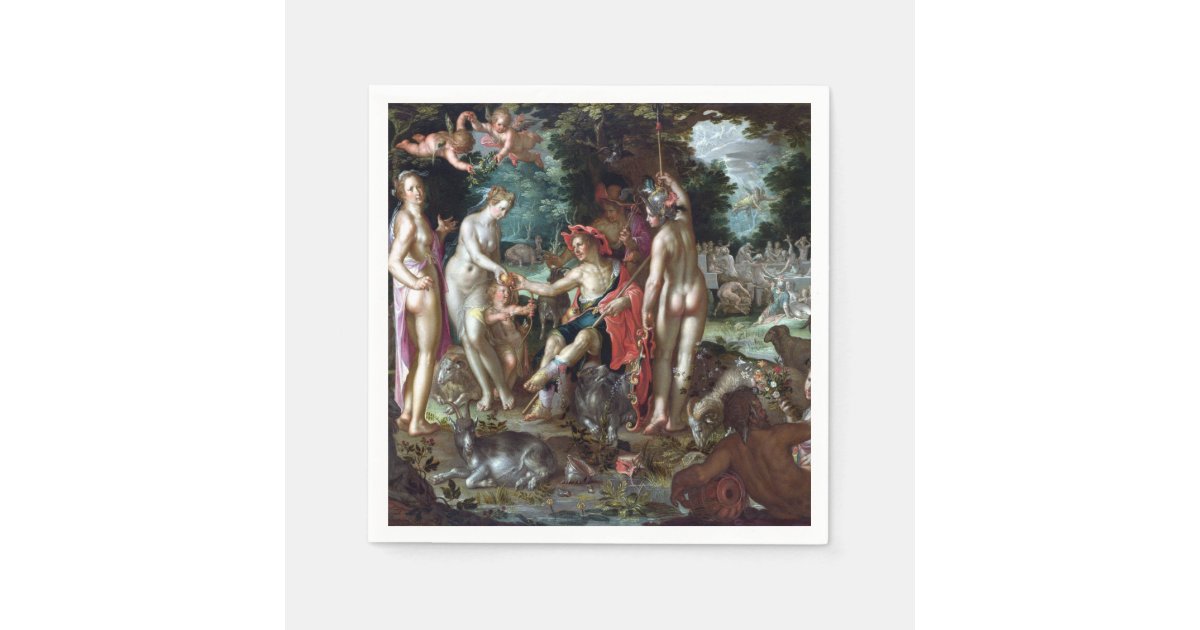
In his classic The Judgment of Paris, by Joachim Wtewael, c. 1615, we find a masterwork simultaneously of art and romantic psychology. In the background is the feast of the gods, where Eris, the disgruntled goddess of discord is living up to her reputation, causing Aphrodite (middle), Hera (at left) and Athena (at right) to pick a fight with each other over “who is the fairest.”
To settle things, Zeus directs the combatants to offer their best gifts to the most eligible mortal bachelor, Paris, letting him decide the winner, who “the fairest” is. Zeus knew better than to dictate what is psychologically true, instead inviting Nature herself to reveal precisely what the most potent feminine instincts of attraction are.
Hera, the Queen of Mount Olympus, offered Paris dominion over the whole world and all its possessions. This would elevate him in hierarchy above all other mortal men – in today’s terms, a woman announcing she prefers a man over all others, to “treat him like a king.”
Athena, the goddess of war, wisdom and diplomacy offered Paris the ability to win every battle he would ever fight – not just status by wealth, but by victory over all other men. In today’s terms, this “cheering on,” an expectation of fighting spirit in the male - worthy of her honor - makes him “feel like a winner” when encouraged by the woman of his life. I’ve asked every men’s group I’ve ever conducted whether they’ve ever heard a woman other than their own mother say to them the words, “I believe in you.” I’m sorry to say that most met me with a thousand-yard stare, while several in any given room quietly wept.
Eros aiming his arrow at Paris in the painting, gives us a strong clue to who the winner of the contest will be: Aphrodite, whose gift of feminine instinct was “beauty” in the hand of Helen of Troy, the “face that launched a thousand ships” to start the Trojan War. It seems Eris, the goddess of discord, did have her way in the end: sending men to war as did Roman Emperor Claudius in the day of St. Valentine.
Masculinity is “male passion,“ femininity is “female passion,” the joining of which raises mutual “passion for life”
Yet, why should men be considered today to be only led to love by the beauty in women, rather than by the other gifts offered to Paris? The gifts of the female, in ordered steps, are the Aphrodite Instinct, the Hera Instinct, and the Athena Instinct depicted in The Judgment of Paris. The male gifts in response, in analogous, correlated steps, are the Hermes Instinct (mysterious, playful behavior by the single man) or the Eros Instinct (mysterious, but devoted, loyal behavior by the married man), the Zeus Instinct (fatherly, “provider/provisioner behavior”), and both the Ares Instinct (“fighting/winning” and “protector” behavior) and the Apollo Instinct (educated, diplomatic, mature, virtuous but self-respecting and respectable behavior.)
The Judgment of Paris teaches us that men do not merely appreciate a woman’s beauty, but the totality of her femininity – her presence in his life, and his in hers, grows in them both shared vitality, excitement, and passion.
Psychologists John Barry and Becci Owens in The Handbook of Male Psychology draw our attention to the symmetry in masculine and feminine principles in art – as in the Yin Yang symbol – and science, as seen in any biological system in homeostasis. Masculinity is “male passion,“ femininity is “female passion,” the joining of which raises mutual “passion for life” – mutual vitality symbolized in the literal mutual viability of the Roman Valentine lovers.
Masculinity and femininity are none other than gifts of passion for the other. Only these can send Eris, the goddess of discord, running for the hills, far away from the feast of romance that our Valentine’s Day was meant to be.
Scroll down to join the discussion
Disclaimer: This article is for information purposes only and is not a substitute for therapy, legal advice, or other professional opinion. Never disregard such advice because of this article or anything else you have read from the Centre for Male Psychology. The views expressed here do not necessarily reflect those of, or are endorsed by, The Centre for Male Psychology, and we cannot be held responsible for these views. Read our full disclaimer here.
Like our articles?
Click here to subscribe to our FREE newsletter and be first
to hear about news, events, and publications.





















Have you got something to say?
Check out our submissions page to find out how to write for us.
















.