Men’s Mental Health in South Korea

In the third of our occasional series of blogs about views of Male Psychology and masculinity around the world, Professor of linguistics, Alaric Naudé, tells us about men’s mental health in the South Korea today.
Korea is a land of contrasts and beauty in many ways. However, just as many beautiful creatures have harsh toxins, Korea has several elements that can make it a harsh environment for men. Many of the difficulties that surround males are driven by the recent events in history including the Korean War and the hyper-military dictatorships that followed. These difficulties in pressure on men have also translated into unhappiness for the family unit.
The hierarchical structure of Korean society is based on Neo-Confucianism principles and this is reflected in the built in honorifics system of the Korean language. Korean grammar structure changes depending on the hierarchical position of the speaker relative to the person being addressed. Both men and women are under strict social pressure to behave to a certain standard and while this can be beneficial to social harmony, an unbalanced approach can lead to friction and disadvantage.
Fortunately in Korea the concept of feminism is not taken very seriously, ironically, strongest opposition come from women who view the movement as an affront to tradition, patronising and their extreme behaviour to be against the greater social good. With that said, there are specific inequalities that men have faced and are facing in Korea.
The hyper-militaristic dictatorship under Chung Hee Park forced conscription of men onto the whole country. His personal ideology was highly influenced by Bushido philosophy and he spearheaded his own particular brand. Men were to behave in the predefined manner as stipulated by the party policy. Unfortunately for groups such as Jehovah’s Witnesses, their men were specifically targeted. Their refusal of military conscription and desire to do non-military alternative service was viewed with great ire and many were beaten, tortured and killed. Collectively they served prison sentences amounting to 37,800 years and this human rights abuse was only recently rectified.
Men in general have pressure to be of a certain socio-economic status before marriage and to have elaborate weddings, this has resulted in the marriage rate plummeting, the birth rate plummeting and the suicide rate significantly increasing. Many of my male students worry about their future work and possibility of marriage with several expressing a desire to search for work abroad.
Mental health in Korea is somewhat of a taboo subject and the stigma attached to men is significant. Having been diagnosed with a mental health issue may affect the type of work that can be gained and the ability to move up the socio-economic ranks, which in turn leads to more unhappiness and more suicide.
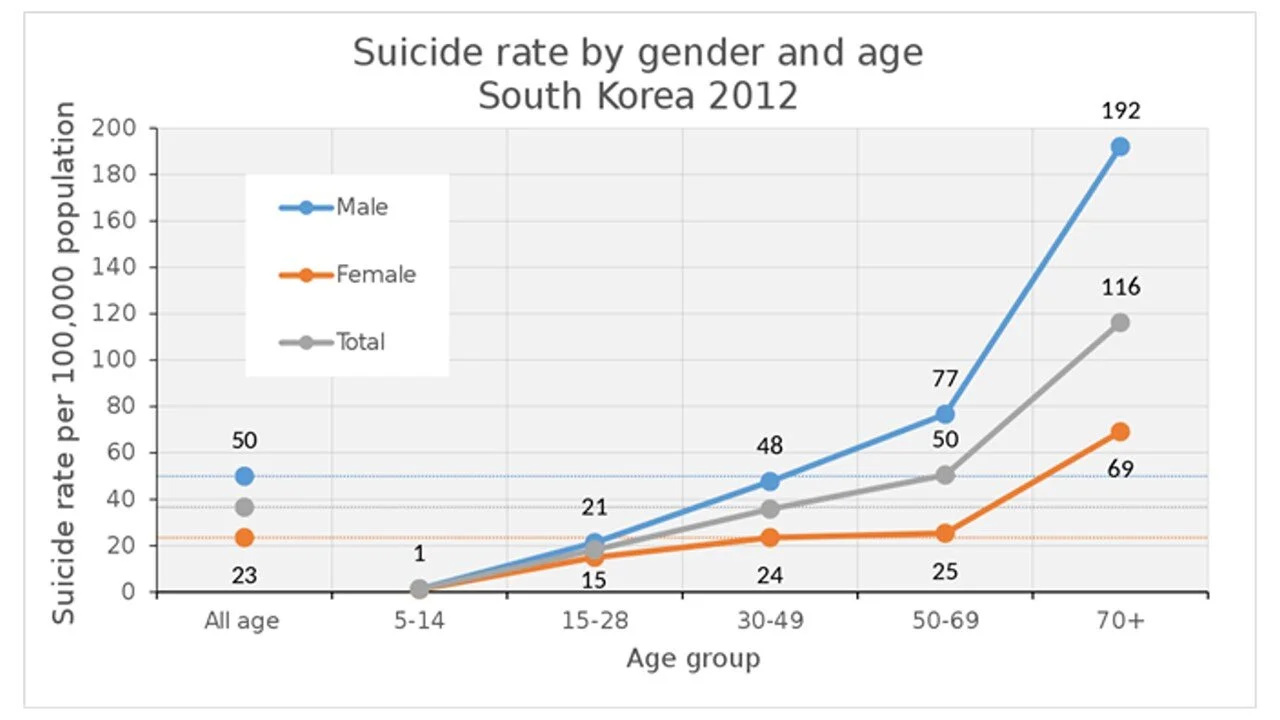
The Korean suicide rate is of special concern because the inability to access counselling in correlation to the stigma attached for even receiving counselling means that there is no easy remedy to the problem. Culturally men may also be hesitant to turn to their friends for assistance lest they be viewed as weak.
In school, boys are being out performed by girls. Demographically, teaching is a female dominated field and some of my female student teachers have commented that they feel unfair focus is given by other female teachers to their female students. Male students are becoming less motivated due to disinterest in studying based on the pressure of future expectations. This is likely to cause a large shift in future demographics. Females generally marry across the same socioeconomic level or upwards. Men generally marry on the same socioeconomic level or downwards. However, the current flip in academic results and the ever widening gap means that the future marriage rate will likely only continue to decrease, to the detriment of society and a catastrophe for population levels.
Like any other country, the issues facing Korea are highly complex and compounded by biological factors as well as the cultural damage caused by the Korean War. There are no easy answers, yet, psychological outreach and awareness of male mental health issues are an imperative beginning to resolving many of these conundrums.
This article was first published on the Male Psychology Network website in 2019
Scroll down to join the discussion
Disclaimer: This article is for information purposes only and is not a substitute for therapy, legal advice, or other professional opinion. Never disregard such advice because of this article or anything else you have read from the Centre for Male Psychology. The views expressed here do not necessarily reflect those of, or are endorsed by, The Centre for Male Psychology, and we cannot be held responsible for these views. Read our full disclaimer here.
Like our articles?
Click here to subscribe to our FREE newsletter and be first
to hear about news, events, and publications.






When a male is in a power imbalance, at least two masculine instincts are disempowered…

…people – men and women alike – respond less positively to male-favouring sex differences than they do to female-favouring sex differences.
hyper-masculine gender norms are typically embedded within military institutions, and while adherence to these norms can contribute to combat and military success, they conversely make clinical work challenging
Men might benefit greatly from a government strategy aimed at improving their health. Here are suggestions from the Centre for Male Psychology on how that might be done. This article ends with some comments on potential pitfalls in the process of putting this strategy in place.



…people – men and women alike – respond less positively to male-favouring sex differences than they do to female-favouring sex differences.

… many papers do not even bother to identify or justify the nationality of their samples…

hyper-masculine gender norms are typically embedded within military institutions, and while adherence to these norms can contribute to combat and military success, they conversely make clinical work challenging


Have you got something to say?
Check our our submissions page to find out how to write for us.
hyper-masculine gender norms are typically embedded within military institutions, and while adherence to these norms can contribute to combat and military success, they conversely make clinical work challenging

hyper-masculine gender norms are typically embedded within military institutions, and while adherence to these norms can contribute to combat and military success, they conversely make clinical work challenging
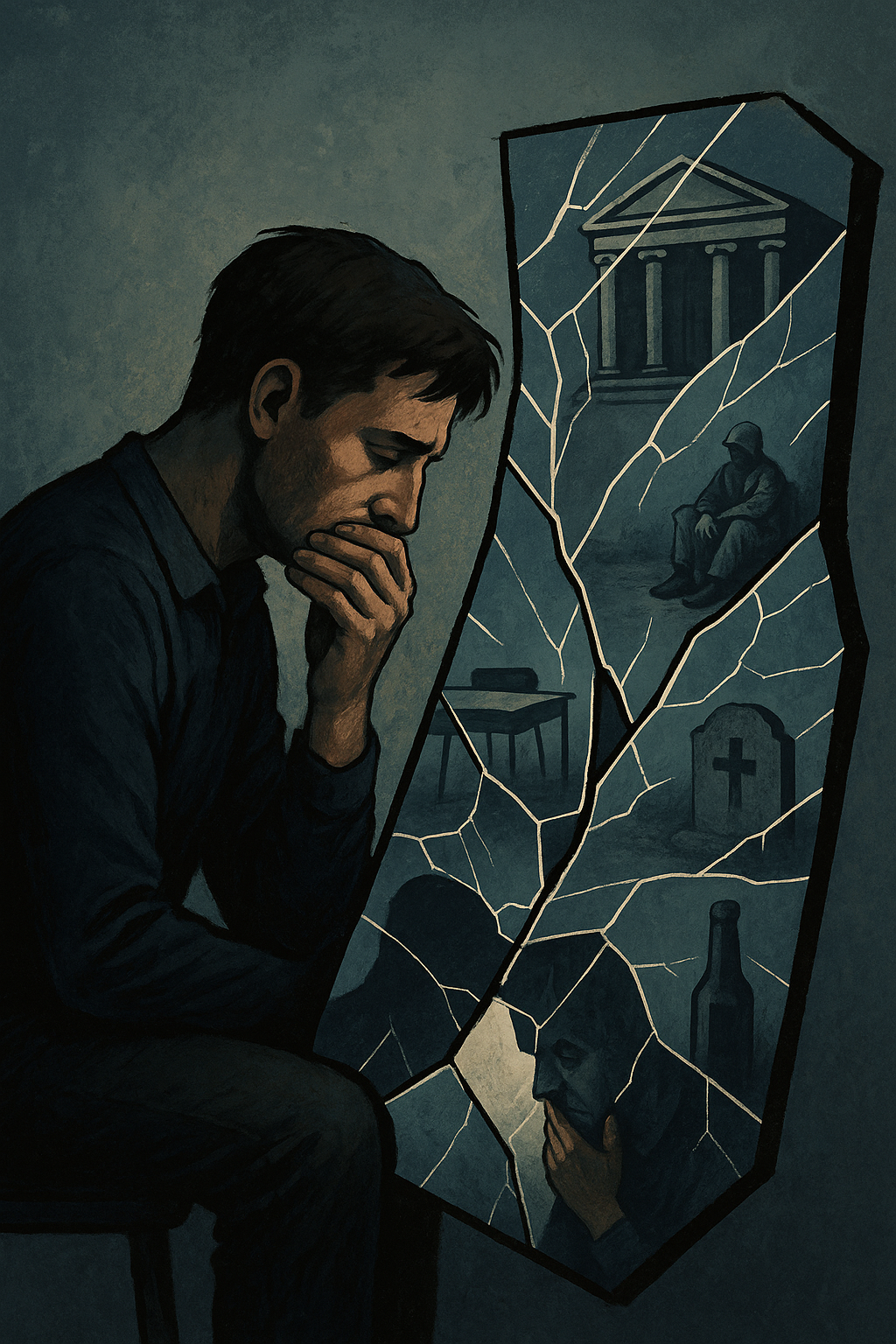
hyper-masculine gender norms are typically embedded within military institutions, and while adherence to these norms can contribute to combat and military success, they conversely make clinical work challenging

hyper-masculine gender norms are typically embedded within military institutions, and while adherence to these norms can contribute to combat and military success, they conversely make clinical work challenging

hyper-masculine gender norms are typically embedded within military institutions, and while adherence to these norms can contribute to combat and military success, they conversely make clinical work challenging

Much of our attitudes, theorizing and public debate around men and masculinity is influenced by high profile feminist and Gender Studies scholars in academia. But what is the scientific quality of publications from these scholars?

Some people blame drill music – a form of rap - for the rising murder rate in London. Drill is known for aggressive lyrics about gang violence, but rather than seeing this as a valuable way for young men to express their feelings, some people want to ban it.

To survive… cultures have to use men and women effectively and … in fact, most cultures have used men and women in different ways… what our culture does is [grant] greater status to men and greater protection to women

hyper-masculine gender norms are typically embedded within military institutions, and while adherence to these norms can contribute to combat and military success, they conversely make clinical work challenging

There are around 300,000 veterans living with hearing loss in the UK, according to The Royal British Legion. In addition to being at a greater risk of PTSD, depression, and anxiety, many vets are also battling psychological distress from hearing problems.

The book begins with a description of her therapeutic approach, and an illustration of how to understand and work with the rage often seen in male CSA clients.

I felt in my dealings with some police officers, as though I were treated firstly as a man (assumed to be a perpetrator), but they’d overlooked risks associated with my impairment. Example: How can you dodge a missile you don’t see coming?

The Panorama programme on domestic violence failed to adequately highlight two important issues: male victims and female perpetrators.

your photograph, name and address, might appear in the local and national press and on TV, insinuating what an evil monster you are

…an attack upon masculinity is an attack upon one’s sense of self, of identity. …What, then, is the right psychological defence against such an attack?

The male has been designed to “look”, not only at the female, but to “look out” for prey, for danger, and for ways to protect his family unit.

If his child is allowed to live, this man must be available, for the rest of his life, to love and provide for his child… If, on the other hand, it is decided that his child is to be destroyed, he should be able to go about his life as if nothing has happened

Socialising is a basic human need. The opposite – social isolation – is one of the worst forms of torture. Some people look down on the local pub as a place for undesirable riff raff, but that narrow viewpoint misses entirely the community value of the pub

Male psychology is a recent development in academia. Unlike gender studies, feminism, and men’s studies, male psychology takes the view that we can gain more by recognising and harnessing the positive aspects of masculinity than we can by taking a relentlessly negative approach to men.

.
Alaric Naudé EdD PhD is Professor of Linguistics at the Department of Nursing, Suwon Science College & Seoul National University of Education, South Korea.