

Feel the fear – it might save someone’s life

Picture: Project Jeb Poster
Now that you've gotten to know me a little after reading part one of my life I figure we should delve a little deeper into my fuel, what drives #ProjectJeb one step after the other.
The answer is fear.
Fear is a huge driver for me and #ProjectJeb. Fear of another male suicide striking close to home.
Fear that I would be a day late.
Fear that when a man needed to reach out, in his distressed state, he could not find the hotline number.
Fear realized...
Back on sleepy hollow across the street from our family home another family started out. They had 3 sons like our family. I will call the sons A B and C.
A was the same age as me and born about 10 months after me.
B was the same age as my little brother and born within a few weeks of each other.
C was born a few years after A and B.
By then their family had moved to another part of town.
Back about 4 years ago I saw what I call red flags above B's head. Divorce, family court, parental alienation, which lead to poor job performance, leading to job loss and compounding health issues.
Their family had grown up and spread themselves across Canada, I kept in touch with A and B, C here and there. When I saw the red flags popping up above B’s head I reached out to him. I knew folks who worked on family court issues and would be willing to donate my time to help cut costs down for B.
Nothing I did seemed to work to motivate B to get out of his red flag funk.
I reached out to B's brother A in British Columbia. I chatted a little with A small talk, not really knowing how to introduce the real reason I was calling.
Finally I ran out of small talk topics and told A my suspicions that his little brother B was in a bad state and I did not like the issues I saw weighing down on him. I urged A my oldest friend, a friend I've known since we were in diapers to get out here and try and drag B out of his funk.
We end our call and A said he would be out shortly.
A made it as far as Winnipeg… and then B was gone.
My biggest fear was realized, their family's horrific tragedy.

When A got to town I wasn't aware that B had killed himself, but I did receive word that A was asking around at my old family home.
A was beside himself and full of self-hate, survivors guilt I suppose would be the technical term. The terms at the time matter little to me.
What I did face was the task of keeping A from self destructing in, what I would assume was the most punishing way possible. A was so close and yet so far from possibly being to help B. But even if A had made it in time to B there was no guarantee B still wouldn't have ended his own life anyways.
In this thing it’s like that - no guarantees.
“Fear is a huge motivator for me and Project Jeb. Fear it will happen again to another close long time friend, or their son. Fear that as the numbers keep rolling my family's number will come up again.”
By the time I met up with A he was already drunk and, as I would find out later on, into some of the nastier things you can indulge in from the substance abuse sandbox. A just wanted to drink and substance abuse himself into oblivion and then wanted to pick a fight because he couldn't beat himself up anymore. He needed someone else to do it for him.
I was there for it. I stopped it before it got too out of hand, but not before someone had called the police.
A was soon in the back of a cruiser wearing a set of matching chrome bracelets and the officers found drug paraphernalia in his jacket pocket. It was not a bong for weed. It wasn't needles but it wasn't pretty.

Fear was motivating me a lot through this. I was afraid A was going to end up with compounding issues that could possibly throw him into a worse state, if there could be such a thing.
I talked to the police and the victim and explained A's recent history and how he just lost his little brother to suicide. I didn’t have to exaggerate or tell any lies - A's actions were off to anyone paying attention. He was clearly a man in great distress, understandably so, I brokered a deal that if I could guarantee A would stay off the street and not interact with the victim at all he would be released into my custody.
Apparently my work had preceded me and the officers were aware of what I do.
A was released into my custody. I found a safe place for him to cool down from his recent experiences and proceeded to try and keep his self-harm to a minimum.
Again fear. Fear I would fail in this.
A left a couple of weeks later. We still talk. I worry about him. He still has his demons eating away at his soul one substance use at a time.
Fear is a huge motivator for me and Project Jeb.
Fear it will happen again to another close long time friend, or their son.
Fear that as the numbers keep rolling my family's number will come up again. I got a big family.
But I don't let fear stop me or Project Jeb, it pushes us one more step down the road.
[Editors note: This story is told to explain the deeply personal and relational background to suicide - there is no intention to blame or caricature any person in any simplistic way. Equally there is a need to talk about the personal impact that people have on each other in families and in other social groups.]
If you have been impacted by the suicide of someone close to you, or thoughts of suicide, phone Samaritans on 116 123 (UK & Ireland), who are open 24 hours per day, every day of the year. In Canada phone 1-833-456-4566.
Scroll down to join the discussion
Disclaimer: This article is for information purposes only and is not a substitute for therapy, legal advice, or other professional opinion. Never disregard such advice because of this article or anything else you have read from the Centre for Male Psychology. The views expressed here do not necessarily reflect those of, or are endorsed by, The Centre for Male Psychology, and we cannot be held responsible for these views. Read our full disclaimer here.
Like our articles?
Click here to subscribe to our FREE newsletter and be first
to hear about news, events, and publications.


When a male is in a power imbalance, at least two masculine instincts are disempowered…

…people – men and women alike – respond less positively to male-favouring sex differences than they do to female-favouring sex differences.
hyper-masculine gender norms are typically embedded within military institutions, and while adherence to these norms can contribute to combat and military success, they conversely make clinical work challenging
Men might benefit greatly from a government strategy aimed at improving their health. Here are suggestions from the Centre for Male Psychology on how that might be done. This article ends with some comments on potential pitfalls in the process of putting this strategy in place.



…people – men and women alike – respond less positively to male-favouring sex differences than they do to female-favouring sex differences.

… many papers do not even bother to identify or justify the nationality of their samples…

hyper-masculine gender norms are typically embedded within military institutions, and while adherence to these norms can contribute to combat and military success, they conversely make clinical work challenging


Have you got something to say?
Check out our submissions page to find out how to write for us.
…people – men and women alike – respond less positively to male-favouring sex differences than they do to female-favouring sex differences.
There is social power, there is structural power, and there is physical power. What women have in our society is the power of the state behind them, and men do not. Men only have that physical power, and most men don’t want to use it


Masculinity may be just the tonic (remedy) needed by society at a time when it has recently suffered so many fractures.

“The place that people feel least free to speak their minds are oftentimes university, which I found absolutely stunning.”

Peer reviewers seem to be more accepting of my research on physiological differences between men and women (e.g., muscle fatigability) and less accepting of my research on psychological differences.

Generally speaking men’s humour is a good predictor of relationship satisfaction, as long as the woman appreciates it. A lot of studies show that men try to impress women with humour.

I was left with no doubt that men were struggling in myriad ways with stress and psychological illness – yet it has always been the discourse of the ‘desperate housewife’ that has attracted the most publicity, both in medicine and popular culture

…many professionals seem to interpret the evidence “most convicted child sex offenders are men”, as “children are more at risk from their father than their mother.

…people – men and women alike – respond less positively to male-favouring sex differences than they do to female-favouring sex differences.
IMD is not recognized by the UN because many believe we live in a patriarchal world and that the focus of the UN should be on women and children.

I’ve become curious why people, including very smart people with Ph.Ds, tend to leap at moralistic conclusions, adhere to them and consider them “science” when they are no such thing.

…critical gerontology focuses on the political-economic approach and consequently had a limited perspective on women and men: economically the former were seen as deprived and men privileged. Men were therefore disregarded.

…There is a reason why men who speak up on these issues tend to be retired or unemployed.

People depart a man in trouble [but as] soon as a man's got someone to talk to he will pour his heart out.
people are more aware of the fact men can be victims of this type of violence, but this often isn’t translated into policy, practice or indeed provision of resources
The brutality of the person's offence is generally related to the brutality of what they've experienced during childhood.

There is social power, there is structural power, and there is physical power. What women have in our society is the power of the state behind them, and men do not. Men only have that physical power, and most men don’t want to use it

90% of men in prisons have come from generational family violence… So when they're violent - which is what they've learned - we then perpetuate the violence by putting them in prison.

“I feel very strongly that the pendulum has swung too far, as it always does, the swing from a very male dominated patriarchal society to a very, very female dominated society where men …”

…the feminist movement has done inestimable damage to the mental health of boys and men. Making boys second class at school, teaching them that males are bad by nature and that women have suffered at the hands of men inevitably leads to boys feeling unhappy about themselves and adopting the unruly, delinquent behaviour which is expected of them.

Some people blame drill music – a form of rap - for the rising murder rate in London. Drill is known for aggressive lyrics about gang violence, but rather than seeing this as a valuable way for young men to express their feelings, some people want to ban it.

Gender scholars and activists were aghast a few years ago at the depiction of a feminist, in a documentary movie called The Red Pill, who unexpectedly learned to empathise with men. In a rare interview, director and star of The Red Pill, Cassie Jaye, reflects upon the impact the movie has had on herself and others.
.
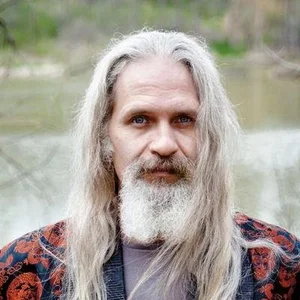 Dan Perrins
Ordinary man driven to delivering one-man voluntary community health promotion by extraordinary circumstances. I run #ProjectJeb throughout Southern Ontario, Canada, hoping to improve men’s mental health by spreading the Four Pillars of Jeb. #MenMatter no more or less than #WomenMatter. Be a Jeb-i warrior - be a force for good.