
Why does men’s mental health get less recognition than women’s mental health? A letter to the Canadian Mental Health Commission Hamilton.

By Dan Perrins
Dear Canadian Mental Health Commission Hamilton (CMHCH),
On Thursday August 31 I met a couple of your representatives at the screening of the documentary Love in the Time of Fentanyl.
I thoroughly enjoyed the interaction that took place. The discussion was not centered on substance abuse but covered two topics of which men are the vast majority of victims: suicide, and slow suicide via substance abuse.
Your representatives were not busy with attendees needing their time. In fact for the 40 or so minutes that the conversation took place I believe only one person came to the room.
The talk amongst your personnel and I was about over and so I went down to the theatre area to catch the rest of the film and take part in the discussion that was happening after the show.
“I asked your representatives if I put the terms ‘women's mental health’ and ‘men's mental health’ into the search bar of the government of Canada website would I get the same number of results.”
I am not writing to you today in regards to the documentary (that deserves a more nuanced discussion) but to go over the chat your representatives and I had.
At the beginning of the dialogue I asked your representatives if I put the terms "women's mental health" and "men's mental health" into the search bar of the government of Canada website would I get the same number of results.
There was a bit of an awkward silence, as if I had just said a quiet part out loud.
Your staff replied they did not believe there was an equal amount of returns.
I confirmed their assumptions and tossed out a couple of recent returns that I documented.

Image: Screenshots of search results for ‘men’s mental health’ compared to ‘women’s mental health’
They did not appear to be too surprised at my response.
From there I went on to give them a Coles notes introduction about my efforts to reduce the male suicides.
Before I go any further I'd like to ensure your staff, (perhaps even the national staff?) are aware of my efforts to reduce both the aforementioned issues men face which they are the vast majority of.
I run something called #ProjectJeb

Image: Stickers distributed as part of #ProjectJeb
It is a walk I and my puppers Charger do every year to raise awareness about the male suicide issue while at the same time promoting the national suicide hotline.
It is a simple concept, a sticker highlighting the fact men are 75% of all suicides, the national suicide hotline and two hashtags.
One is #MenMatter not more or less than women.
And the other hashtag #ProjectJeb.
I also base my efforts on 4 pillars I'd like to share them with all of your staff.
The 4 Pillars of Project Jeb:
1) Toxic masculinity is toxic terminology. We can use the term toxic behaviour and not harm a young man's ability to develop a healthy ego. I can point to behaviours that tend to affect young women like 'cutting' should we call that toxic femininity? Would society stand for it?
I think not.
2) Encourage our sons to talk at an early age. And listen. Maybe their concerns are valid maybe not but if they are just hand waved away we will never know.
It also let's them know they do in fact matter. I believe we should also encourage our daughters to get a little dirt under their fingernails. They like our sons aren't made of fine bone China.
3) current mental health efforts require some tweaks to make them more appealing to men. By this I mean programs should include a hands busy approach. It is my position that men are more open to discussing their issues if their hands are busy. (I'd like to point out 1 of your employees was aware of Men's Sheds. I applaud them for looking at solutions outside of the current set.)
4) substances aren't solutions, and that applies to everyone.
I bring these 'pillars' of Project Jeb to folks via the walks I have done since 2015. We've covered thousands of miles and affected thousands of people with this simple concept.
I hope we can work together to reduce the suffering caused by the God awful effects a suicide has.
I encourage your staff to become Jeb-i-warriors.
Be a force for good.
Raise awareness about men's mental health.
Thank you,
Dan Perrins.
#ProjectJeb
If you are having thoughts of suicide, or have been impacted by the suicide of someone close to you, phone Samaritans on 116 123 (UK & Ireland), who are open 24 hours per day, every day of the year. In Canada phone 1-833-456-4566. In the US phone 988 for the National Suicide Prevention Lifeline. In Australia call Lifeline on 13 11 14
Scroll down to join the discussion
Disclaimer: This article is for information purposes only and is not a substitute for therapy, legal advice, or other professional opinion. Never disregard such advice because of this article or anything else you have read from the Centre for Male Psychology. The views expressed here do not necessarily reflect those of, or are endorsed by, The Centre for Male Psychology, and we cannot be held responsible for these views. Read our full disclaimer here.
Like our articles?
Click here to subscribe to our FREE newsletter and be first
to hear about news, events, and publications.




When a male is in a power imbalance, at least two masculine instincts are disempowered…

…people – men and women alike – respond less positively to male-favouring sex differences than they do to female-favouring sex differences.
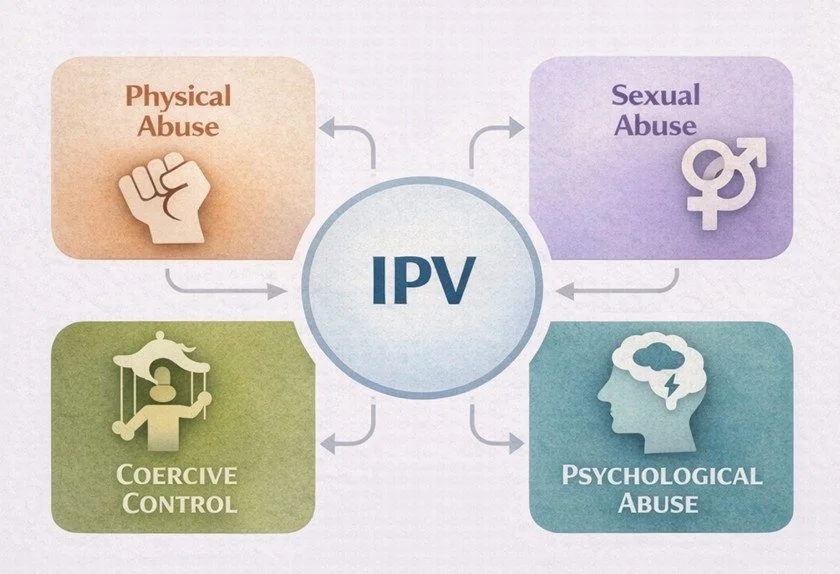
hyper-masculine gender norms are typically embedded within military institutions, and while adherence to these norms can contribute to combat and military success, they conversely make clinical work challenging
Men might benefit greatly from a government strategy aimed at improving their health. Here are suggestions from the Centre for Male Psychology on how that might be done. This article ends with some comments on potential pitfalls in the process of putting this strategy in place.



…people – men and women alike – respond less positively to male-favouring sex differences than they do to female-favouring sex differences.

… many papers do not even bother to identify or justify the nationality of their samples…
hyper-masculine gender norms are typically embedded within military institutions, and while adherence to these norms can contribute to combat and military success, they conversely make clinical work challenging

Have you got something to say?
Check out our submissions page to find out how to write for us.
…people – men and women alike – respond less positively to male-favouring sex differences than they do to female-favouring sex differences.
There is social power, there is structural power, and there is physical power. What women have in our society is the power of the state behind them, and men do not. Men only have that physical power, and most men don’t want to use it


Masculinity may be just the tonic (remedy) needed by society at a time when it has recently suffered so many fractures.

“The place that people feel least free to speak their minds are oftentimes university, which I found absolutely stunning.”
Peer reviewers seem to be more accepting of my research on physiological differences between men and women (e.g., muscle fatigability) and less accepting of my research on psychological differences.

Generally speaking men’s humour is a good predictor of relationship satisfaction, as long as the woman appreciates it. A lot of studies show that men try to impress women with humour.

I was left with no doubt that men were struggling in myriad ways with stress and psychological illness – yet it has always been the discourse of the ‘desperate housewife’ that has attracted the most publicity, both in medicine and popular culture

…many professionals seem to interpret the evidence “most convicted child sex offenders are men”, as “children are more at risk from their father than their mother.

…people – men and women alike – respond less positively to male-favouring sex differences than they do to female-favouring sex differences.
IMD is not recognized by the UN because many believe we live in a patriarchal world and that the focus of the UN should be on women and children.

I’ve become curious why people, including very smart people with Ph.Ds, tend to leap at moralistic conclusions, adhere to them and consider them “science” when they are no such thing.

…critical gerontology focuses on the political-economic approach and consequently had a limited perspective on women and men: economically the former were seen as deprived and men privileged. Men were therefore disregarded.

…There is a reason why men who speak up on these issues tend to be retired or unemployed.

People depart a man in trouble [but as] soon as a man's got someone to talk to he will pour his heart out.
people are more aware of the fact men can be victims of this type of violence, but this often isn’t translated into policy, practice or indeed provision of resources
The brutality of the person's offence is generally related to the brutality of what they've experienced during childhood.

There is social power, there is structural power, and there is physical power. What women have in our society is the power of the state behind them, and men do not. Men only have that physical power, and most men don’t want to use it

90% of men in prisons have come from generational family violence… So when they're violent - which is what they've learned - we then perpetuate the violence by putting them in prison.

“I feel very strongly that the pendulum has swung too far, as it always does, the swing from a very male dominated patriarchal society to a very, very female dominated society where men …”

…the feminist movement has done inestimable damage to the mental health of boys and men. Making boys second class at school, teaching them that males are bad by nature and that women have suffered at the hands of men inevitably leads to boys feeling unhappy about themselves and adopting the unruly, delinquent behaviour which is expected of them.

Some people blame drill music – a form of rap - for the rising murder rate in London. Drill is known for aggressive lyrics about gang violence, but rather than seeing this as a valuable way for young men to express their feelings, some people want to ban it.

Gender scholars and activists were aghast a few years ago at the depiction of a feminist, in a documentary movie called The Red Pill, who unexpectedly learned to empathise with men. In a rare interview, director and star of The Red Pill, Cassie Jaye, reflects upon the impact the movie has had on herself and others.
.
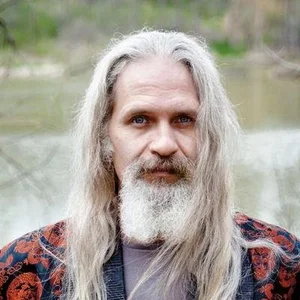 Dan Perrins
Ordinary man driven to delivering one-man voluntary community health promotion by extraordinary circumstances. I run #ProjectJeb throughout Southern Ontario, Canada, hoping to improve men’s mental health by spreading the Four Pillars of Jeb. #MenMatter no more or less than #WomenMatter. Be a Jeb-i warrior - be a force for good.